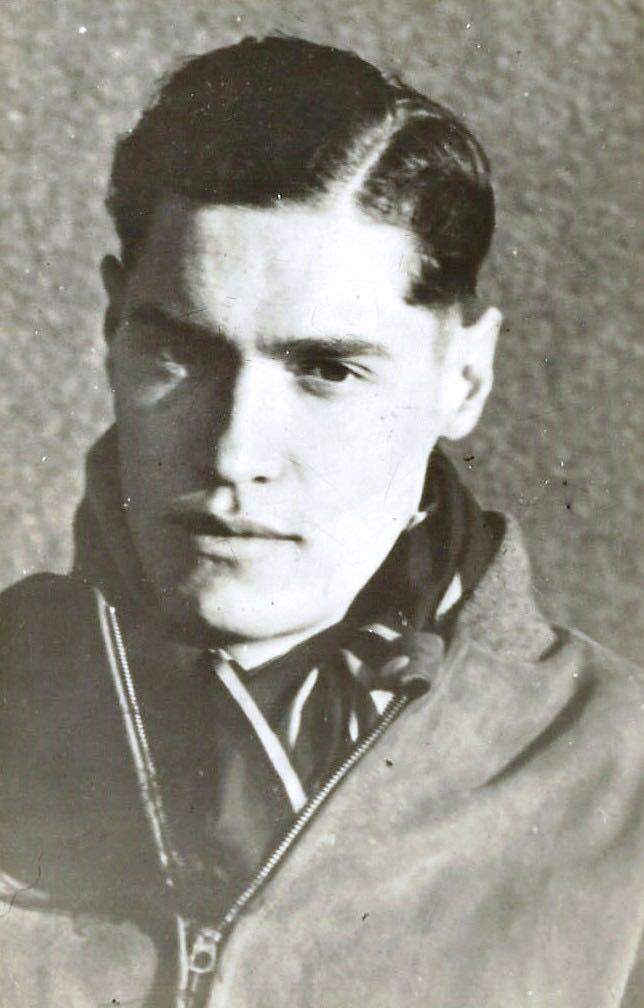
Flying Officer Norham J. Lucas DFC –
266 Rhodesian Squadron:
Keith Nicholls first contacted me via social media on 13 December 2023. He informed me he had some family items dating from World War Two and had that difficult decision of “what to do with them”. They were the personal belongings of his uncle Norham Lucas who served with 266 Rhodesian Squadron and he had spent some time in the Southwest including Exeter and Harrowbeer in Devon and Predannack in Cornwall.
The items included a diary, flying logbooks, medals, caps, press cuttings and letters. Keith lives in South Africa hence the family connection with Rhodesia. It is always difficult to know what to do with items belonging to those who are no longer with us. I suggested that I could honour Norham Lucas with a feature on the website, rather than just keep them locked away in a cupboard or attic. This is his story.
Flying Officer Norham Lucas completed his training at Guinee Fowl Air Station, Rhodesia in 1941. He flew solo in just five hours and 50 minutes, which at that time was a record. His training included flying Harvards at Cranborne, Rhodesia and he was then deployed overseas in June 1941. On his arrival to England, Norham joined 19 Squadron which was famous for being led by Squadron Leader Douglas Bader. Sadly, Norham never met Bader as at that time, he was a prisoner of war (POW) having bailed out leaving his artificial leg behind in the aircraft. Famously, a spare leg was flown out to the POW camp so that Bader could carry out duties along with the other prisoners.
Norham’s 21st birthday arrived on 15 November 1941 and on the same day he joined 266 Rhodesian Squadron flying Spitfires and later Typhoons.
Operations patrolling the English Channel began in May 1942, and the RAF’s first kill by a Typhoon, came on 9 August, when it was reported that Pilot Officer Lucas in R7696/ZH-C and Pilot Officer Munro in R7822/ZH-H destroyed a Ju88 off the coast at Cromer, Norfolk.
From 266 Squadron Operational Record Books (ORB) from 10 September 1943, 16 aircraft took off from RAF Gravesend and flew to RAF Exeter. The groundcrews travelled to the Southwest by train arriving into Exeter in the evening.
The following day the Squadron had one scramble and some non-op flying to get settled flying in and out of RAF Exeter. There was also some non-op dusk flying practice.
On 12 September, the Squadron took part in a mock attack on Dunkeswell Aerodrome with them being complimented on their efforts.
On 16 and 17 September, the Squadron carried out practice landings in Typhoons at RAF Bolt Head to get them used to the aerodrome there.
On 21 September the Squadron moved to RAF Harrowbeer with 14 aircraft, with the weather reported as being very poor.
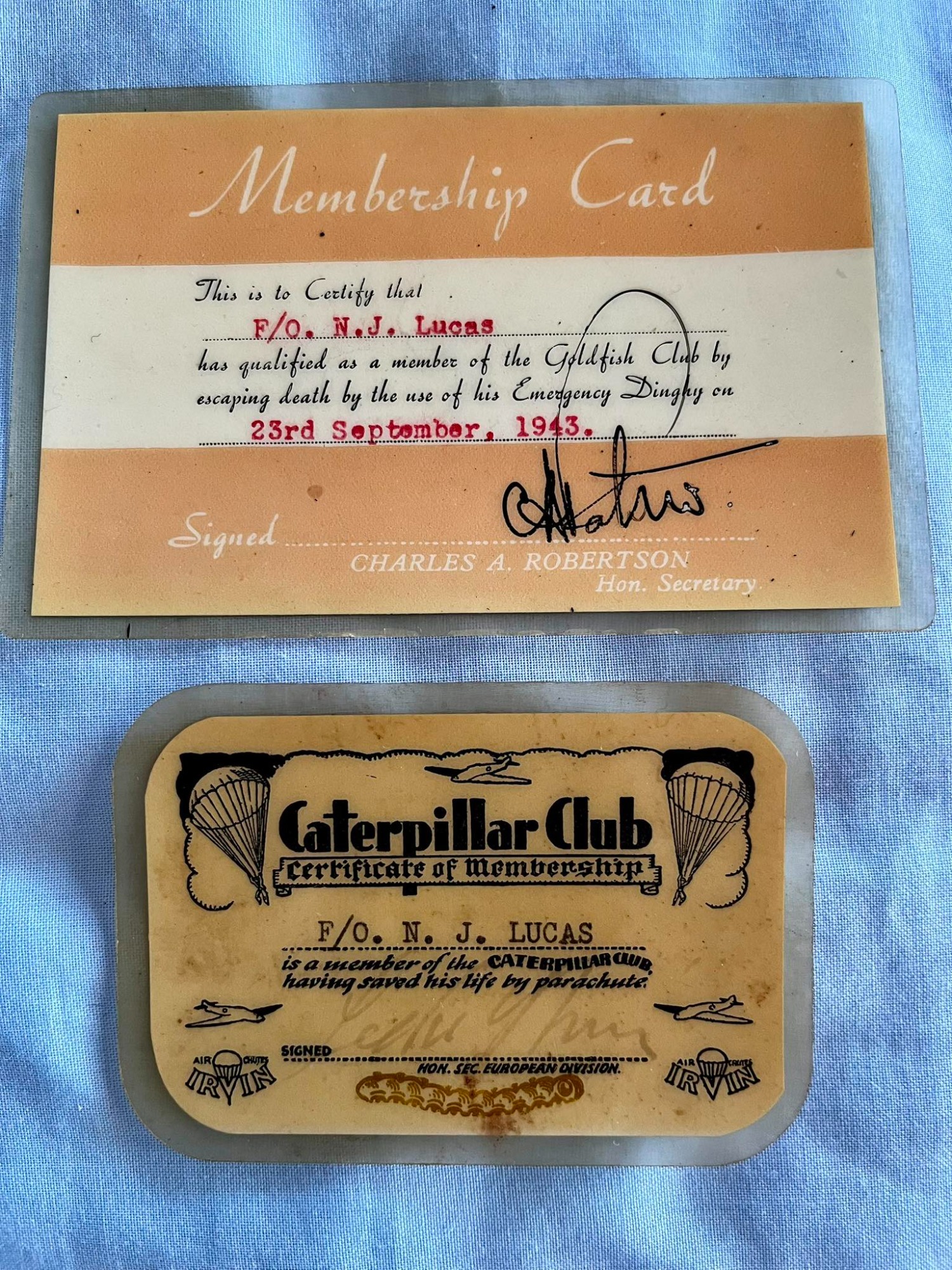
A near end of life experience occurred for Norham off the coast of Cornwall. After some combat action over the sea, he sustained damage and he was forced to bail out of his aircraft. He successfully scrambled into his life saving dinghy and waited. After quite some considerable time and much to his relief, Norham was rescued by a Search and Rescue Walrus aircraft, in what was rather poor weather conditions.
Airmen who successfully bail out of their aircraft and ditch in the sea become members of two clubs that are still going today. The Caterpillar Club is an informal association of people who have successfully used a parachute to bail out of a disabled aircraft. After authentication by the parachute maker, applicants receive a membership certificate and a distinctive lapel pin.
When it was formed, to become a member of the Goldfish Club someone could only join if they were in the RAF, had ditched into water and survived by climbing into a dinghy. Today, those rules for membership have now been relaxed and it is believed to be one of the longest running active military clubs.
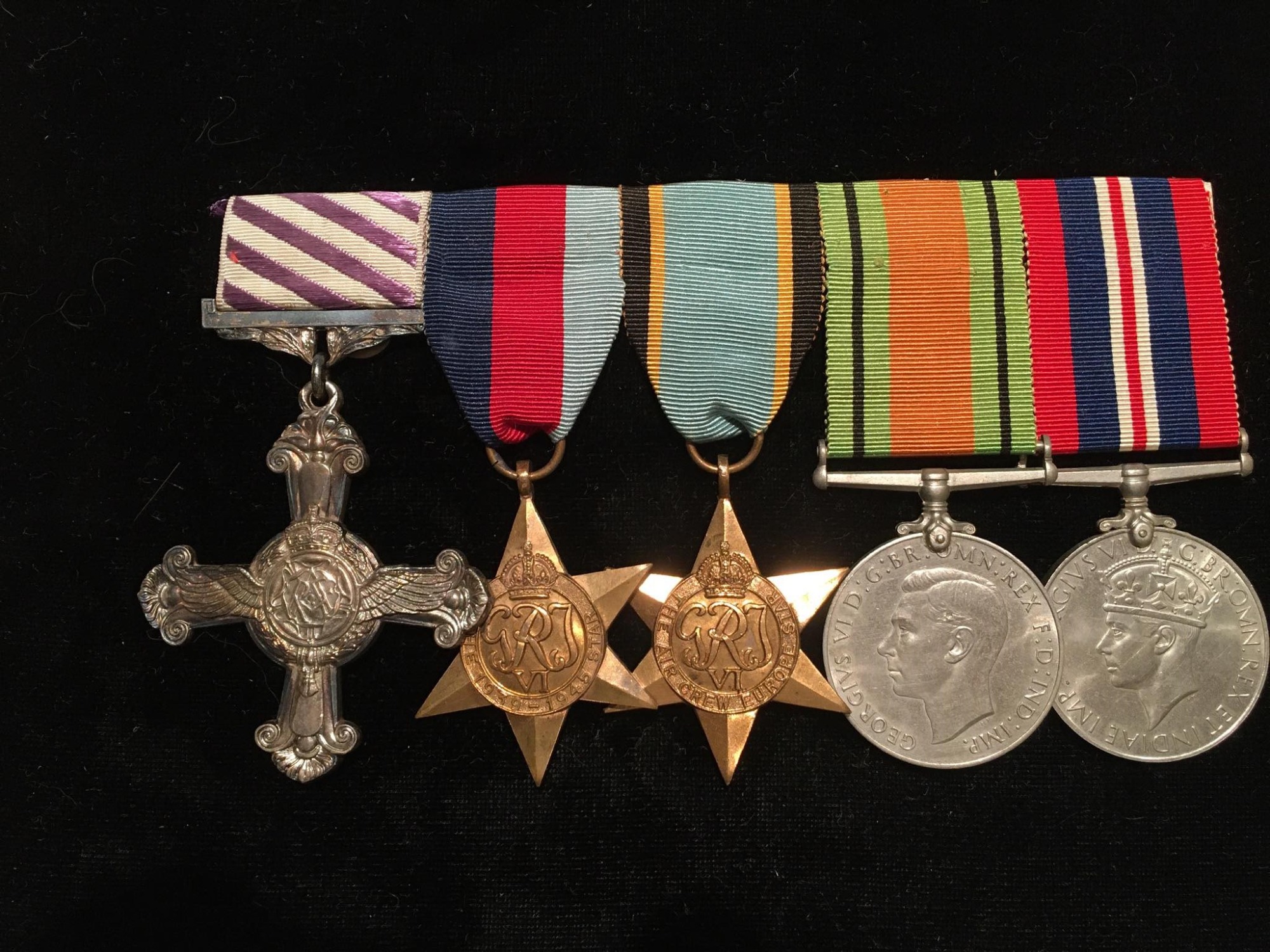
On the 28 March 1944, Norham was awarded the Distinguished Flying Cross (DFC) and the official notice read as follows:
"This officer has completed a large number of sorties and throughout has displayed, exceptional keenness and devotion to duty. His fine fighting qualities have always been apparent and on several occasions, he has flown safely to base after his aircraft has been badly damaged in air fighting. On one occasion, Flying Officer Lucas was compelled to abandon his damaged aircraft whilst over the sea. Within a few days of being rescued he resumed flying operations. In recent sorties over Northern France Flying Officer Lucas has flown with great distinction and shared in the destruction of 2 enemy aircraft."
Sadly, Norham’s life ended on the 5 April 1945, when he was involved in a flying accident. As told by Keith’s late Mother, “Norham was training a pupil pilot when their Harvard ran out of fuel. Guess they should have checked before taking off but after serving activity in the UK, he presumed it to be full. The pupil pilot didn't want to bail out so they attempted a wheels-up landing in a field. In this landing Norham hit his head to the dashboard which killed him instantly. The pupil was unhurt”. This was a tragic end to a remarkable man. Norham is buried in the military cemetery in Bulawayo, Rhodesia, now Zimbabwe.
Flying Officer Norham J. Lucas DFC – 266 Rhodesian Squadron:
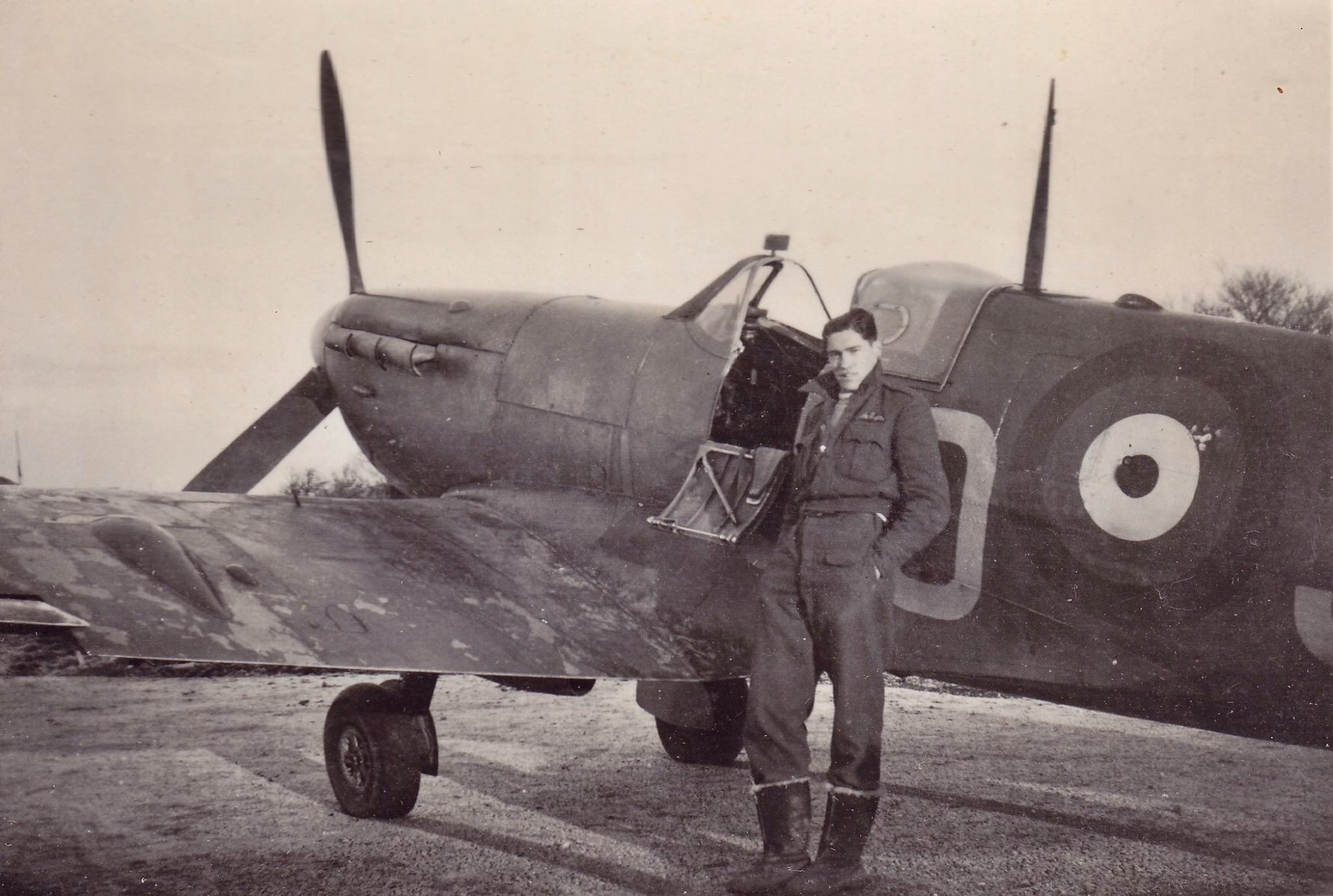
Below - Norham stands by his 266 Sqn Spitfire.
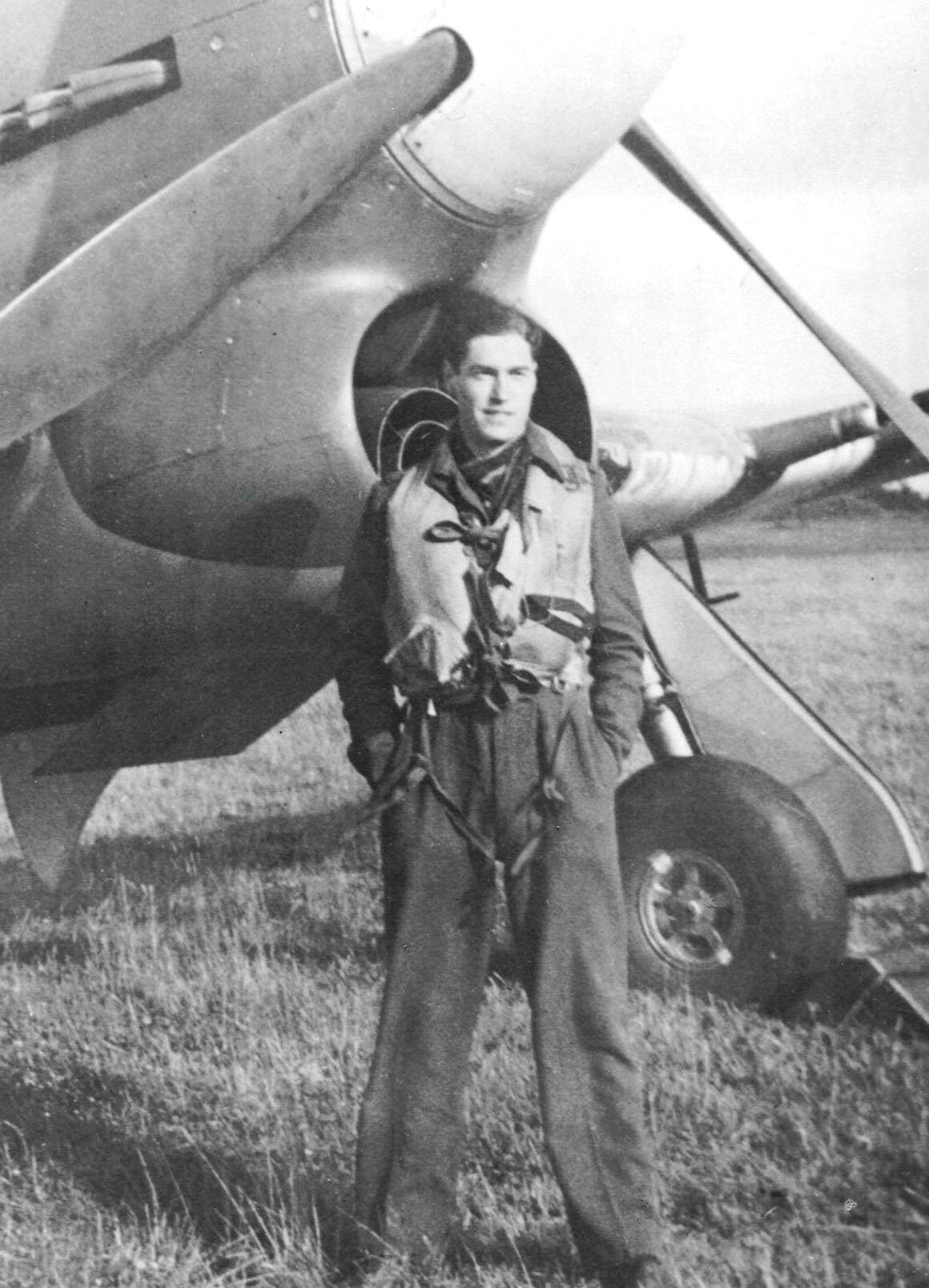
Below - Norham in front of his Typhoon aircraft.
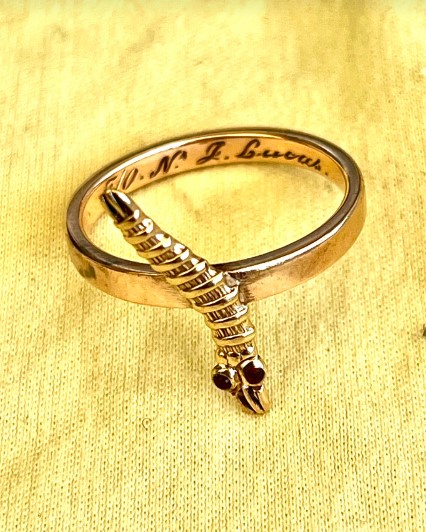
Below - Keith stated that his grandmother had the pin made into a ring that she wore daily. Here are two photos of the very ring. It has F/O N J Lucas inscribed on the inside.
Below - Airmen who successfully bail out of their aircraft and ditch in the sea become members of two clubs that are still going today. The Caterpillar Club is an informal association of people who have successfully used a parachute to bail out of a disabled aircraft. After authentication by the parachute maker, applicants receive a membership certificate and a distinctive lapel pin.
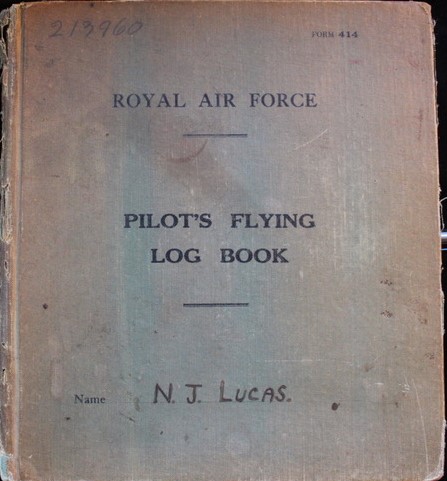
Below - The RAF Form 414 Pilot’s Flying Log Book of F/O N J Lucas.
Below - These are his medals including the DFC.
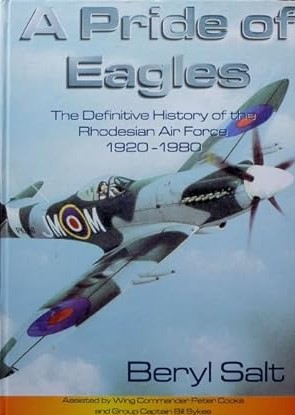
Below - Norham is featured in the book ‘A Pride of Eagles’ written by the late Beryl Salt.
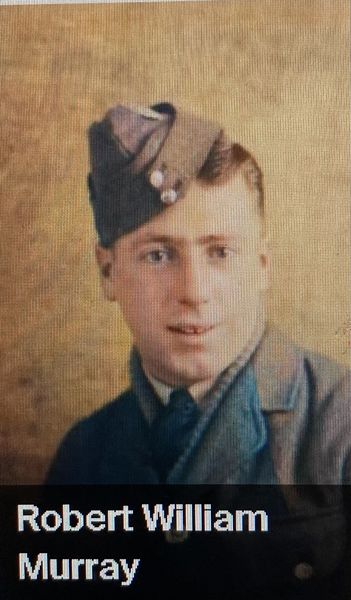
Below - Leading Aircraftman - Robert William Murray – 266 Sqn – History:
My good friend Michael McDonald shares the story of his Grandad who spent some time at RAF Exeter with the Squadron. Thank you so much Michael.
Robert William Murray born 7th Nov 1919, at Nigg, Aberdeenshire to parents Robert Park Murray (mechanic -Churchill tank regiment 1914-1918) and Anna nee Stephen- Cove, Aberdeen.
Robert W Murray worked with his father at his garage in Woodside Aberdeen as a motor mechanic in the years leading up to the second world war. His father and mother emigrated to Rhodesia in South Africa just before war broke out and Robert William closely followed suit.
When war broke out in Europe in 1939, Robert William Murray enlisted with the RAF at Natal in South Africa (11/04/1940 - 21/09/1945) Leading Aircraftman, M2564, NCO 778211, joined the empire program which is actually documented on a Pathe news report along with a photograph.
Robert initially trained at cranborne airfield in Salisbury, Rhodesia. Robert was then transferred to the UK (RAF Wittering) on completion of his training and was appointed to the 266 Rhodesian squadron, first working on Spitfires and then on to Typhoons. The squadron was heavily involved in Dunkirk and the Battle of Britain along with many many sorties over Europe. In 1942 squadron was moved to Duxford to be re equipped with the Typhoon. The Typhoon role was being changed from fighter to bomber in support of the Normandy invasion.
January 1943, No. 266 squadron was moved to Exeter, my grandfather had an address as Windy Ridge, Birchy Barton Hall. In September 1943, the squadron moved again to Harrowbeer and then on to the New Forrest in 1944. The squadron was also involved in shooting down and destroying V1 and V2 rockets, the Typhoon being the only plane fast enough to do so. The squadron was also involved in blowing up V2 bases, railway stock etc. across Europe.
My grandfather met my grandmother while in hospital in Exeter as a result of an injury, my grandmother
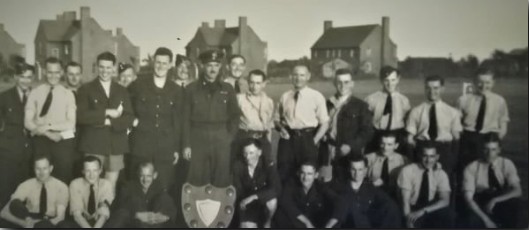
(Ellen Vaughan) worked as a nurse in Exeter, I was told my grandfather sustained a leg injury as a result of a game of football, I have pictures of him with a squadron winners cup with the said 266 team.
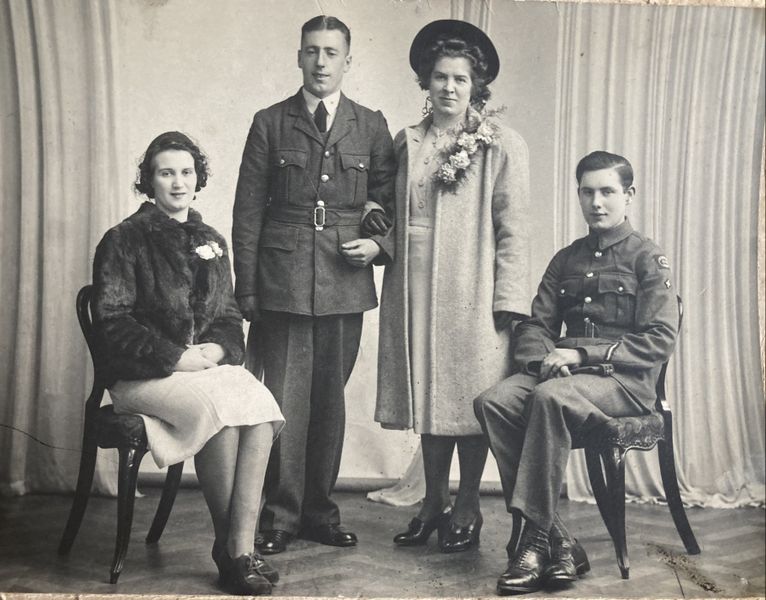
My grandparents married in Brentford, Middlesex in January 1943, my mother Ellen Murray was born on the 2nd December 1943 but sadly my grandmother, Ellen Vaughan who originated from Sellack, Herefordshire, died at Mowbray hospital, Exeter, on the 5th of December as a result of complications after child birth.
My mother was then adopted by her uncle in Aberdeen as he too had recently lost a young daughter. My grandfather had to return to Exeter to continue on with the squadron.
The squadron was disbanded at Hildesheim Germany end of July 1945.
Post war my grandfather went to work with 266 sqn Spitfire pilot George Elcombe in South Africa. George had his own transport and milk delivery company with a fleet of vehicles. George Elcombe PTY Ltd was the largest transport firm in Rhodesia. George was a former spitfire pilot. My grandfather was the workshop manager at Elcombes PTY, South Africa and looked after his fleet of vehicles along with his brother and son to his new family in South Africa as he remarried in 1946.
My mother Ellen McDonald nee murray, just recently found out the history of her father and now at 80 plans to come visit Exeter and Mowbray hospital where she was born in tribute to them both. My mother kept in touch with her dad after the war by phone call but sadly never met up again. My grandfather passed away 9th November 1985, aged 66 at Natal, South Africa.
See rare photographs below.
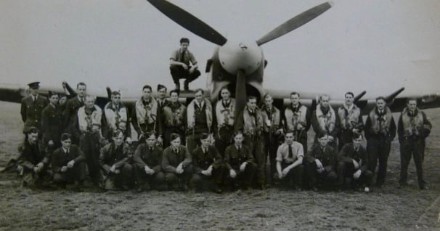
Below - Aircraftman Robert W Murray is pictured with his Squadron in front of a Hawker Typhoon. Robert is situated front row six o'clock to the prop.
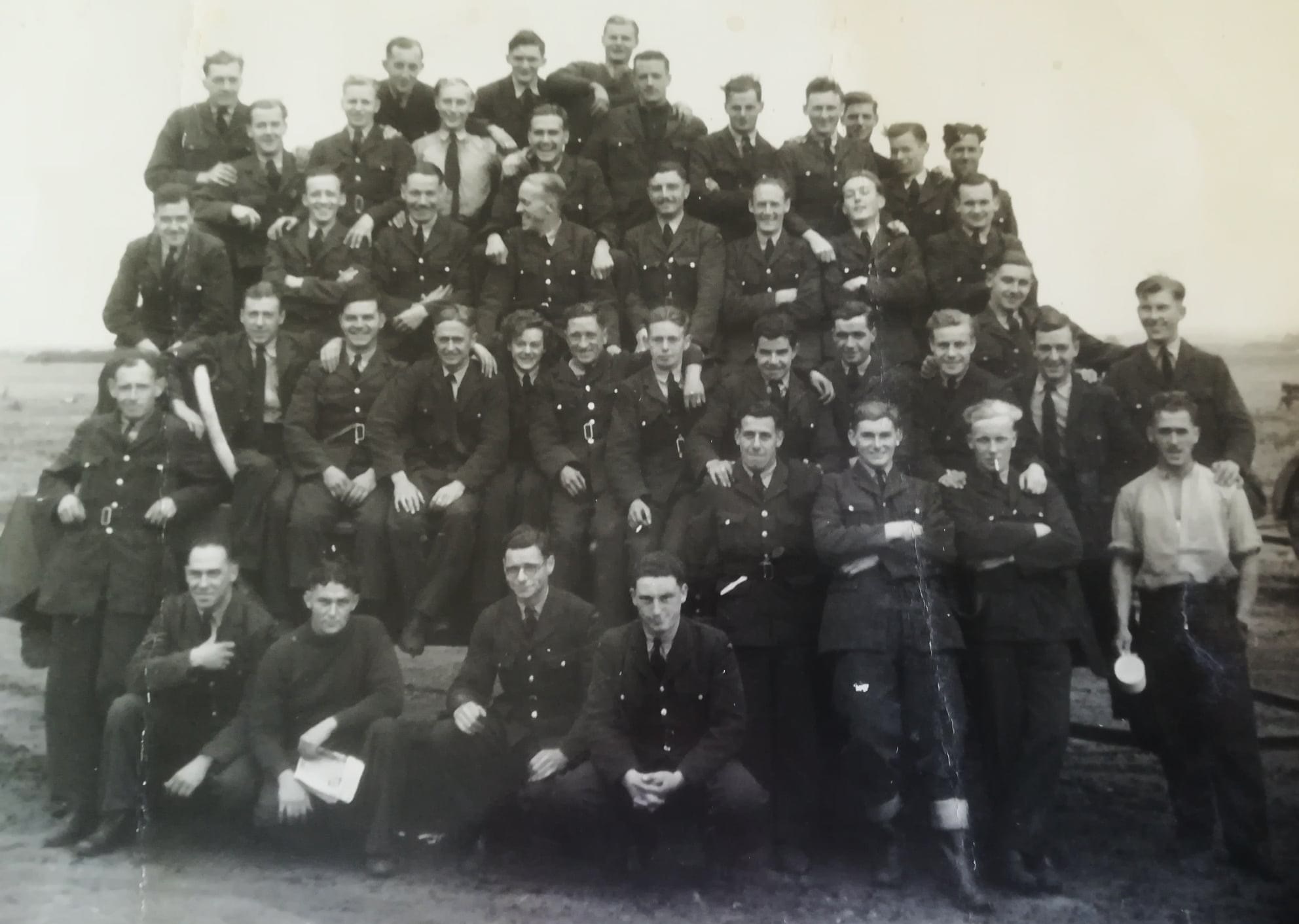
Below - Aircraftman Robert W Murray is pictured with his Squadron on a fuel truck. Robert has his arm over the fuel hose.
Below - Natal, former province of South Africa training session.
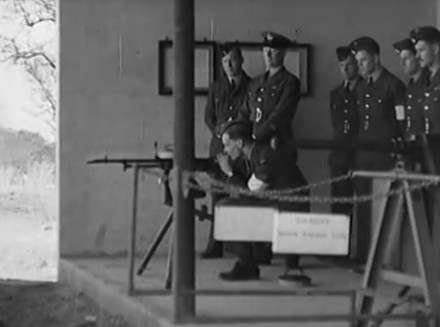
Below - Aircraftman Robert W Murray is pictured on the right looking on during this training session.
Below - 266 Squadron members proudly with the football shield following match victory. Robert Murray sustained a leg injury during the game.
Below - Robert Murray wedding photograph with wife Ellen Vaughan pictured at Ellen Murray's house. We are unaware of the other two guests in this photograph.
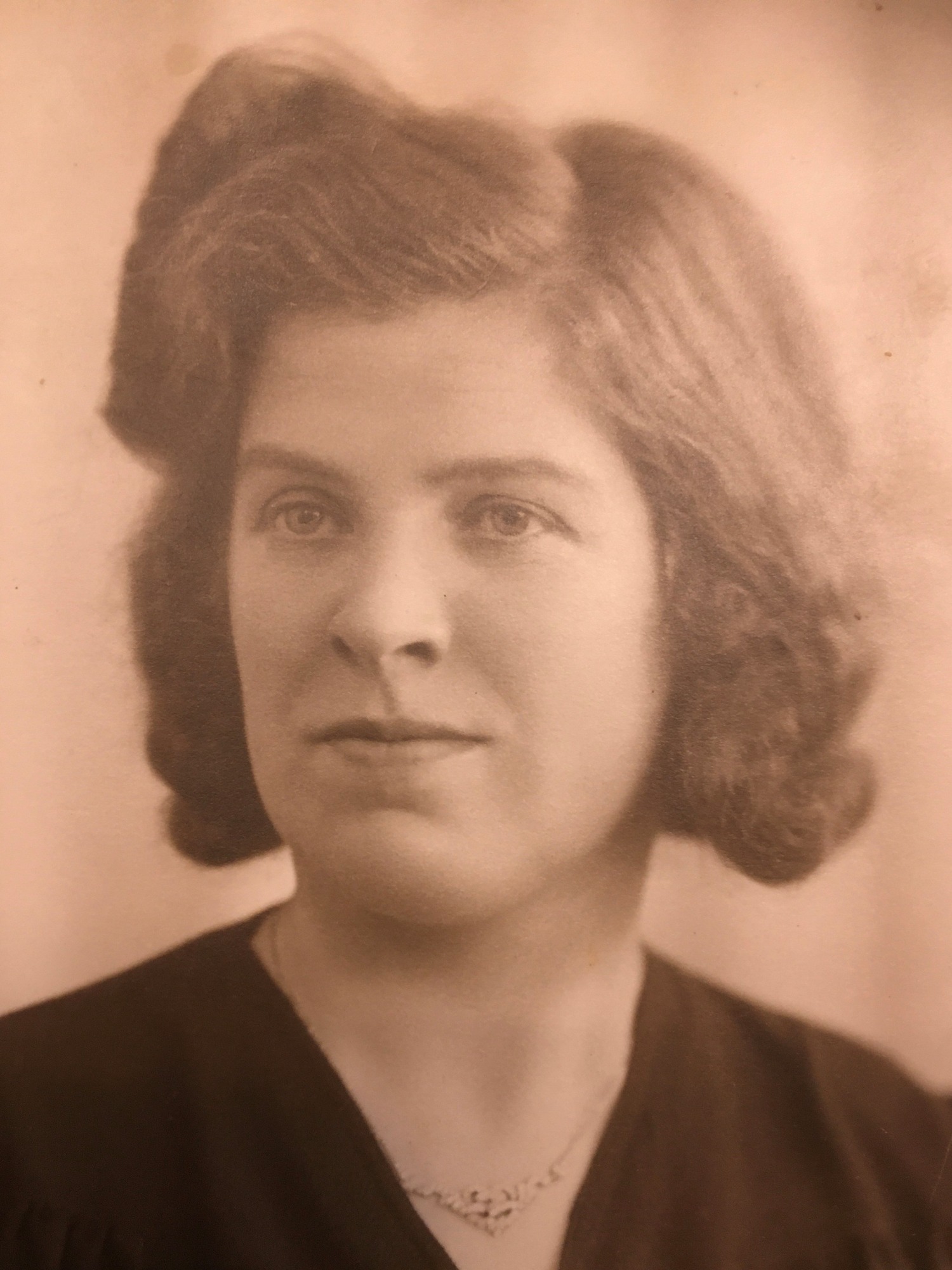
Below - Ellen Vaughan who was a nurse in Exeter, sadly died on 5 December 1943, at Mowbray hospital, Exeter.
A French Connection
There is an Exeter connection with the French town of Le Folgoet in conjunction with No. 266 Squadron who flew the Typhoons out of RAF Exeter in 1943. The lovely people of Le Folgoet remember the Exeter pilots who were shot down during a dogfight over the town. Every year on the 8 May and on Rememberance Day on the 11 November, people pay their respects to the brave pilots. A website has much more information on these events and indeed the brave pilots who lost their lives over France.
The website link is click here LE FOLGOËT 80 YEARS ON (brittanyremembers.com)
This page was last updated 20 March 2026.