A History of RAF Exeter
31 May 1937: The Opening of Exeter Airfield
Exeter Airfield officially opened on this day, marking a significant milestone in the region’s aviation history. However, the first aircraft to touch down had arrived earlier—on 12 May 1937—when a Leopard Moth operated by Air Dispatch Ltd, piloted by S.W.A. Scott, landed carrying a copy of the Coronation film of King George VI, destined for local cinemas.
The inaugural air traffic followed on 31 May, when the Mayor of Exeter, Alfred Anstey, along with civic dignitaries, was flown over the city in a de Havilland DH.86 Express (G-ACZO), offering a dramatic aerial view of the city’s future gateway to the skies.
The aerodrome, constructed at a cost of £35,000, was leased to Exeter Airport Ltd—one of several ventures linked to Mr Whitney Straight, the American millionaire racing motorist turned aviation entrepreneur. Though American by birth, Straight had lived in Devon for twelve years and flew in from London to attend the modest, unofficial opening ceremony.
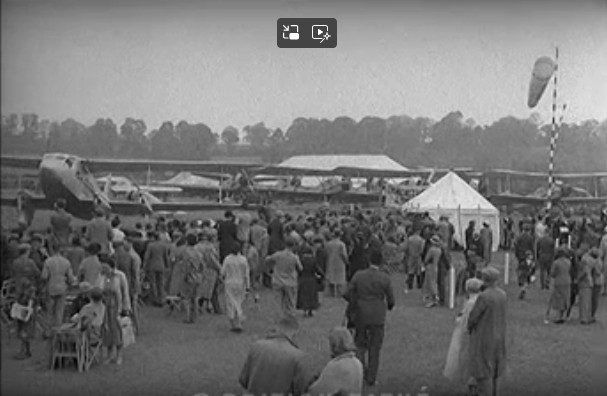
At the time, the airport was far from complete. Canvas tents served as the first terminal buildings, a temporary solution that underscored the pioneering spirit of early British civil aviation.
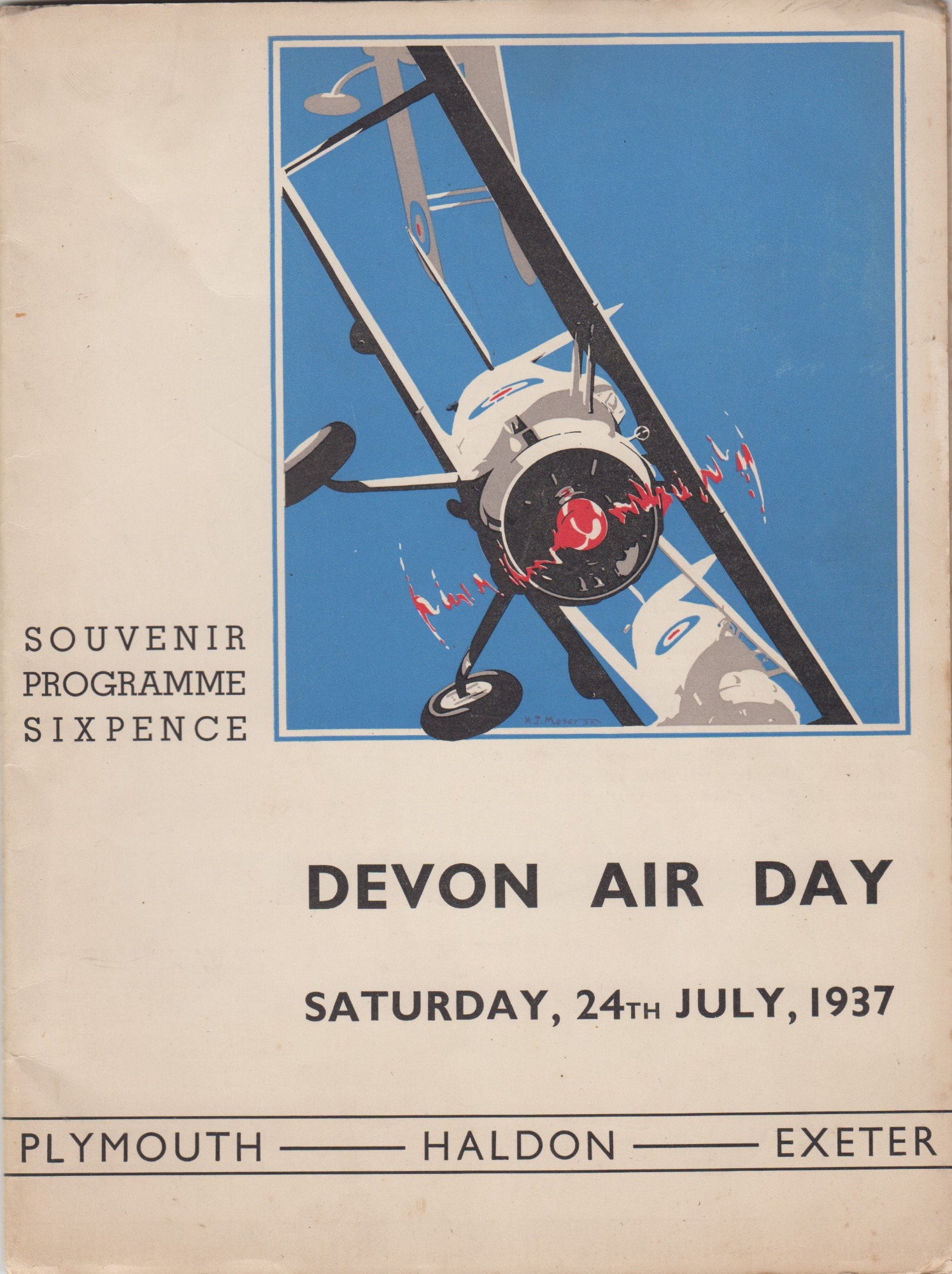
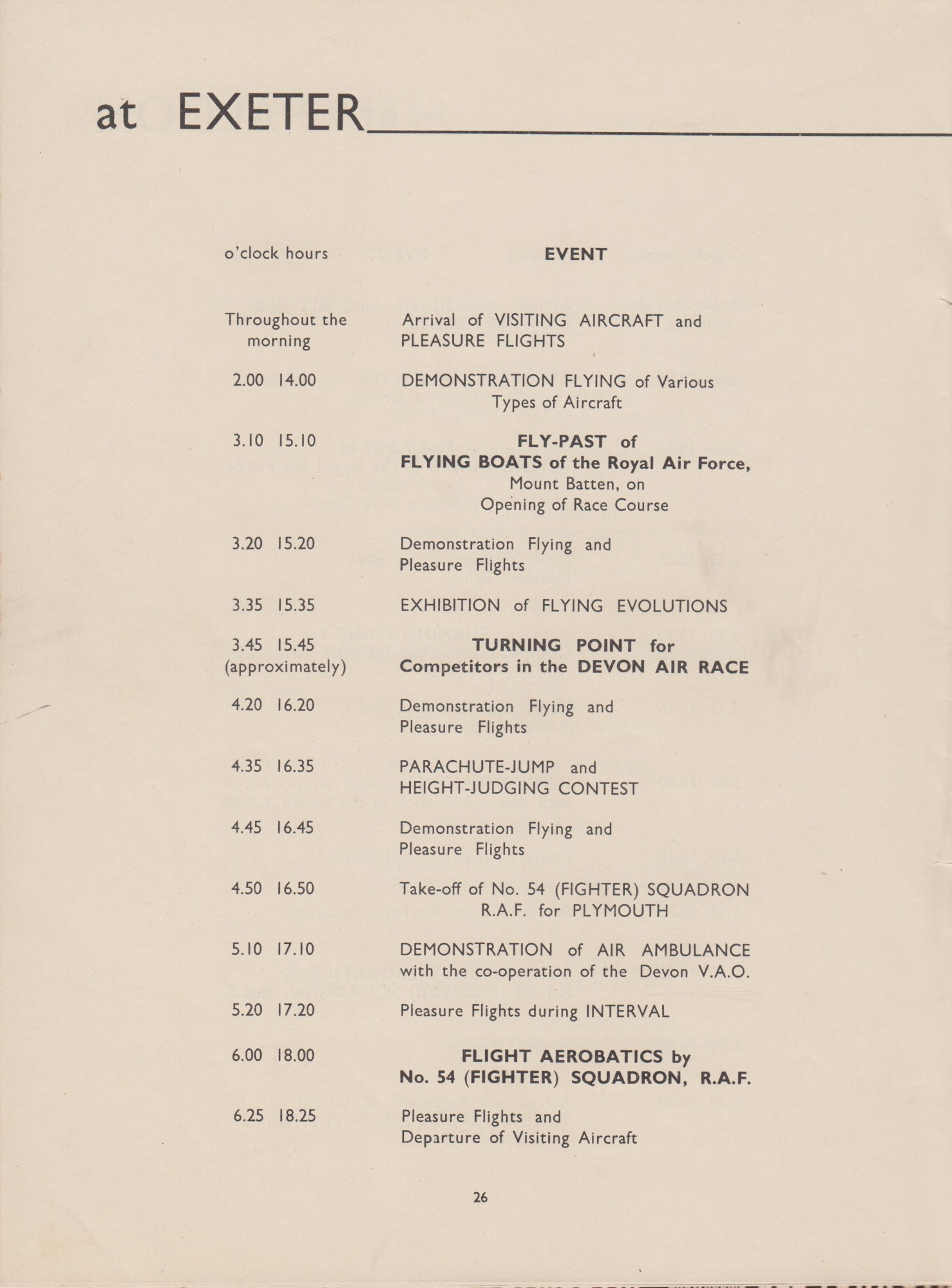
This is what was written in the Devon Air Day programme as a way of an introduction to Exeter Airport,
"Ancient and beautiful Exeter is keeping alive its traditions of the past in looking ahead to the development of the future. The Corporation has established the largest aerodrome in Devon at Clyst Honiton. It began operations on the 31st May 1937, with two airlines opening their summer routes, thus the city is now linked with the rest of the British Isles and Europe by the fastest means of conveyance available'. In the key position in Devon, and indeed the whole of the Southwest, this airport will play a vital part in maintaining the prestige and prosperity of the city its serving".
The Devon Air Day featured not only Exeter airfield but also Haldon and Roborough, Plymouth, on Saturday 24 July 1937. The event was also used for an air race around all three airfields as part of the Air Display Programme.
In early May, seven Lysander aircraft from No. 416 Army Co-operation Flight arrived into Exeter from Hawkinge for armament training. This was only a brief visit making use of the air-firing practice range at Lyme Bay. Here they practiced dropping bombs and firing rounds along with dive bombing exercises from both low and high levels. The Flight departed for Cosford on the 5 June 1940.
On the 3 June 1940 the Aeroplane and Armament Experimental Establishment (A&AEE) moved to Exeter from Boscombe Down which became the Gunnery Research Unit (GRU) operating under 10 Group on the 6 July. This unit would become one of the longest residents at Exeter flying all different types of aircraft used by the RAF. On the 13 July a gunnery research range was established at Brandy Head situated on the coastal path between Budleigh Salterton and Sidmouth. The structure is still in place today and is likely to be turned into holiday flats which at least will preserve the buildings.
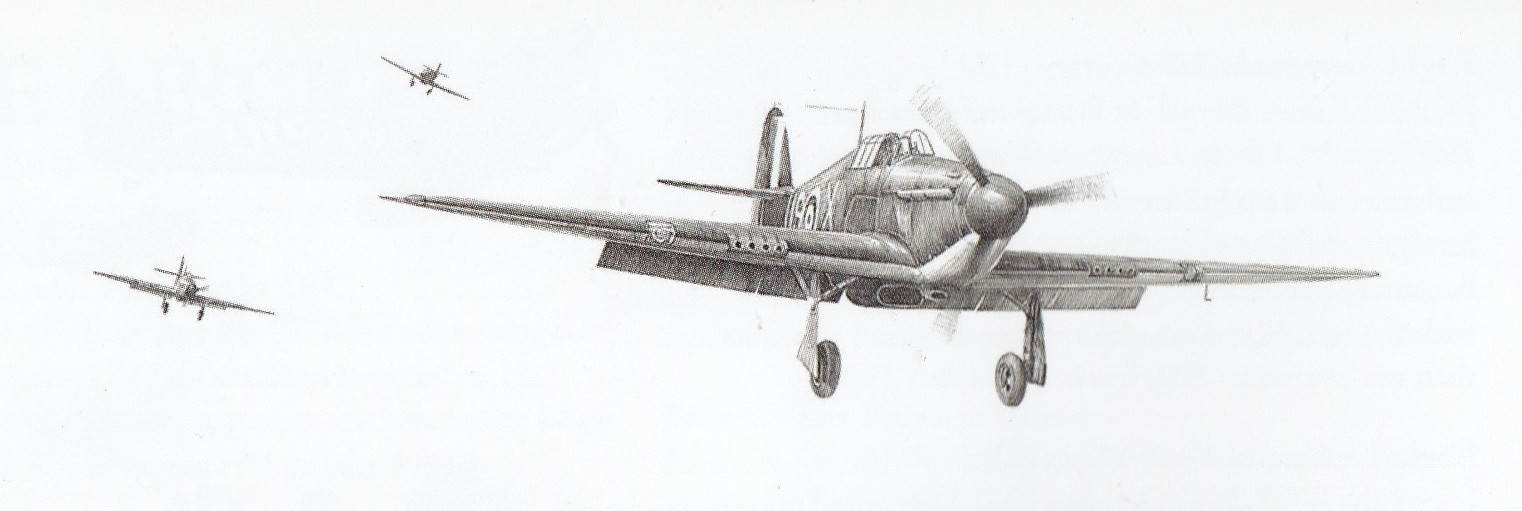
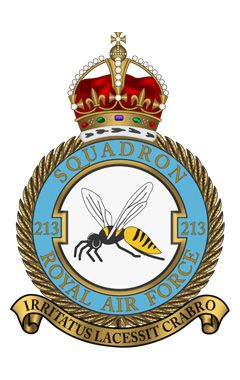
The RAF formally took charge of the airfield on the 1 June 1940, initially with Flying Training Command until the 6 July 1940, when control was transferred to Number 10 Group of Fighter Command under the command of Air Vice Marshal Sir Quintin Brand. The first operational Fighter Squadron was No.213 Squadron, from the 18th June 1940 and soon after on the 5 July they were joined by No.87 Squadron, the airfield became officially RAF operational on 6th July 1940 with Hurricane MK1 aircraft from both 87 and 213 Hurricane squadrons. Sqn Ldr J S Dewar assumed command of the station on this day from Sqn Ldr RHE Emson who would assume command of the GRU from 12 July. The squadron Chaplin Sqn Ldr J H K Dagger didn’t arrive until 15 August.
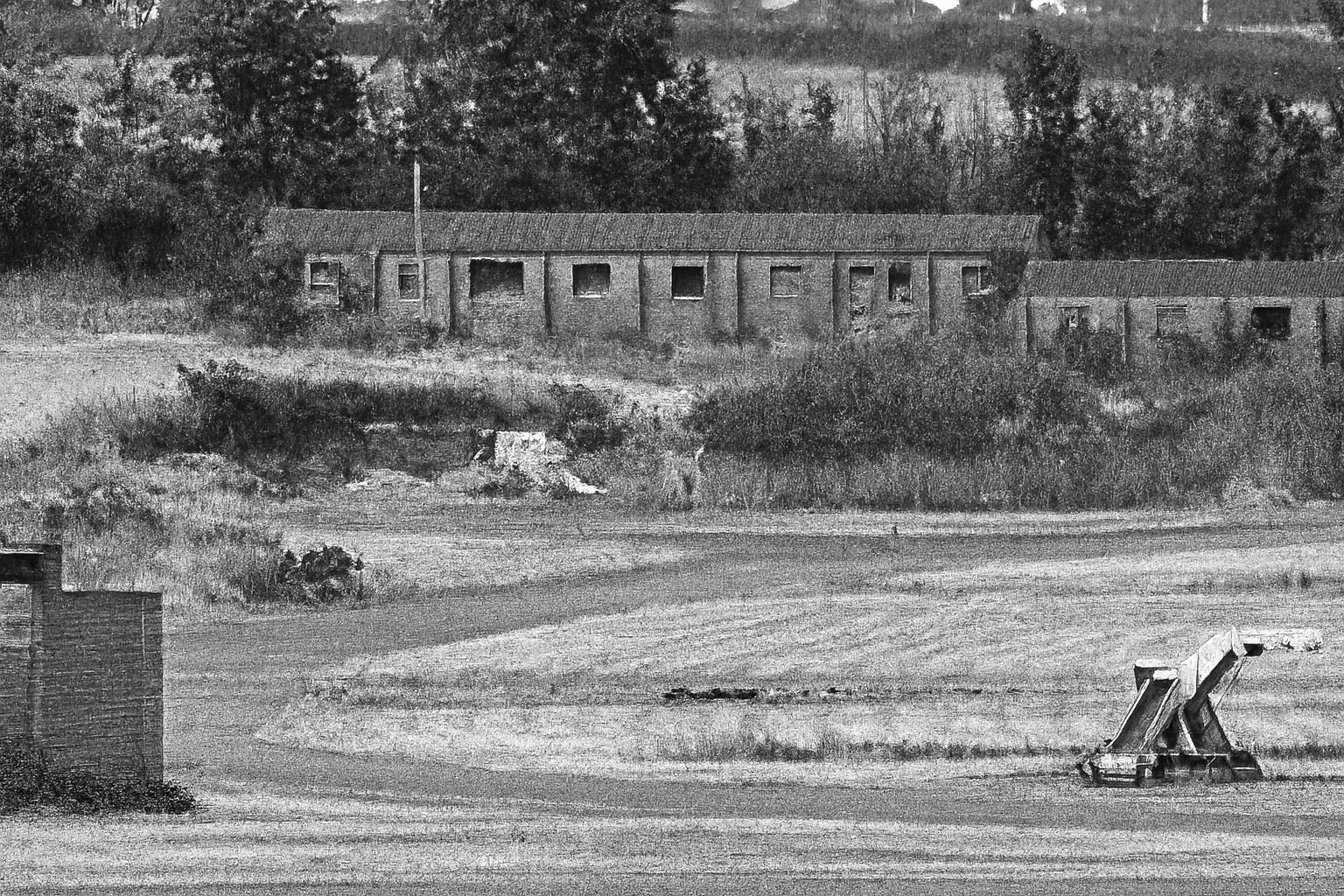
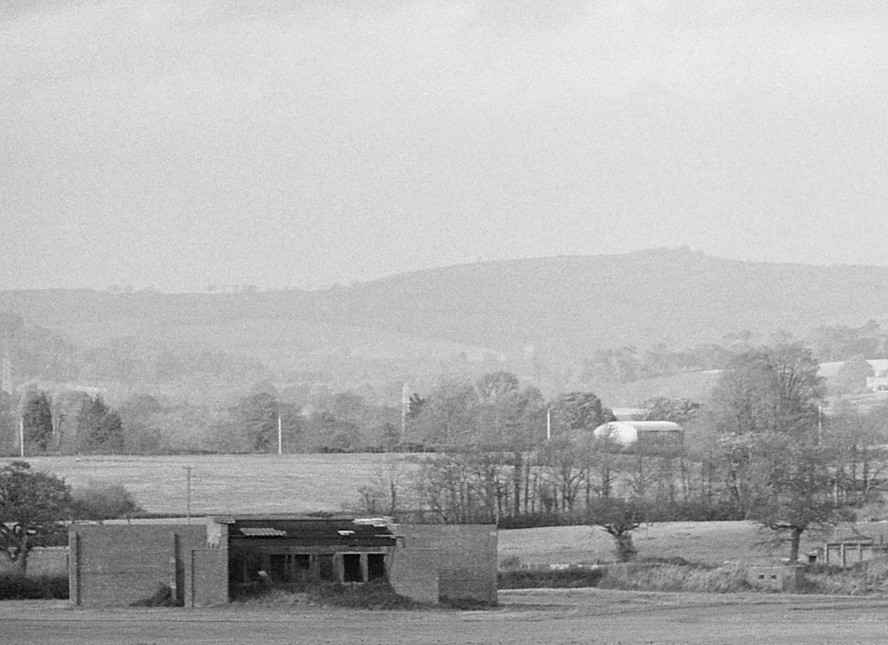
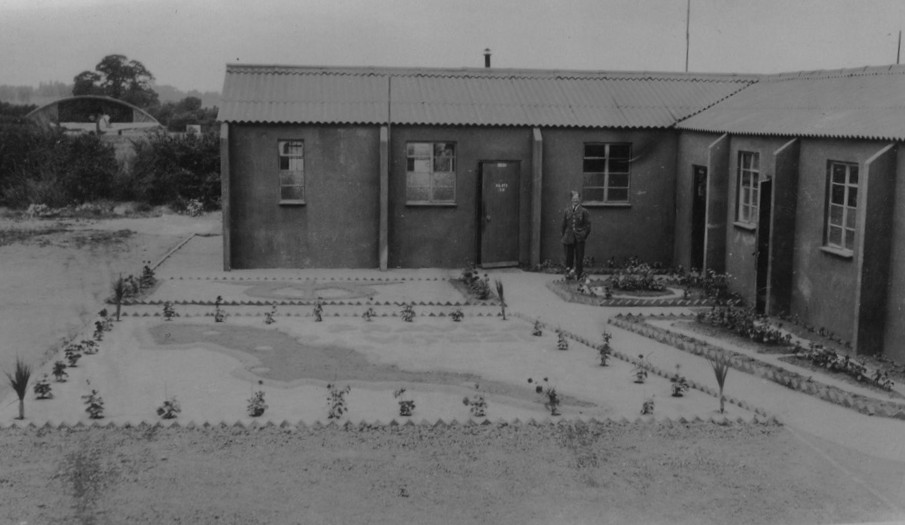
The Airfield was developed to include fighter pens, living quarters, Officers messes, stores, medical centre, including a mortuary and a NAAFI canteen. Airmen lived in wooden huts beside the wartime airfield before more permanent buildings were constructed. During the war German air raids were a threat to those in living quarters so the men were moved to houses in the Pinhoe area of Exeter, however, when pilots were on duty, they slept in bunks inside the surface shelters which were part of the 'W' shaped aircraft pens situated around the airfield perimeter. Devonshire Regiment soldiers were used to guard the airfield and sadly several were killed during German air raids. Several bombs failed to explode and were safely defused by the Bomb Disposal Unit.
There were three underground Pickett-Hamilton Forts which were hidden Defence Posts that could be raised above surface level. These were also known as ‘disappearing pillboxes’. The Pickett-Hamilton fort was designed to be lowered into the ground while it was not in use, to become inconspicuous and not interfere with the passage of taxiing aircraft or other vehicles. There is now just one remaining of the original three and it is protected from being removed or destroyed.
RAF Exeter, Clyst Honiton, Devon, was controlled by No. 10 Group area. The operations room responsible for directing RAF aircraft in this area was RAF Rudloe, Wiltshire, initially established in a block adjacent to the manor house in June 1940. The area covered by No. 10 Group encompassed Southwest England and South Wales.
The initial role of these two Squadrons was to escort the Royal and Merchant Navy, however, with the onset of the Battle of Britain they were soon protecting the skies over Exeter and the Southwest seeing early action in the campaign. August 1940 was a busy month for both Squadrons with some successes but also many losses. Bombs were dropped near the airfield on the 21 August, sadly killing a number of army personnel.
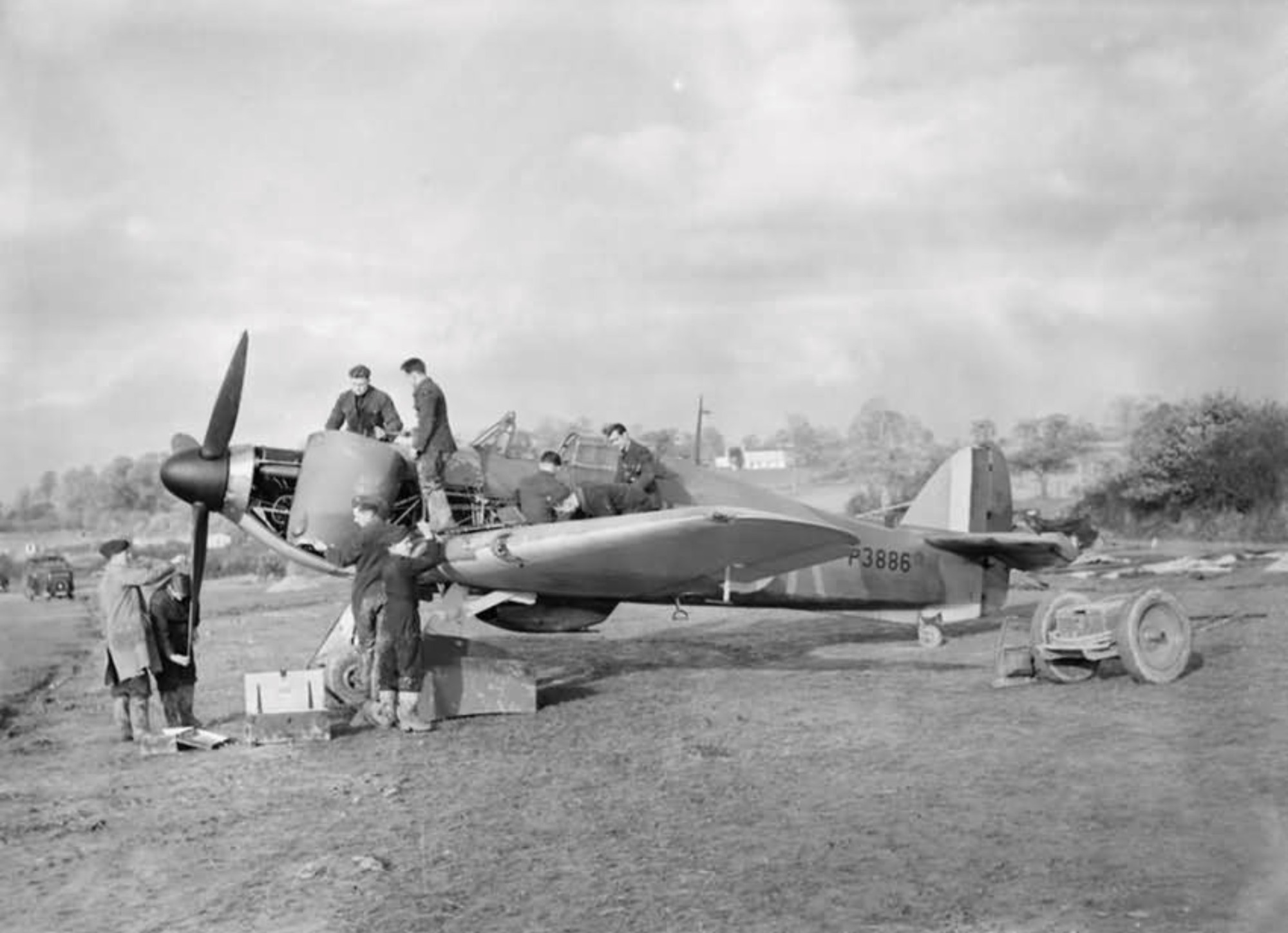
Also serving at Exeter were No.601 (County of London) Squadron - Auxiliary Air Force from 7 September 1940 equipped with Hawker Hurricane MK1s. On 21 September 1940, during the Battle of Britain, the first Polish pilot to be killed flying from the now named RAF Exeter was a member of No. 601 Squadron, F/O J Topolnicki. He was one of 143 Polish pilots who flew in the battle.
An RAF Station Flight existed at Exeter although from what commencement date is uncertain. The Flight consisted of a variety of aircraft including, Dominie, Oxford, Martinet, Master, Proctor, Spitfire, Courier, and Magister. They were mainly used for training or ferrying purposes.
601 Squadron
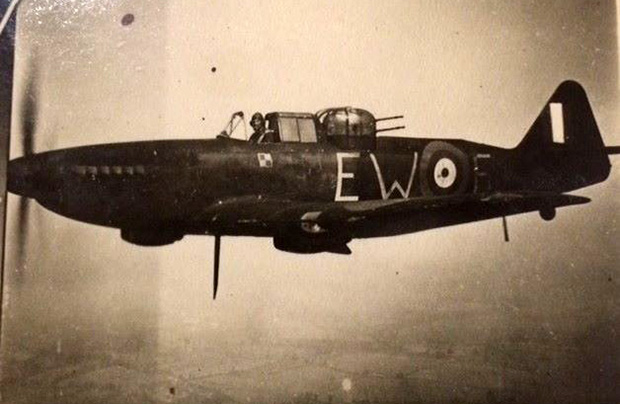
On the 26 April 1941, No. 307 Squadron, equipped with Boulton Paul Defiants, arrived at RAF Exeter from Colerne near Bath. These aircraft were fitted with a rear facing gun turret and required a crew of two. The squadron operated in a night fighter role. During August, the under-powered and cumbersome Defiants were eventually replaced by the twin-engine Beaufighter Mk IIFs, which by the end of 1941, had been upgraded to the faster MkVI.
Note: A more detailed account of each of RAF Exeter Squadrons is provided on individual pages following this one.
In 1942, the 09-27 runway was extended in length to 6,000 ft in a general upgrading. In the early years, the airfield had gained nineteen small, fighter-type pan hard standings and fourteen double fighter pens. Nine concrete loops were added on the northern side of the airfield early in 1944. Hangars, gathered over the years, were one Hinaida, six Over Blisters and four Extra Over Blisters.
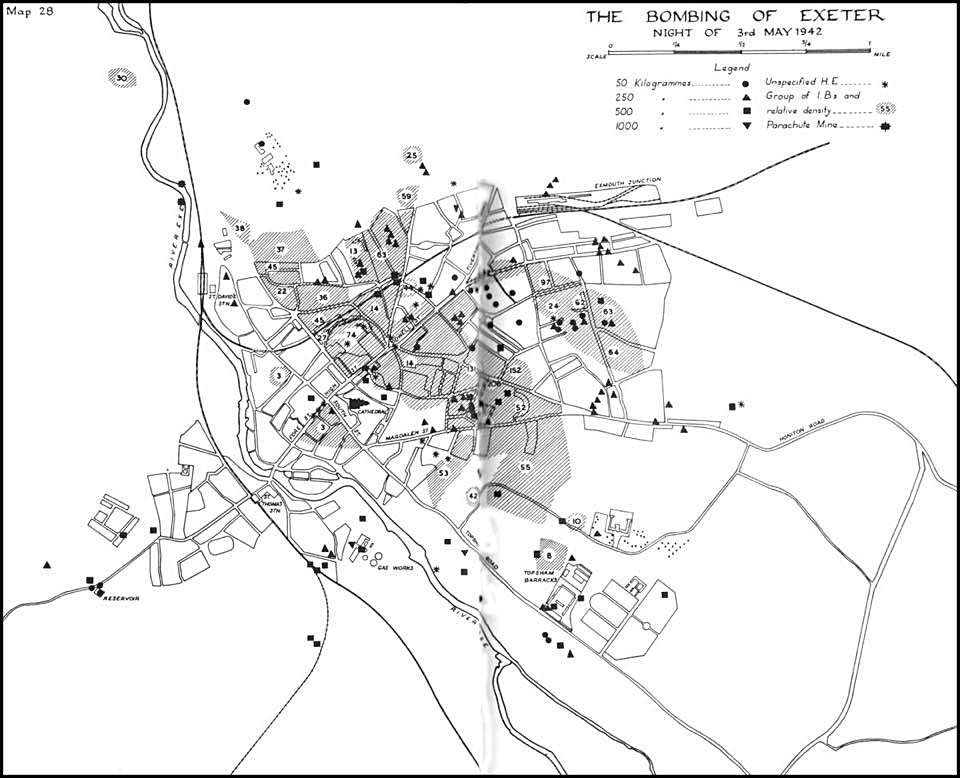
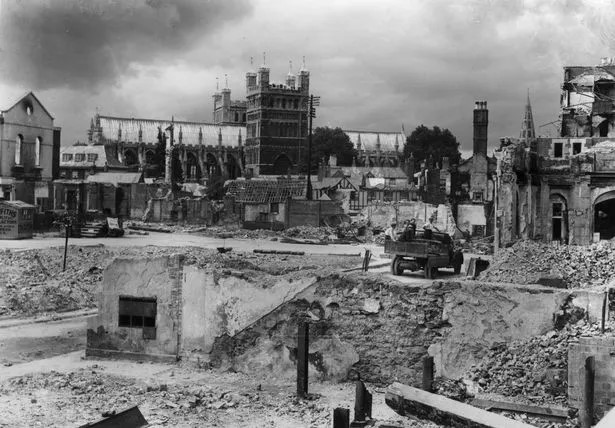
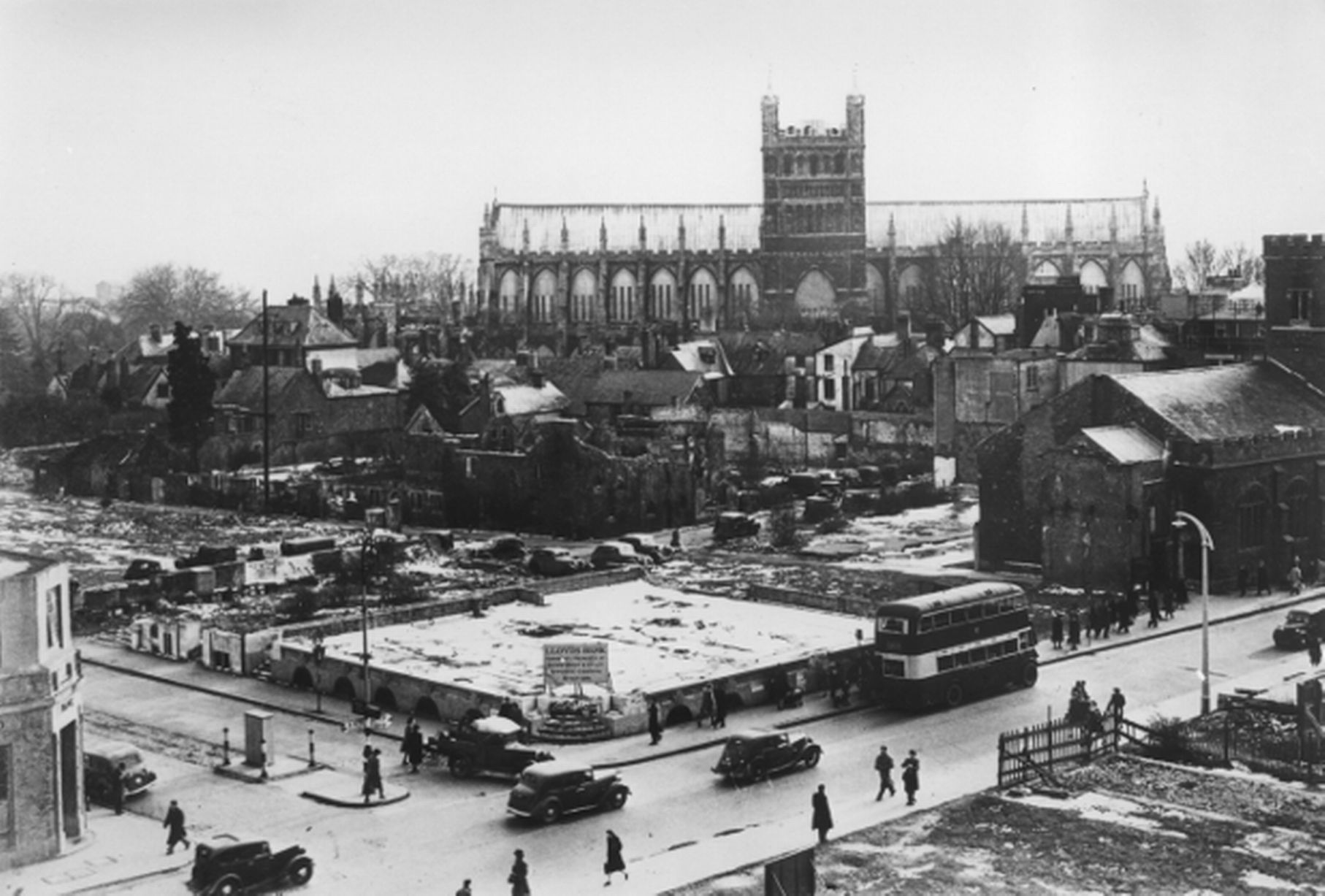
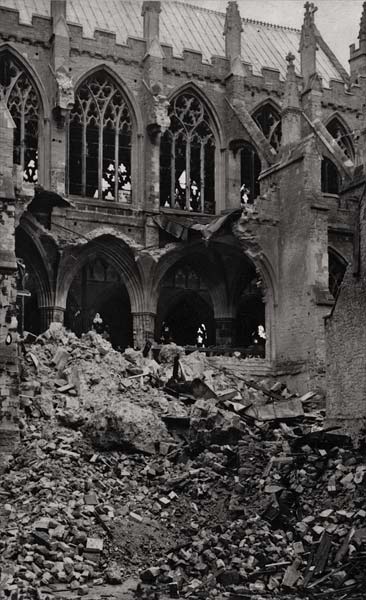
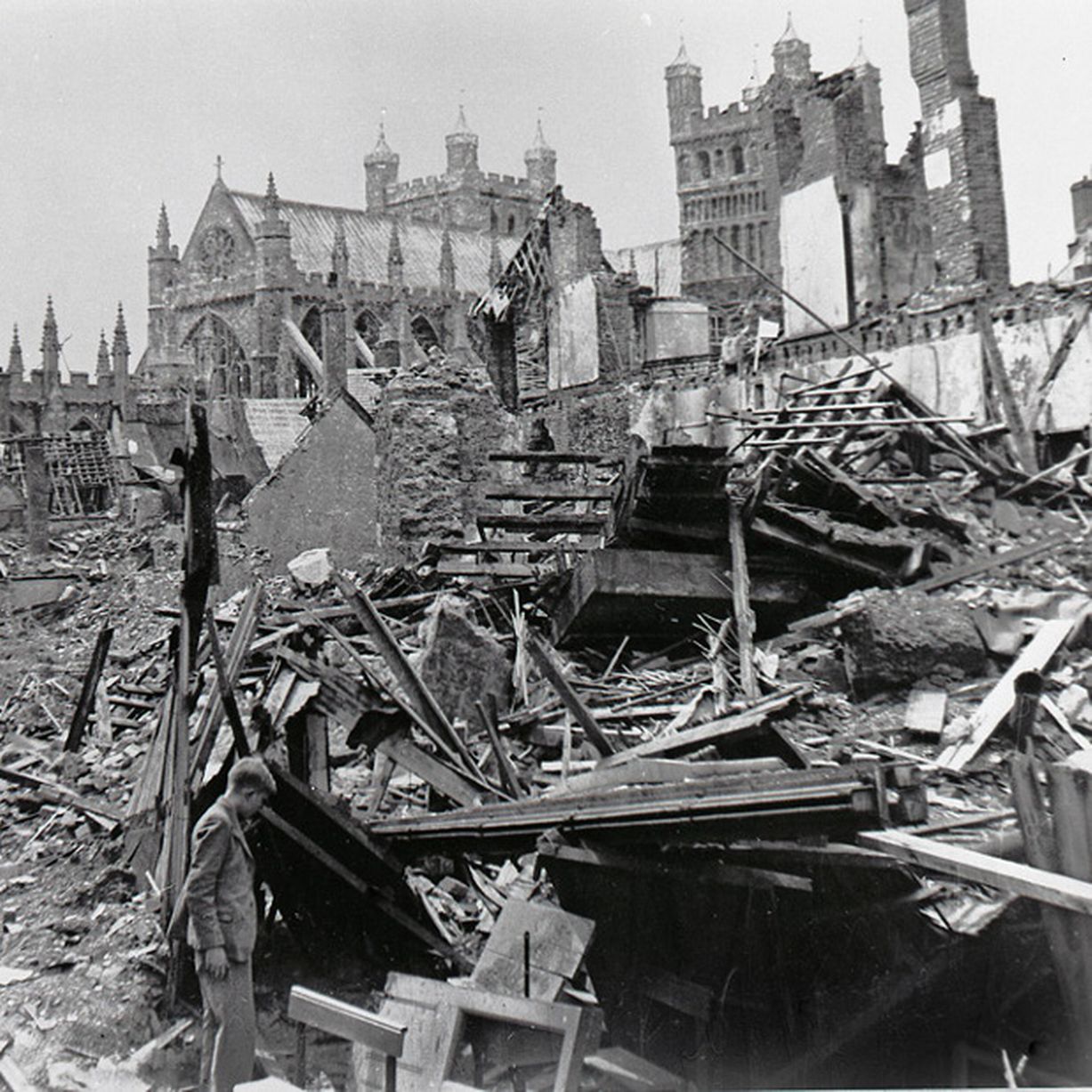
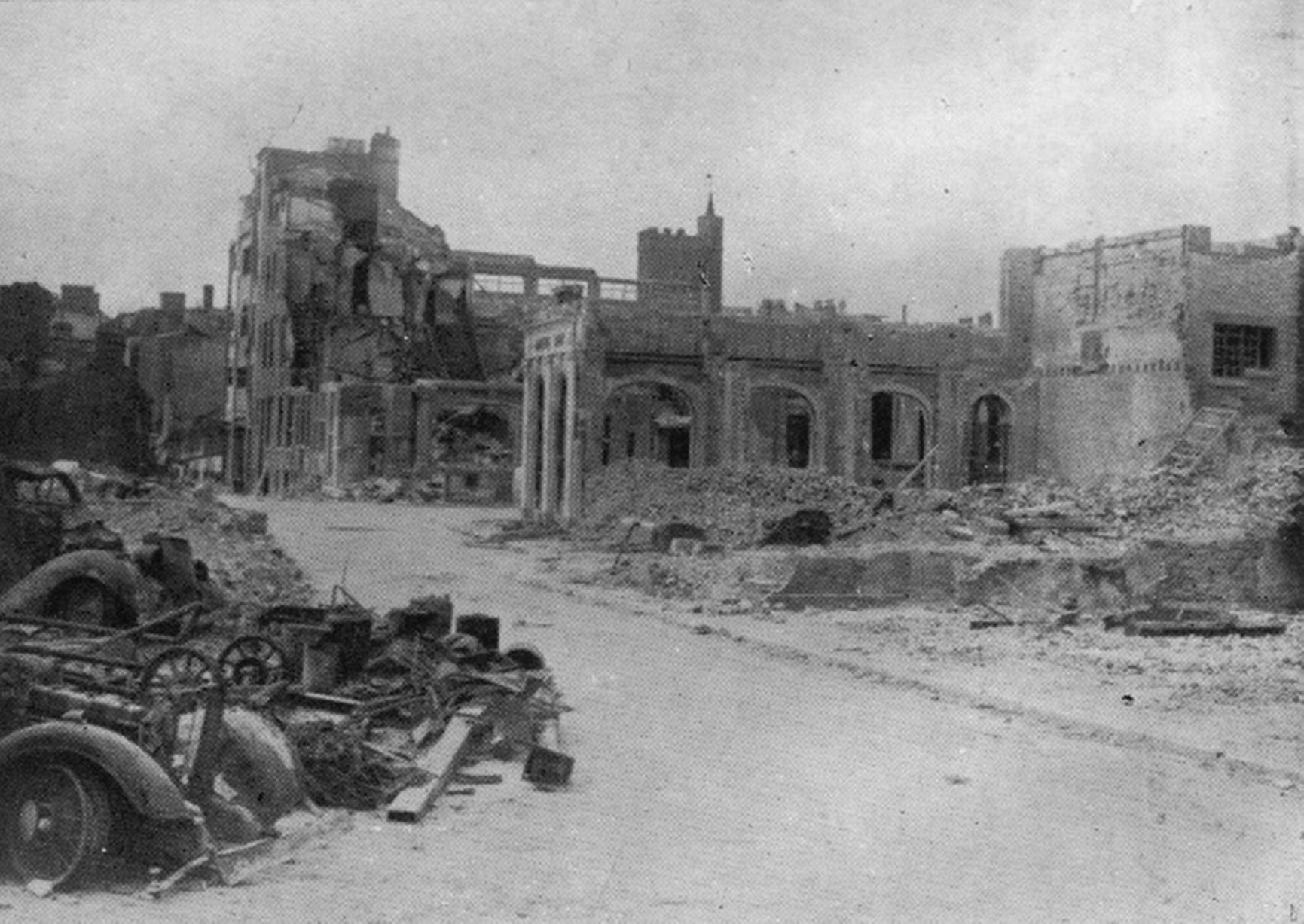
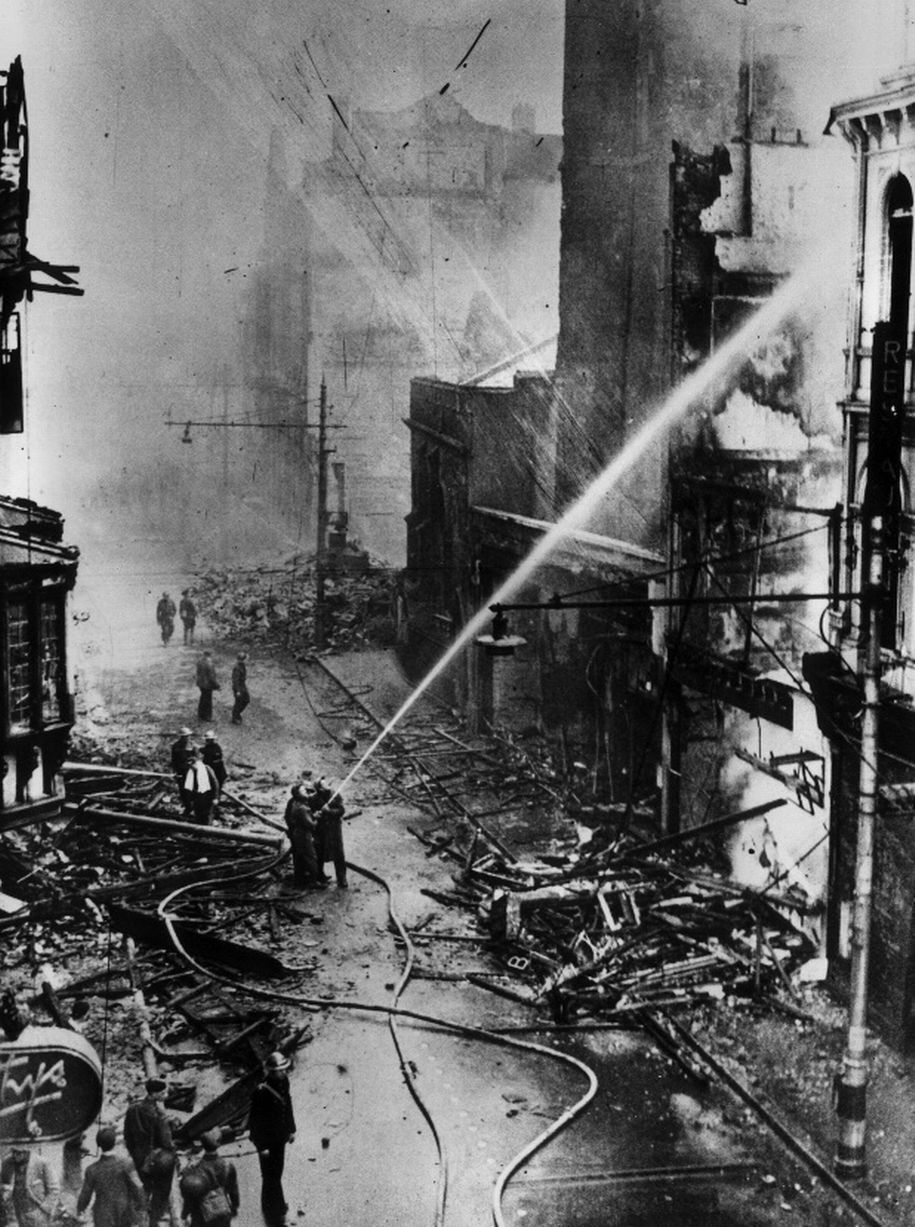
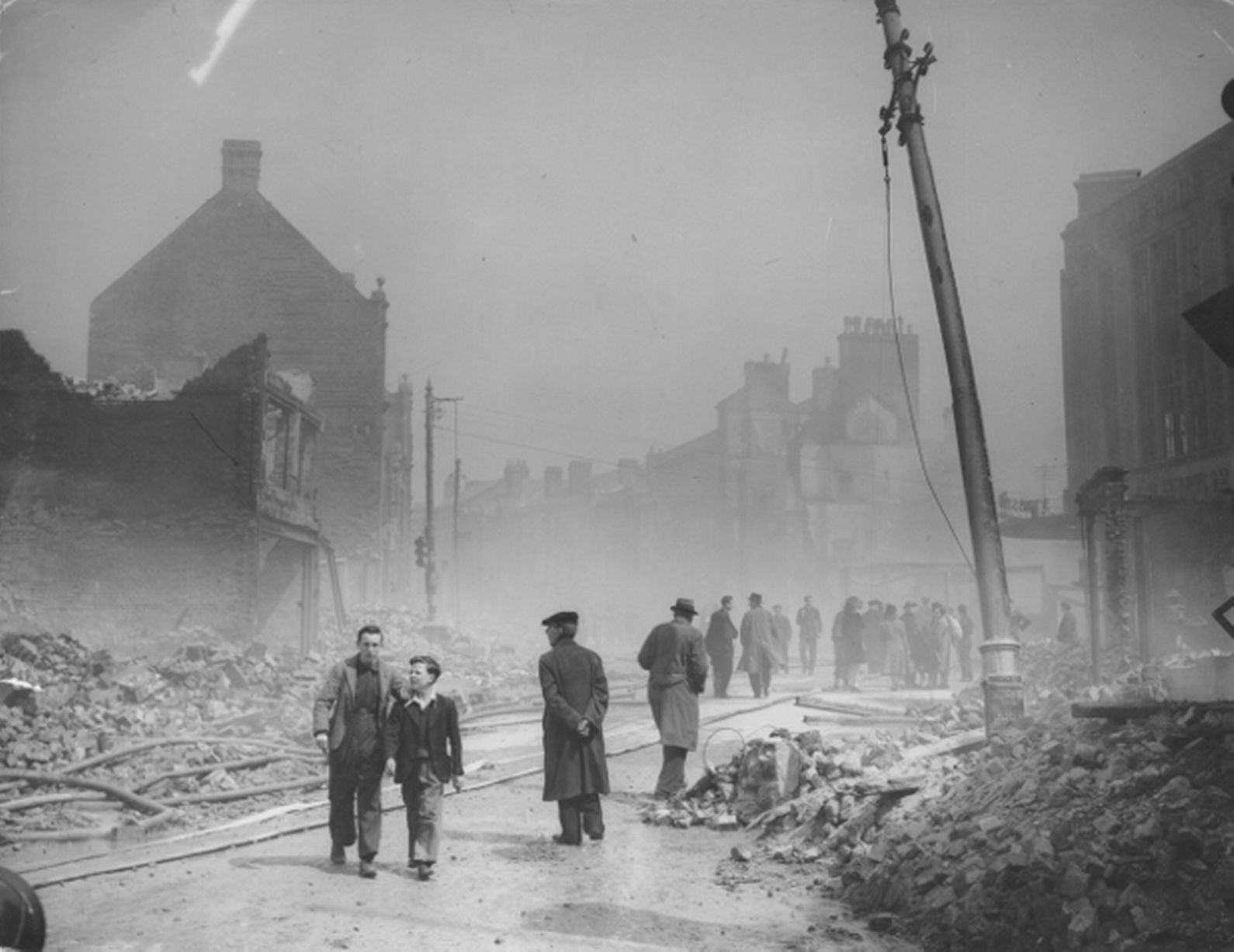
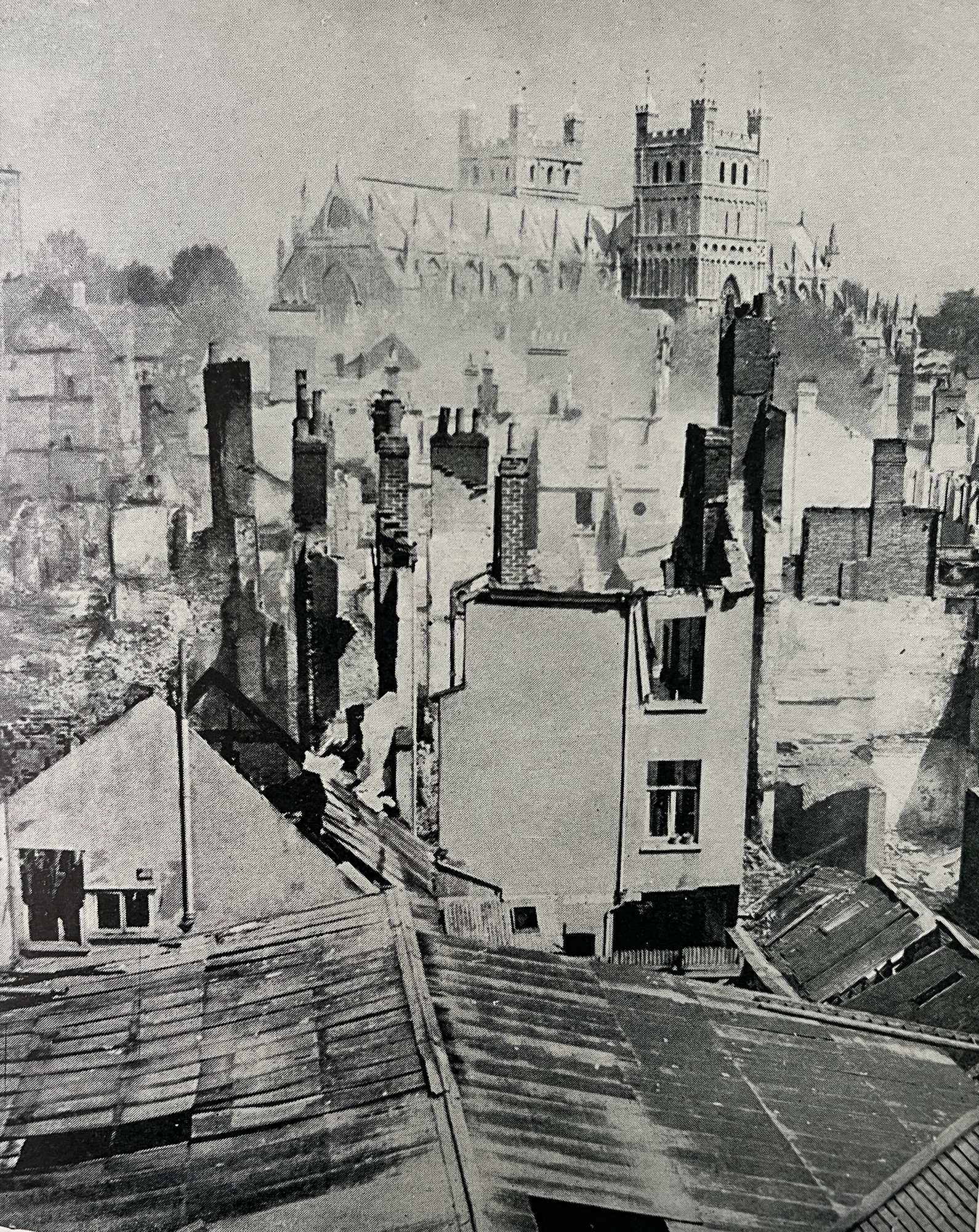
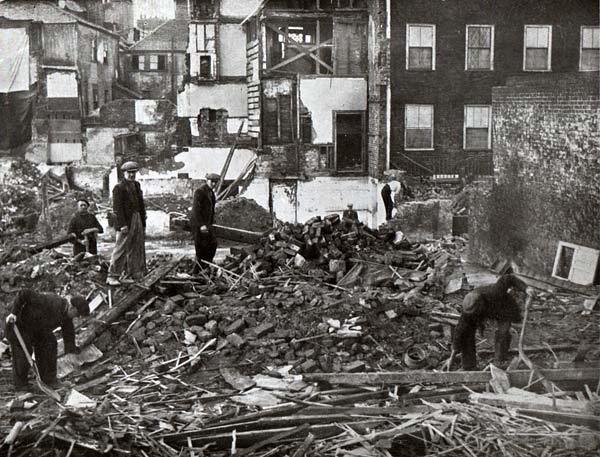
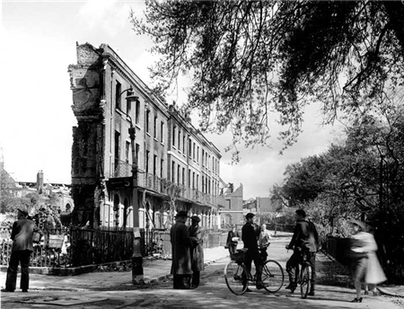
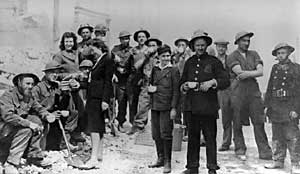
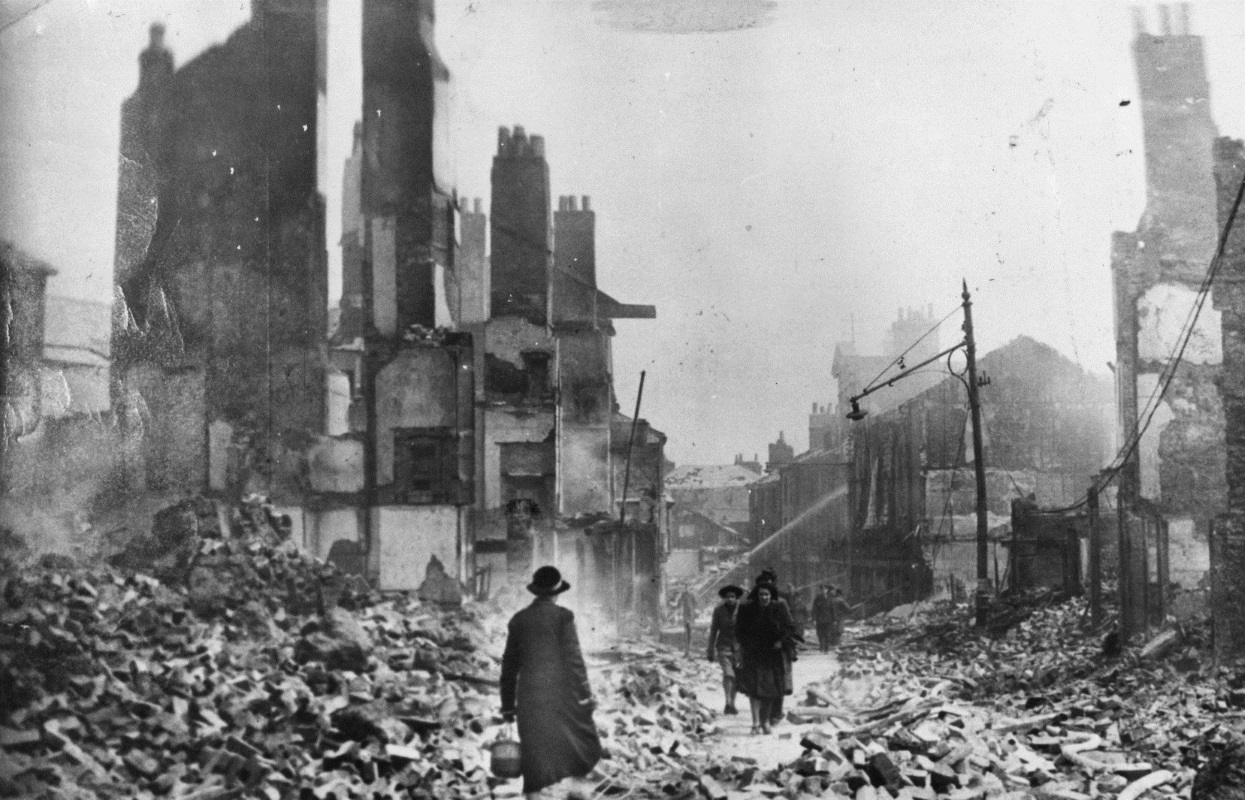
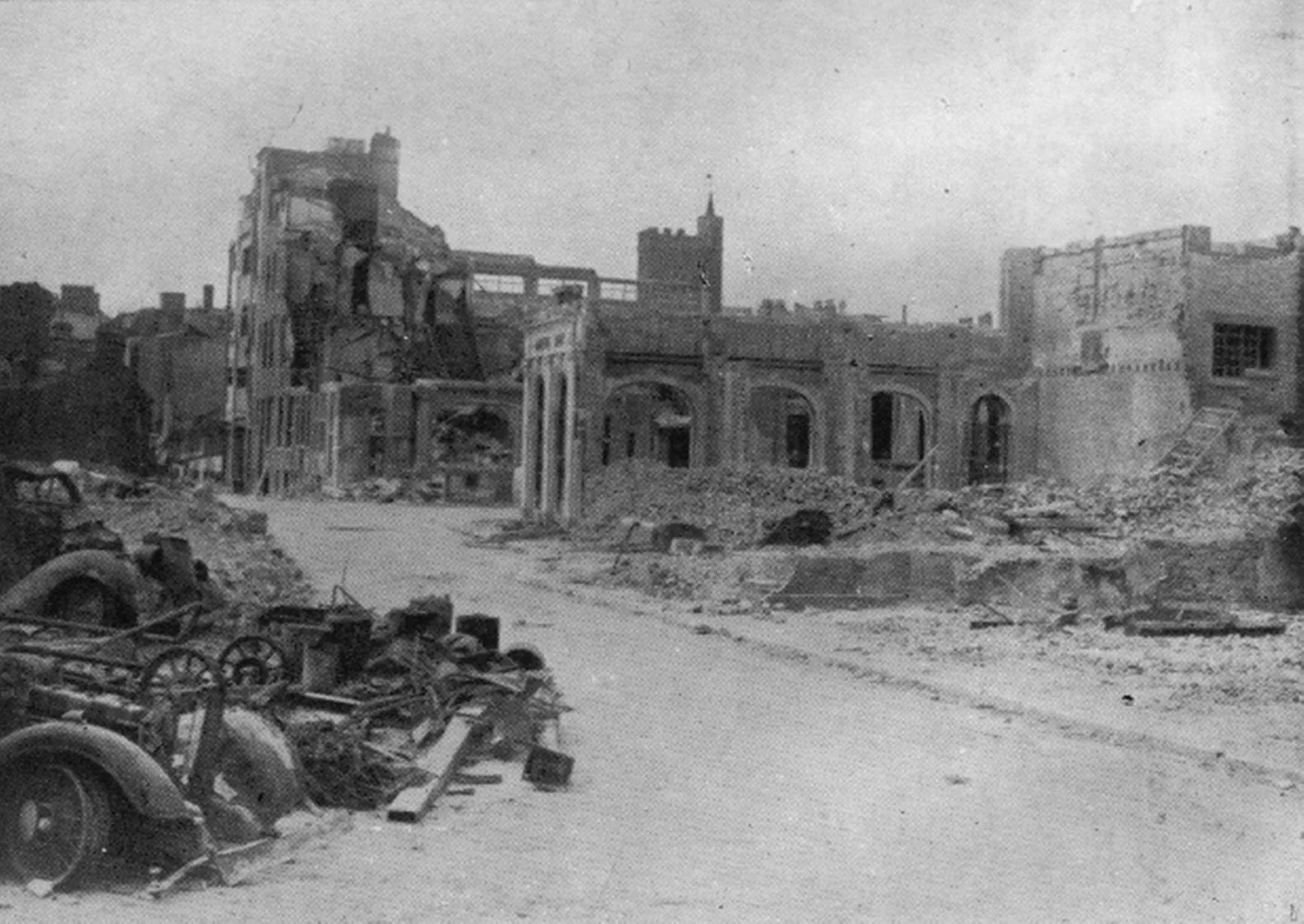
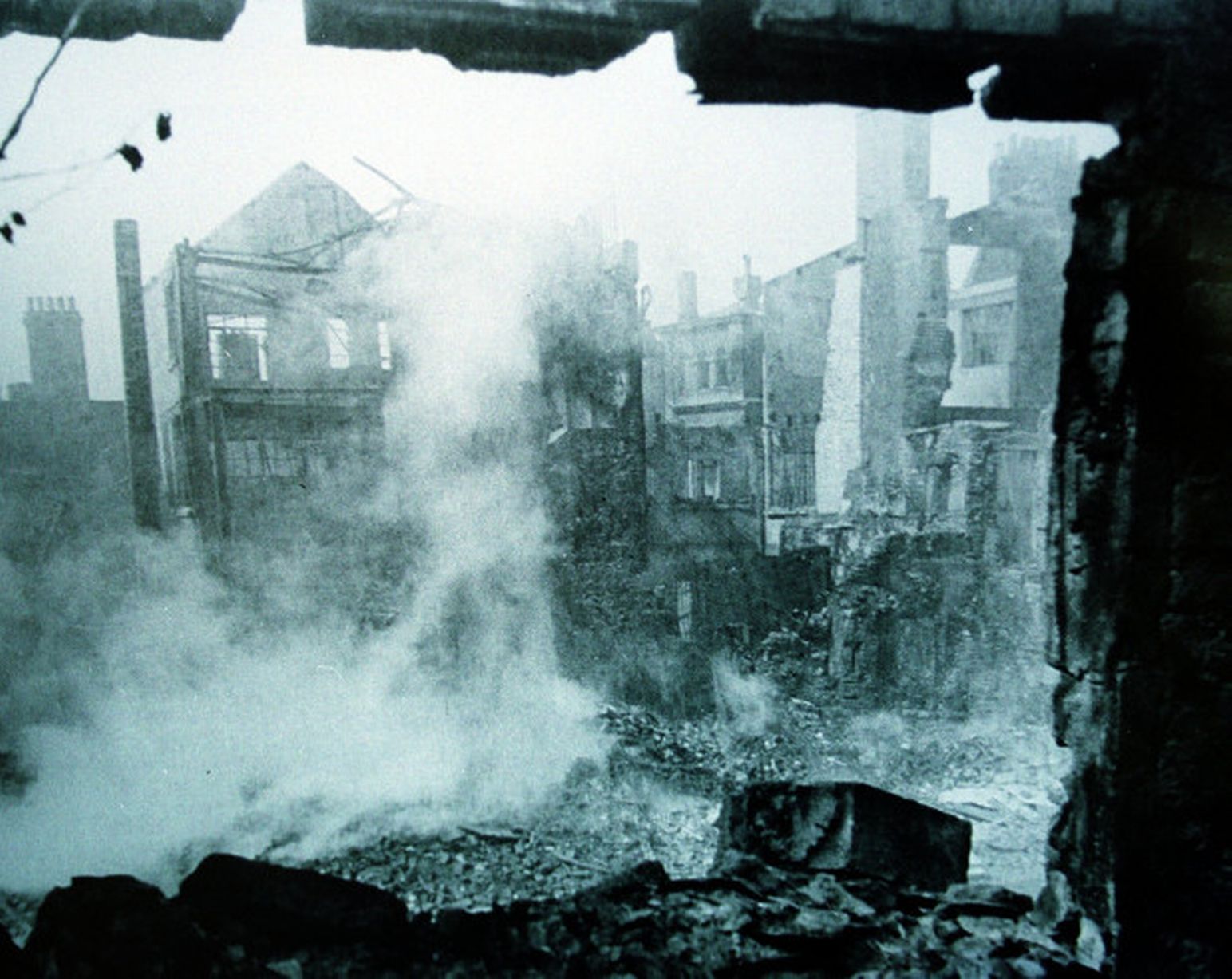
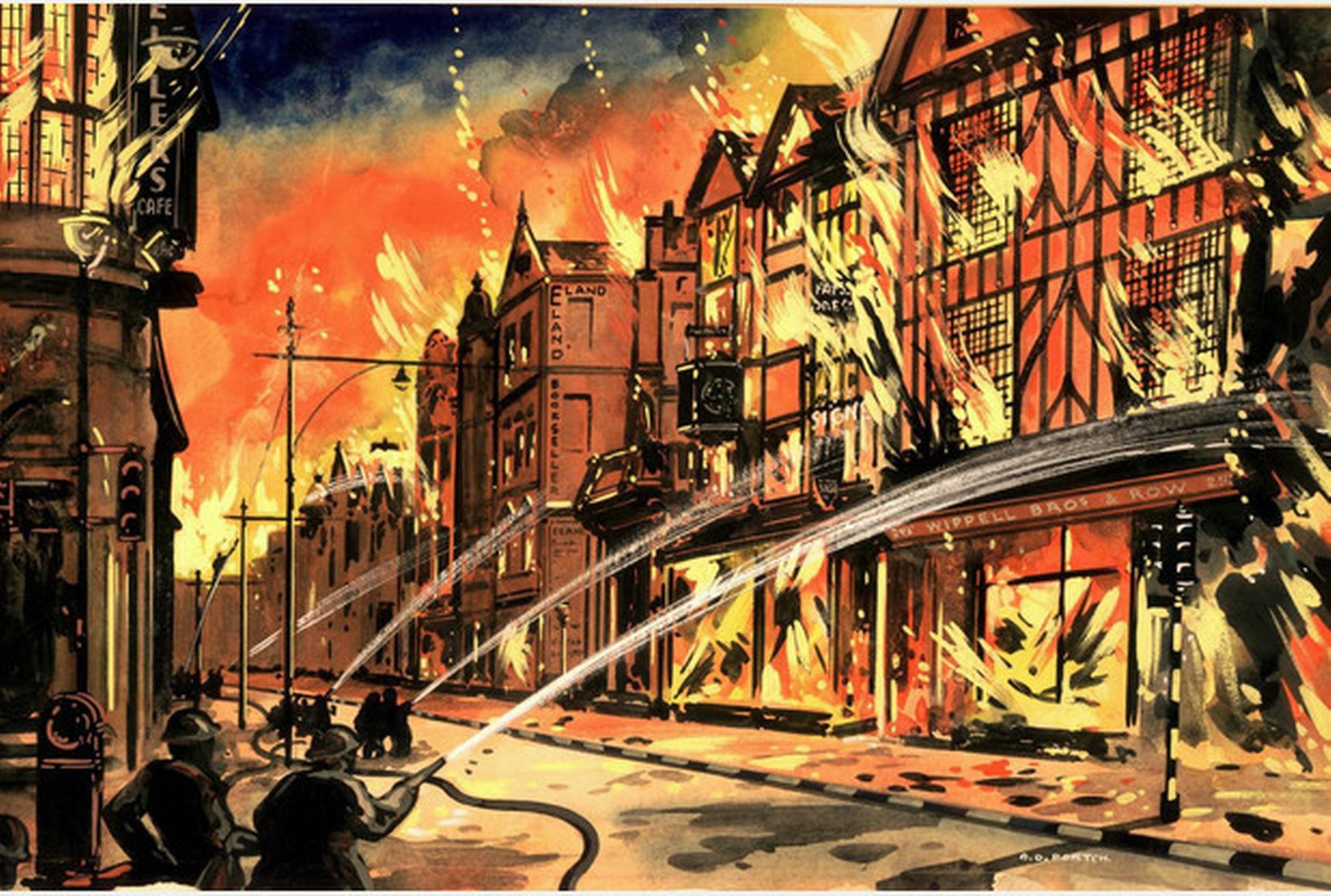
The Exeter Blitz was devasting for the city of Exeter during May 1942, but it could have been much worse with even the prospect of total city devastation. It was the Polish pilots of No.307 Squadron who contributed to saving our city by getting aloft with just four Bristol Beaufighters. The German bombers which totalled forty aircraft were soon stopped due to the heroic Polish airmen efforts. No.307 Squadron remained at Exeter until April 1943, having had their Beaufighters replaced with the amazing Mosquito Mk IIFs.
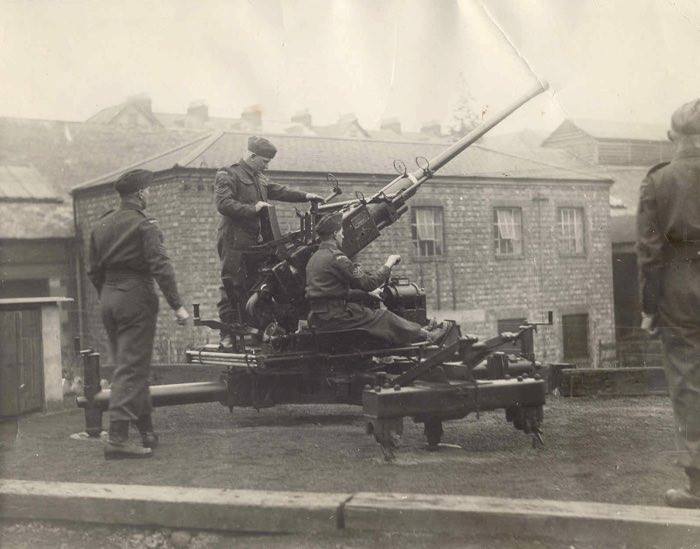
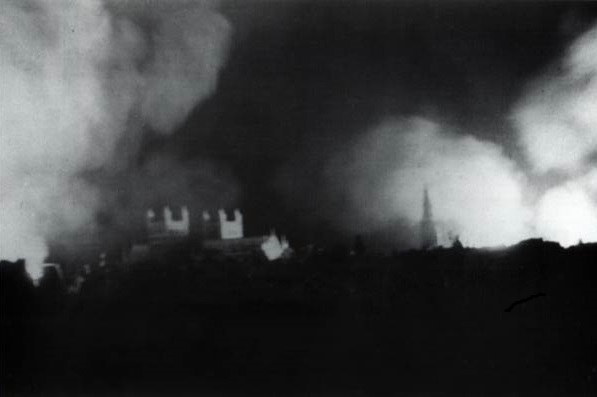
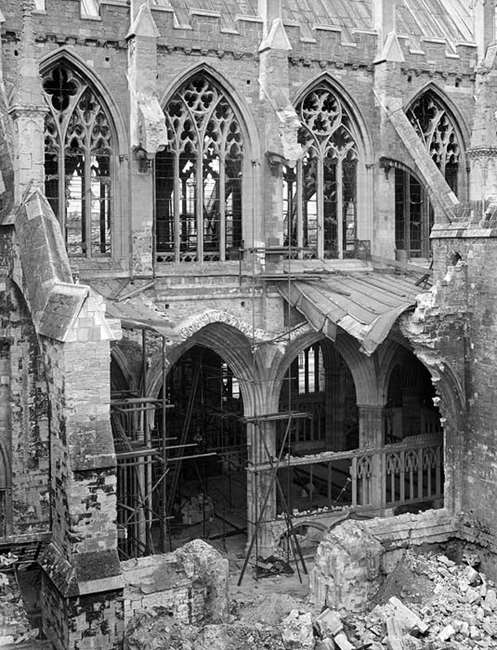
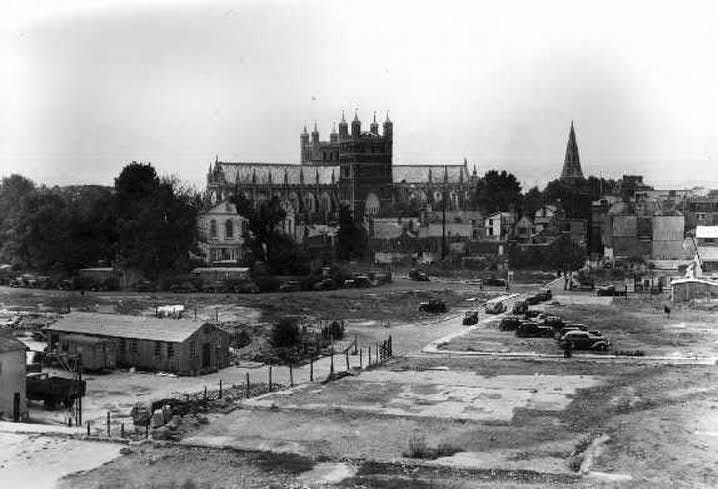
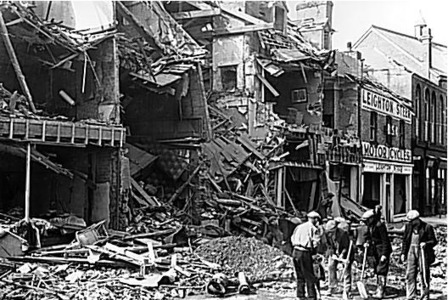
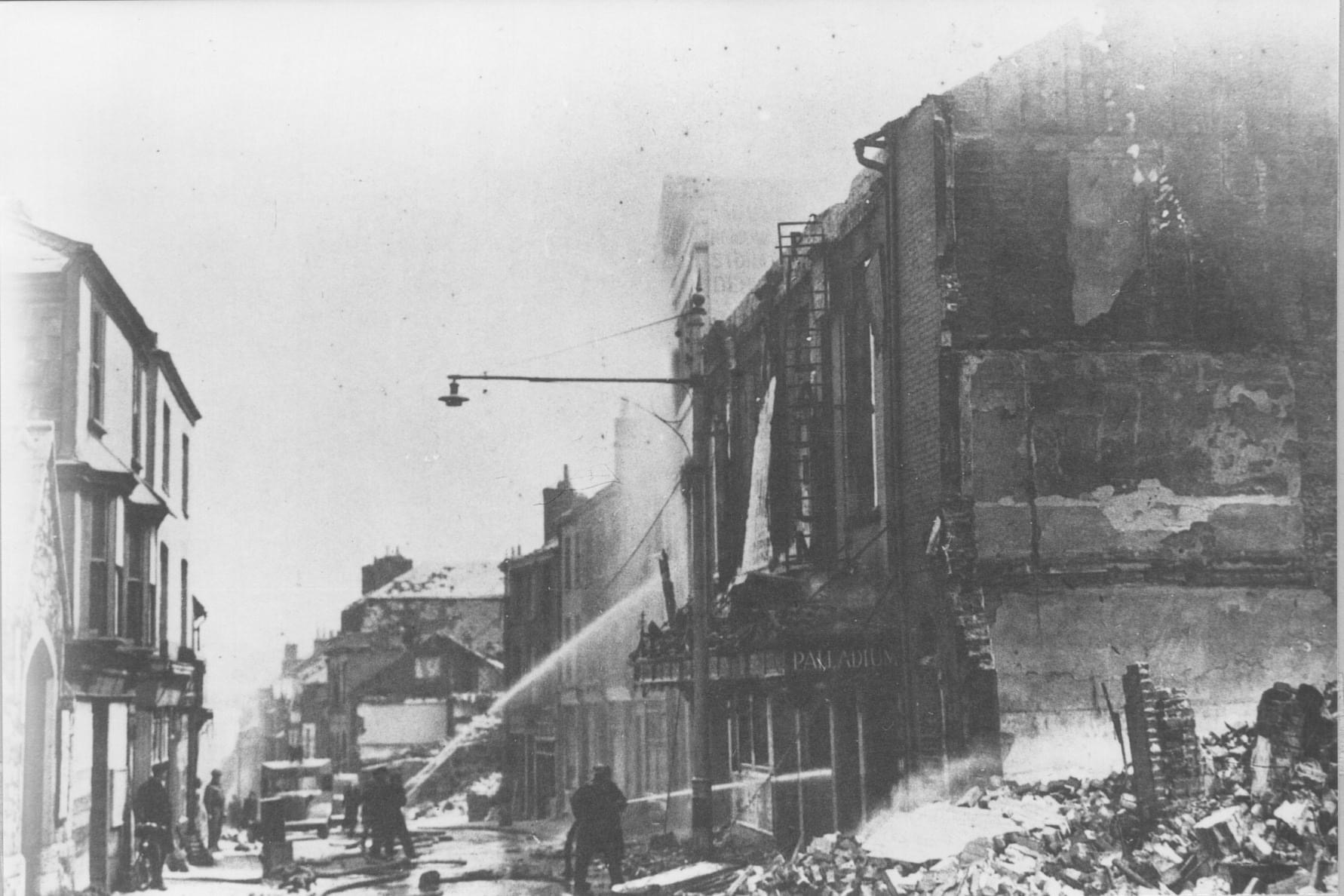
RAF Exeter had a secondary role to play other than a base for Fighter Command. Very often crippled Bombers returning from missions would divert into RAF Exeter for repairs and general maintenance. During 1942 for instance, crippled Blenheims, Wellingtons and Whitleys would often arrive in all sorts of bother and with injuries to crews. As Bombers increased in size they also were often seen arriving and departing from Exeter. Halifax, Wellingtons and Lancaster Bombers have all visited at some stage particularly towards the end of the War.
RAF Exeter was beginning to see a variety of aircraft based at Clyst Honiton with Hurricanes, Boulton Paul Defiants, Bristol Beaufighters, Spitfires, Whirlwinds and later in 1943 with Mosquito’s.
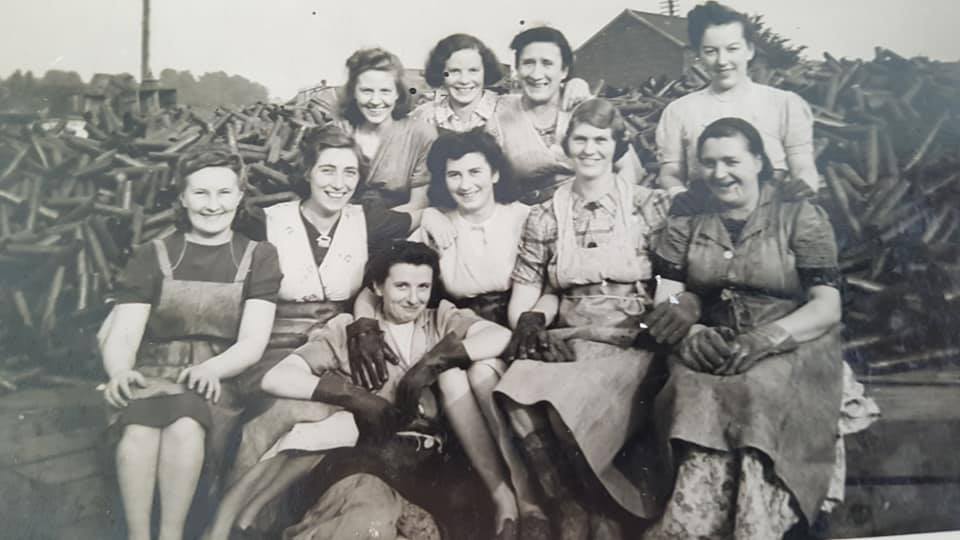
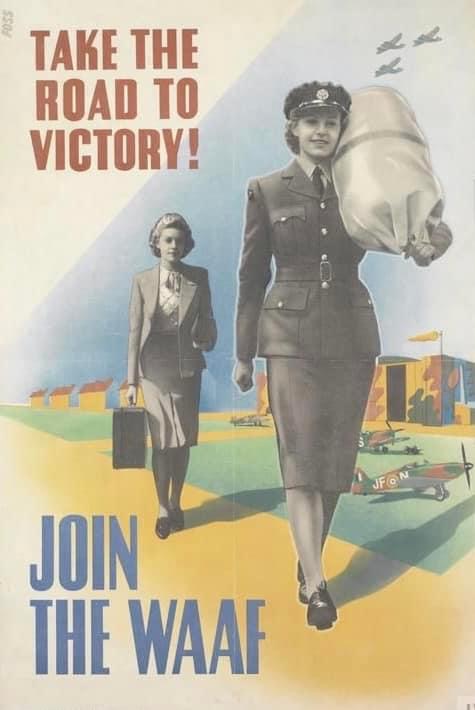
The Women’s Auxiliary Air Force (WAAF) Squadron were also stationed at RAF Exeter during this time. Many were stationed there as Operations’ Room Plotters, based at Poltimore, near the Northern side of the airfield. This role required the WAAFs to have studied and taken exams.
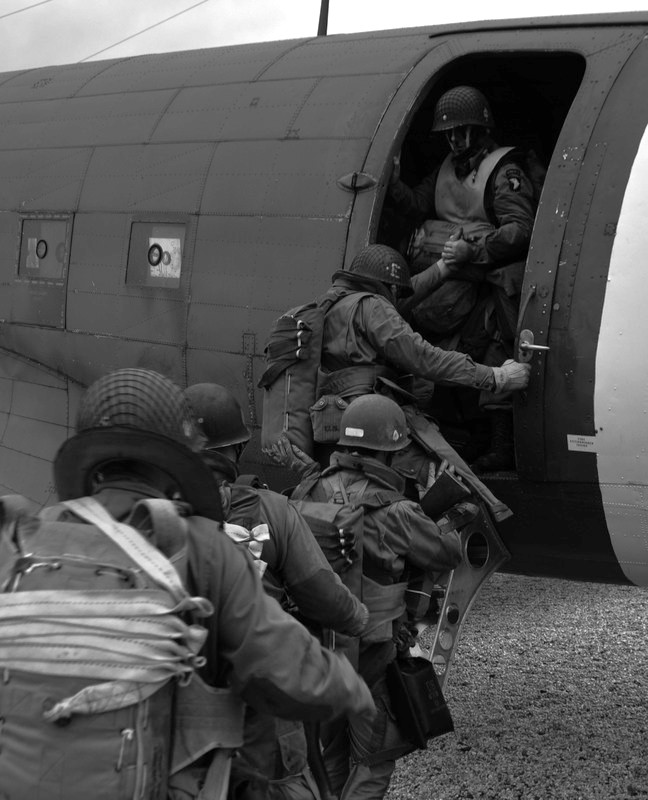
As preparations were being made for D-Day in 1944 several units were moved out of RAF Exeter to make way for the Americans. The airfield became known as Station 463 of the USAAF and was soon home to Hadrian gliders and Dakota C47 Skytrain aircraft busy training for the big day. USAAF troop carrier group the 101st Airborne Division were deployed from Exeter along with the, 95th, 98th and the 440th troop carrier groups. The Troop Carrier aircraft Squadrons at RAF Exeter were applied with freshly painted black and white invasion stripes to aid in aircraft identification from the ground. There was insufficient space to park all the aircraft on the concrete, so many were parked on grass turf.
The 5 June 1944 was a very busy day for RAF Exeter as masses of C47s, gliders and other support aircraft such as Avro Ansons took flight heading for France for the 6 June 1944, D-Day invasion. Once the allied invasion forces had managed to establish themselves ashore in Normandy, C47 aircraft continued to ferry supplies over from Exeter.
The 98th Troop Carrier Group remained at Exeter until 7 August 1944. RAF Exeter was used frequently after the Allied Invasion to ferry wounded soldiers back to England and onto hospitals.
To mark VE day a formation of Oxfords, Spitfires and Vengeances flew over Ottery St Mary, Honiton and Axminster, this was recalled by Mr Michael Payne who was at that time an Air Cadet and was lucky enough to be a passenger in one of the planes taking part.
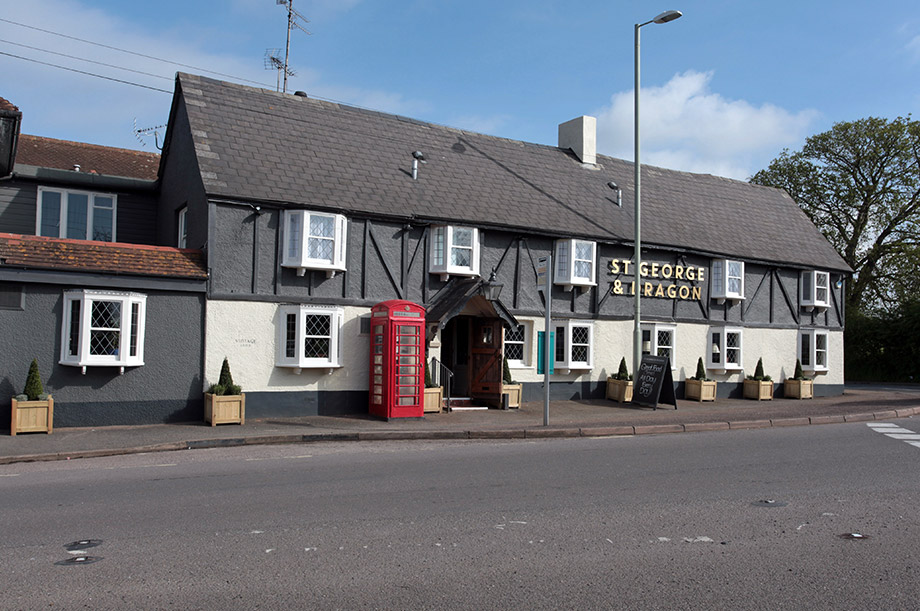
Several properties played a vital role in supporting the war effort such as the regular drinking establishments like the St George and Dragon public house, Clyst St George near Exeter. Although the hotel only had fourteen rooms available, 39 RAF Service personnel were billeted there. A RAF Hawker Hurricane attempted a low flyby of the hotel/pub and struck the roof causing damage to the roof and chimney. Sadly, the pilot was killed and the aircraft was destroyed. Once repairs had been carried out the pilots from RAF Exeter returned and started to the sign the ceiling as a mark of respect. The landlord at that time was a Mr William Lobb. Sadly, following the war and after a refurbishment, the ceiling was taken down and put into a skip. Some sections were rescued and taken to the Royal Air Force Association (RAFA) Exmouth for storage. Most of the ceiling tiles were fairly warn with some signatures barely visible due to the bar’s cigarette smoke. A brilliant website that has a complete list of those signatures along with photos of the tiles is RAF Exeter Archive. The link to the website can be found on the Links/Acknowledgements Page.
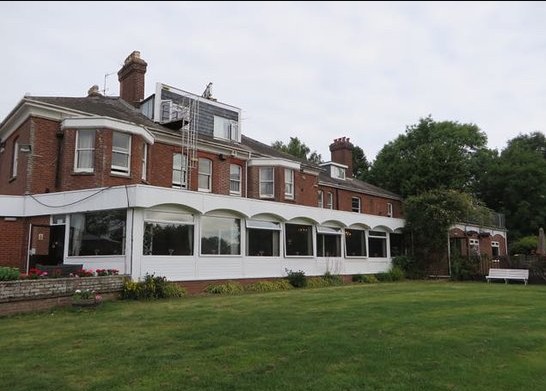
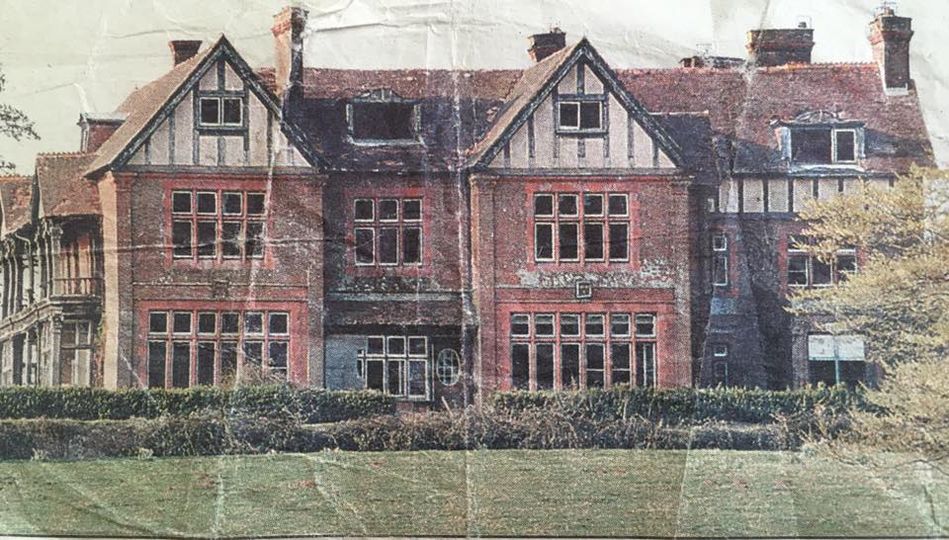
Redhayes House which is located on the left just beyond Junction 29 of the M5/A30, also billeted airmen from RAF Exeter and was used as an HQ for Czech and Polish Fighter Wings from 1941 to 1943. Again, far enough away from the airfield to hopefully avoid any German Air Raids. The USAAF also used Redhayes as HQ in 1944 for the 50th Troop Carrier Wing of the 441st.
The Gypsy Hill Hotel, Pinhoe also billeted Allied service personnel so that they were away from RAF Exeter in the event of German bombing raids.
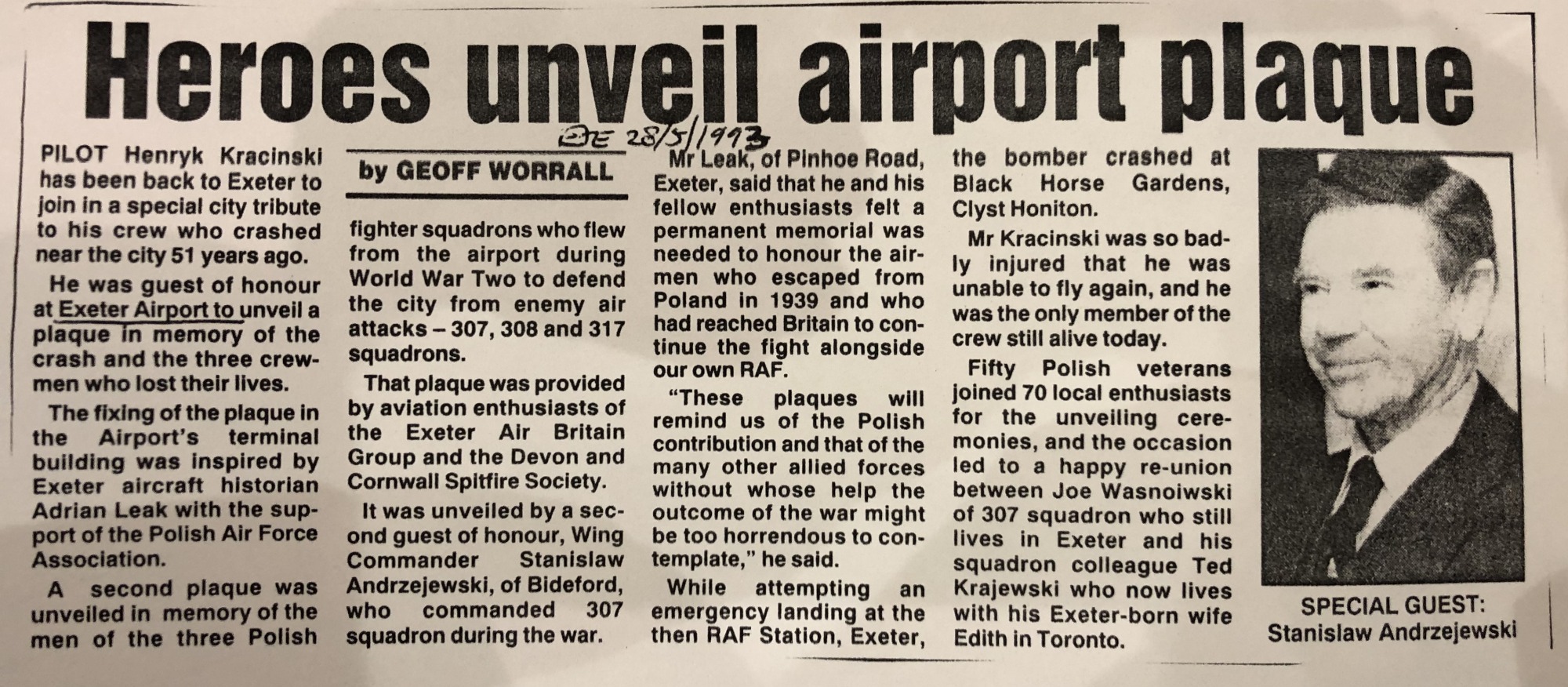
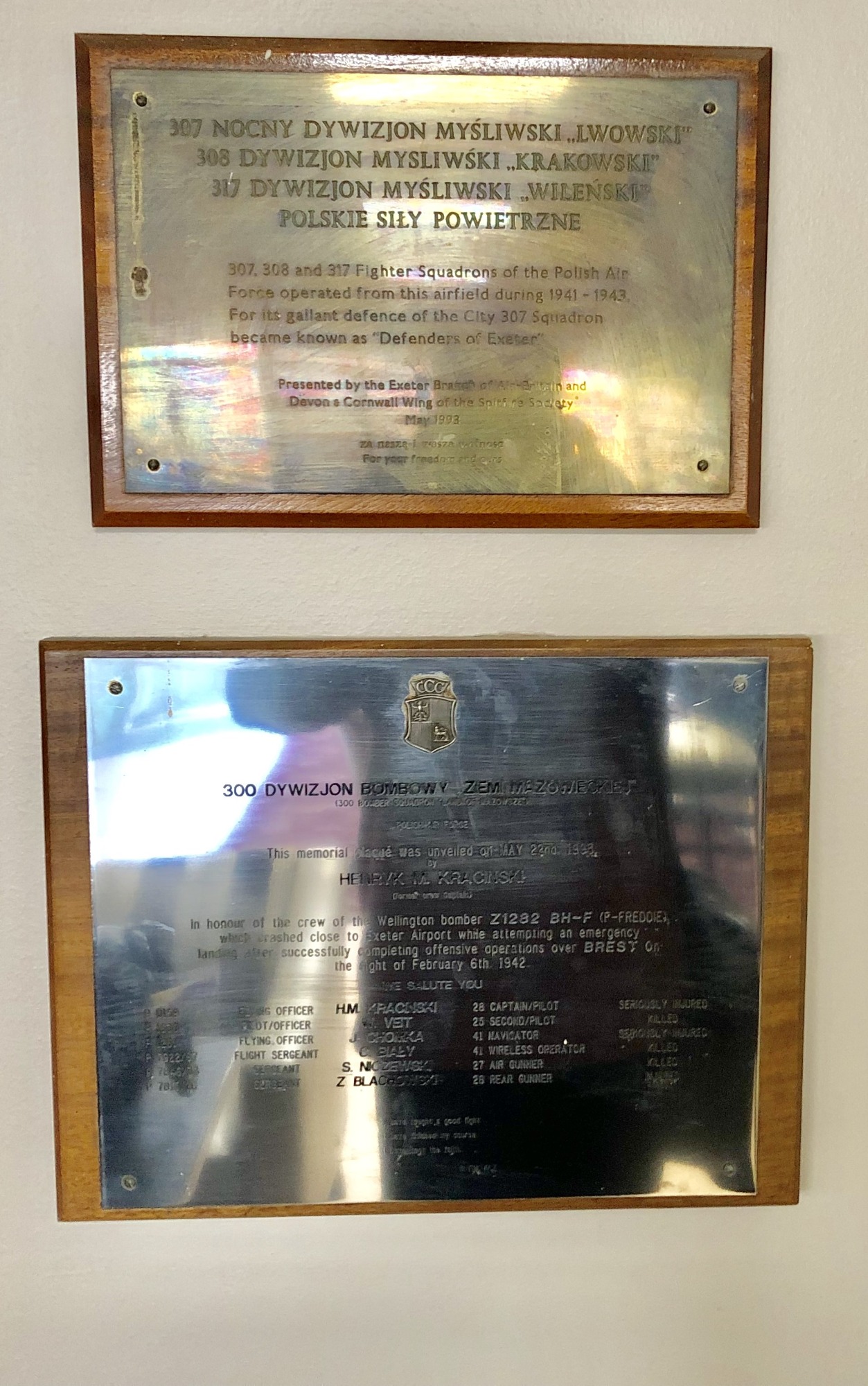
On the night of 6 February 1942, a Wellington Bomber from Lincolnshire, Z1282, BH-F (F - FREDDIE), after successfully completing offensive operations over Brest, attempted a forced landing at RAF Exeter. Sadly, it came down short of runway 09 and crashed at Blackhorse Gardens. Of the five crew members sadly two died, three were injured with two having serious injuries. In honour of his crew members Flying Officer and Captain that night, Henryk M Kracinski unveiled a memorial plaque upstairs next to the bar in the airport terminal building in 1993.
A second plaque was unveiled at the same location in 1993 in recognition of the Polish Squadrons who served at RAF Exeter. This plaque was presented by the Exeter Branch of Air Britain and the Devon and Cornwall wing of the Spitfire Society. The Polish Squadrons represented were 307, 308, and 317.
Towards the latter stages of the war RAF Exeter was the home for No. 3 Gliding Training School which was one of the largest units to have served at the base. No. 84 Gliding Training School also existed at Haldon Moor from August 1944 but was disbanded in 1955 at Exeter due to the formation of No. 624 Gliding School. Various Glider types operated including the Cadet TX.1, TX.2, TX.3 and Sedbergh TX.1
The Commonwealth War Graves Commission tends to the World War graves and memorials in the Exeter Higher Cemetery. The Second World War plot contains most of the 121 Second World War burials. The rest of the graves are scattered throughout the cemetery. The Second World War plot also contains sixty-two war graves of other nationalities, most of them Polish and German.
Post war the station was made available for civil use, being officially transferred to the Ministry of Civil Aviation on 1 January 1947, although there was still some reserve RAF activity until the 1950s.
The Civilian Anti- Aircraft Co-operation Unit often referred to as the CAACU was formed in March 1951 for target towing, testing and instrument calibration for the RAF, Army and Navy.
Scheduled services to the Channel Islands began in 1952 with Jersey Airlines although this was not the same organisation that operated pre- war. It was however the first airline to operate from the airport after the end of the hostilities.
The Exeter Aero Club returned making use of an area of the terminal building as a clubhouse. Ministry approved courses for both the private pilots and for flying instructors were readily available. Most of the members were ex-military personnel from the wartime period.
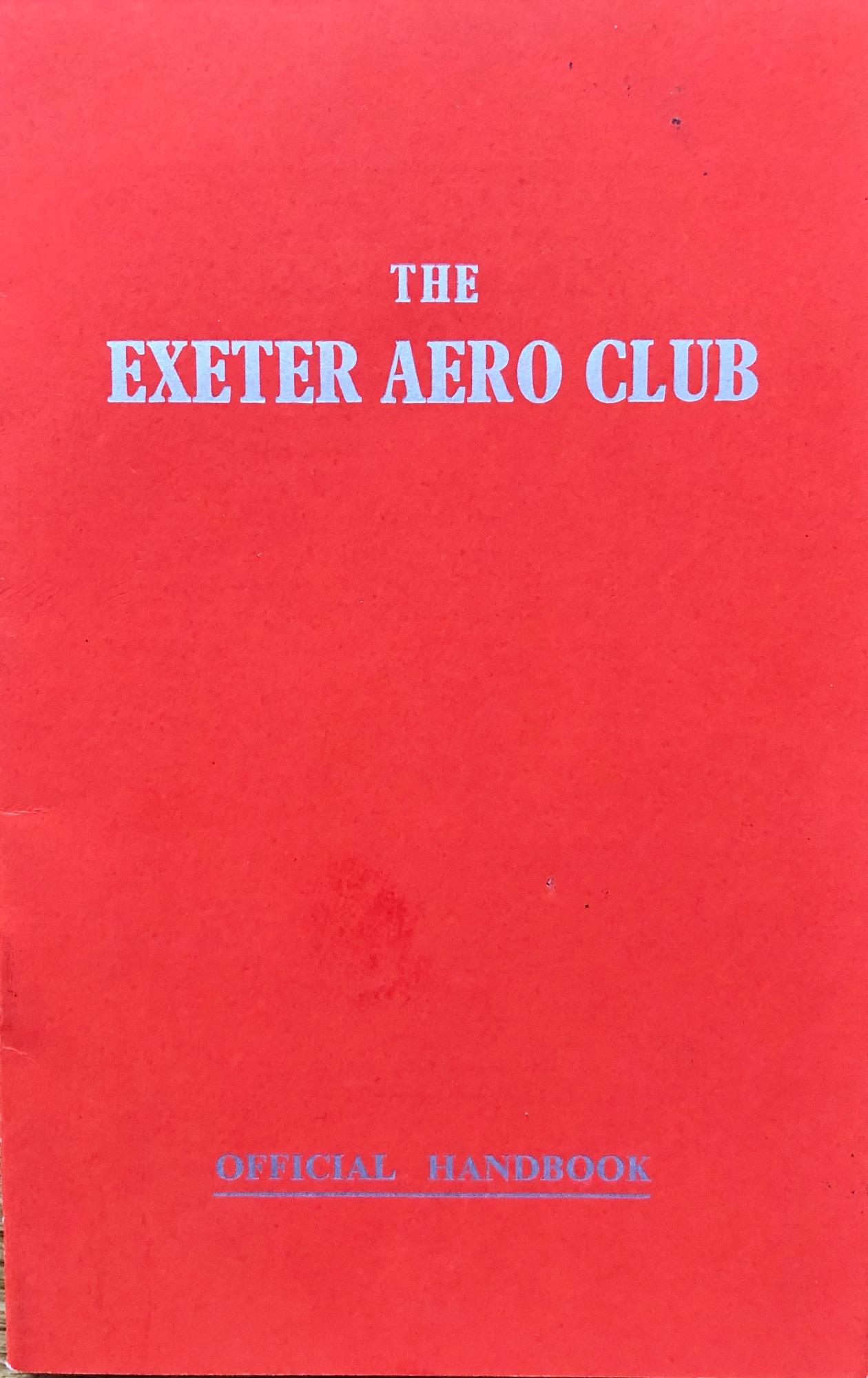
Annual summer air displays were a regular feature at the airport organised mainly by the Royal Air Forces Association (RAFA) between 1958 and 1983. Private organisations ran some between 1984 and 1989 which was the last ever full air display at Exeter.
In 1958 the Ministry of Defence (Air) acquired the airport from Exeter City Council and on 7 October 1964 Air Holdings Ltd took over Exeter Airport Ltd and operated the airport on a long term lease from the Ministry of Defence (Air). The airport was eventually sold by MoD to a consortium of Devon County Council, Exeter City Council, and Torbay Council in April 1972. After a local Government reorganisation had taken place in 1974, the airport was taken over by the “new” Devon County Council.
Exeter International Airport was owned by Devon County Council from 1974 and managed by Exeter and Devon Airport Limited (EDAL); a limited company wholly owned by Devon County Council.
By 1984, the 450 acre site owned by DCC had been managed by British Airports International Ltd until November 1987 when the company changed its name to Airports UK Ltd, a subsidiary of the British Airports Authority. Three other airports were also managed by Airports UK, namely Biggin Hill, Southampton and Southend. The company provided commercial operations, maintenance facilities, planning, ground services as well as finance and administration services. A new terminal building was opened in the early 1980s, and various other improvements, including a runway extension, were carried out over the following years to establish Exeter as an important airport in the West Country.
The operator from 1991 has been Exeter & Devon Airport Ltd.
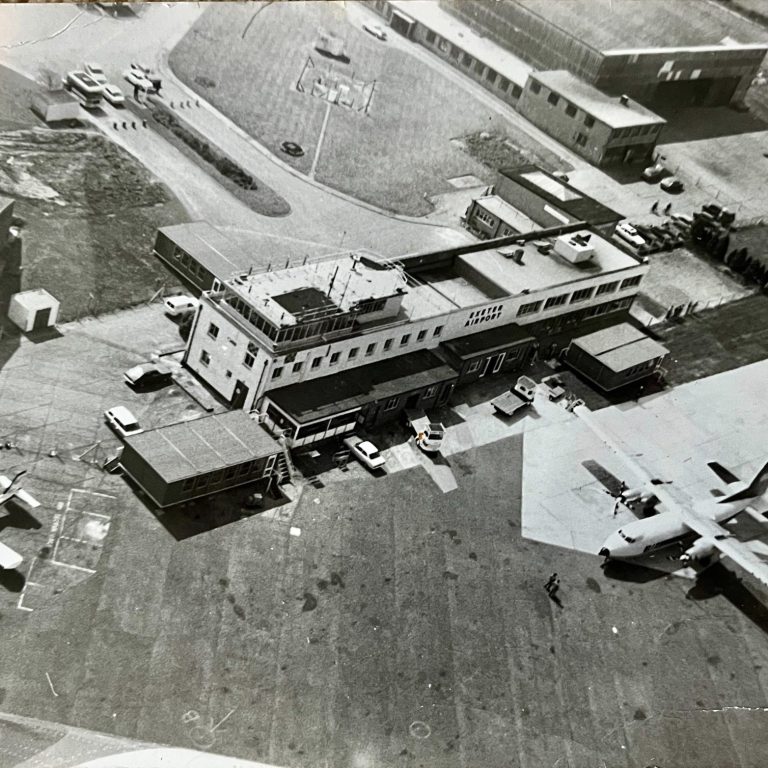
Exeter Airport celebrated its 60th Diamond Anniversary during July 1998 and nearly a year later Her Royal Highness the Princess Royal officially opened Exeter Airport’s new arrivals building on 2 June 1999. A welcoming ceremony took place by Chairman Richard Westlake and Managing Director Geoff Myers as well as a tour of the new facility. The new arrivals facility included separate domestic and international arrival areas as well as improved waiting facilities for meeting and greeting passengers.
In 2004 Devon County Council’s Executive Committee decided to sell at least 75 per cent of its 100 per cent share in the airport operating company and South West Airports Limited scored highest against the sale objectives set by the County Council. However, SWAL announced their withdrawal from the sale of the airport, in October 2005, following the Office of Fair Trading’s referral of the sale to the UK Competition Commission. At meeting held on 16 January 2006, Devon County Council’s Executive approved the recommendation that the airport should be put back on the market to attract fresh bids.
Devon County Council’s announcement to re-launch the airport sale was made in the Financial Times on Tuesday 4 April 2006. An all-party steering group was set up to oversee the sale process chaired by Council Leader Brian Greenslade and supported by senior Council officers.
On 5 January 2007, a majority share of the airport was sold by Devon County Council to Regional and City Airports Ltd, a consortium led by construction firm Balfour Beatty.
Exeter Airport is still currently owned by Regional & City Airports (RCA), a highly innovative regional airports operator in the UK. RCA also owns and operates Norwich Airport and Coventry Airport and holds the management contract for Solent Airfield (Daedalus).
Some of the information above is from the Devon County Council and East Devon District Council commissioned, “Historical Report” report.
Acknowledgements.
Airfield Focus by Jerry Brewer
Devon County Council
East Devon District Council
Exeter Airport official website https://exeter-airport.co.uk
Exeter Airport in Peace and War – Geoff Worrall