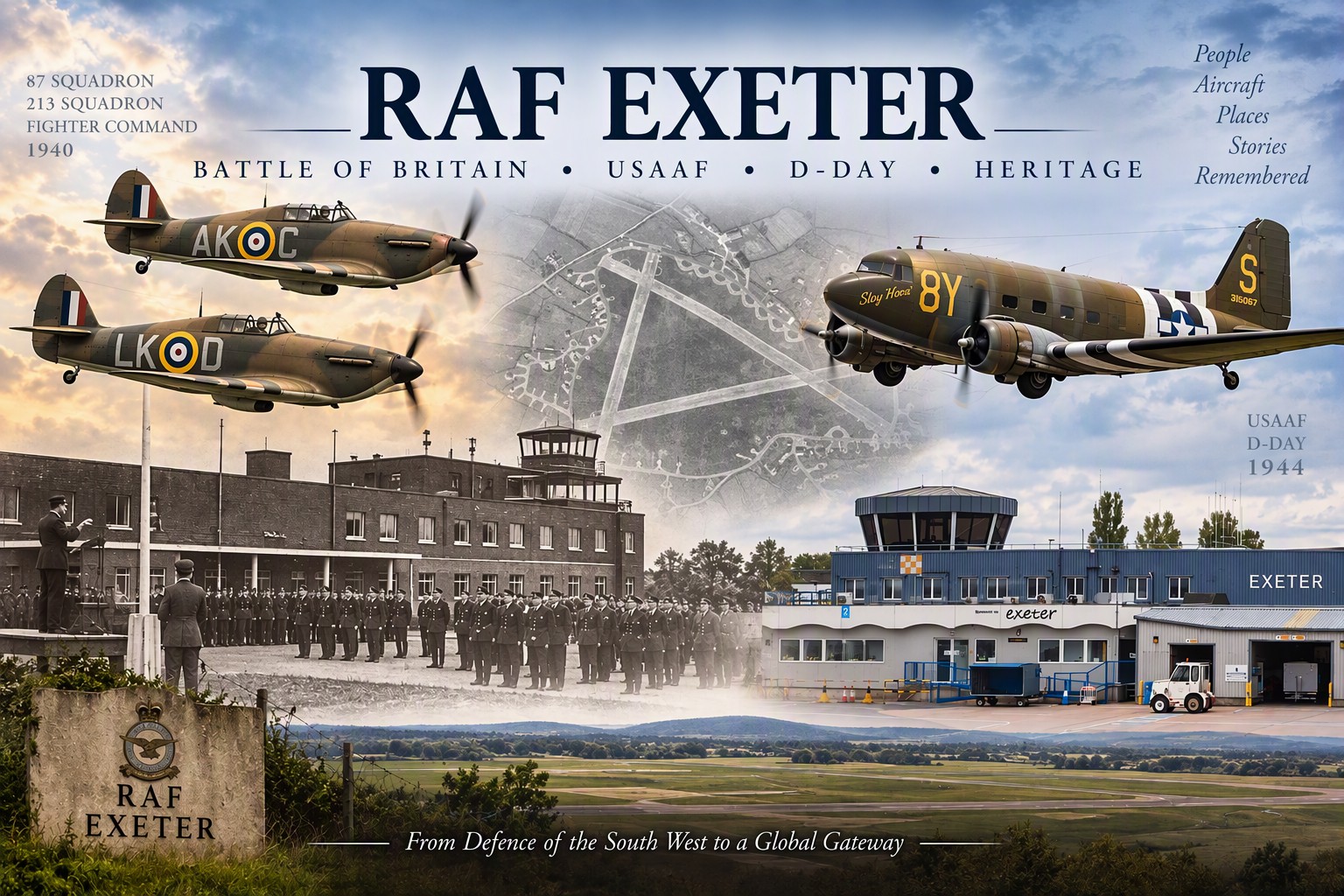
RAF Exeter and the
history of
Exeter Airport by
Chris Wiseman

Last Updated
21 October 2026
RAF Exeter was a key wartime airfield during the Second World War. This site preserves the history of RAF operations, the Exeter Blitz, air raid sirens, fire warden diaries, and the stories of those who served.
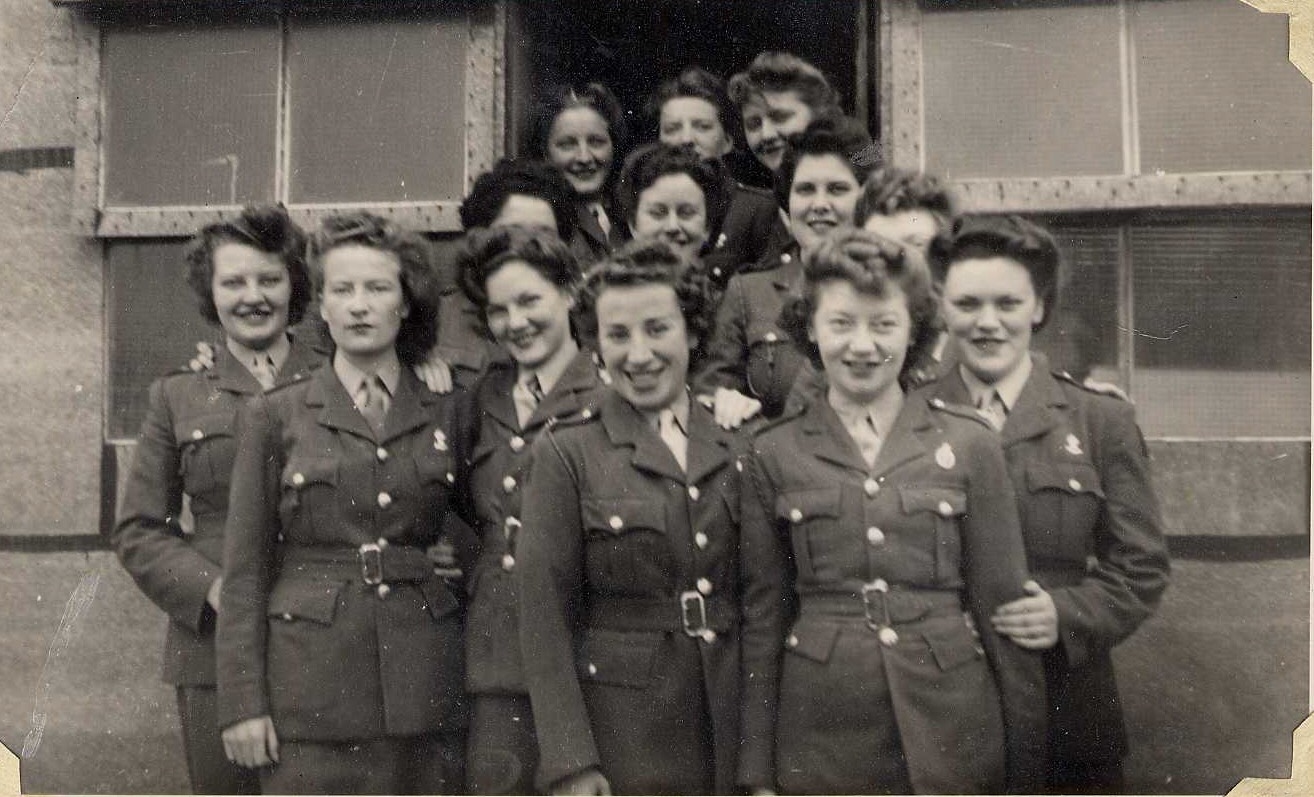

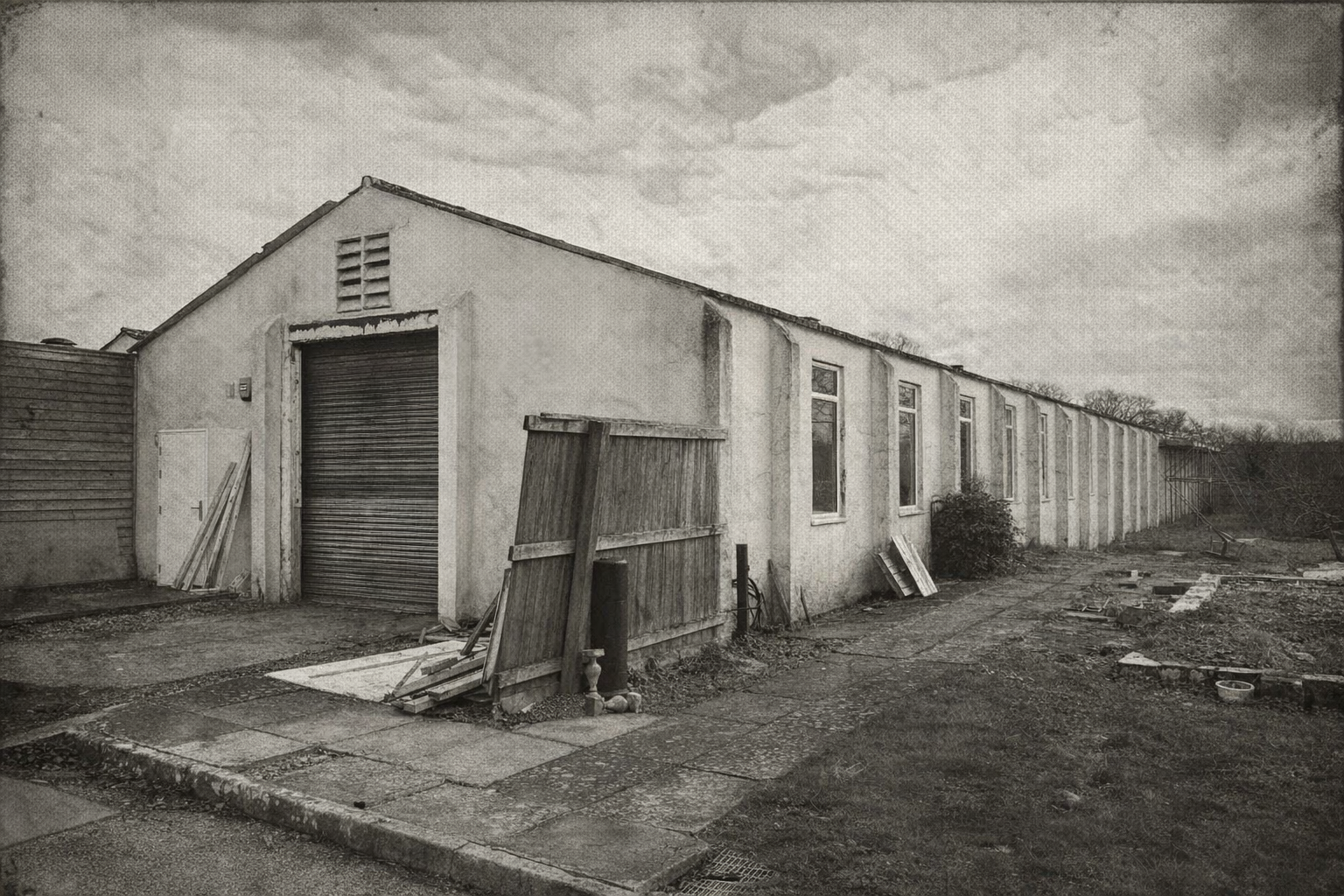
"you were here, you mattered, and we haven’t let you go"
This website is best viewed on PC or Tablet
Foreword
This archive was created to preserve the story of Exeter Airport and the people who shaped its wartime years. It brings together operations, squadrons, memories, and the changing landscape of the airfield, presented with clarity and respect for those who served here.
Every page has been arranged to follow the natural flow of the airport’s history — from its early development, through the pressures of war, to the memories and community that remain. It is not a dramatic retelling, but a steady, factual record built from research, documents, and the voices of those who lived through these events.
My hope is that readers will move through this archive at their own pace, finding a sense of connection to the city, the airfield, and the people whose stories might otherwise fade. This is a place for remembrance, understanding, and quiet reflection.
✨ Explore the Archive
This website preserves the history of Exeter Airport — from its early years and wartime role to its development in the decades that followed.
You can explore:
The squadrons and operations based at Exeter during the war
The airfield’s wider story, including its origins and post‑war evolution
Fire warden diaries and civilian accounts of the Exeter Blitz
Local documents, photographs, and research connected to the airport and the city
Each section is presented clearly and respectfully, allowing you to move through the history at your own pace.
On This Day at RAF Exeter
21 October 1941
Heavy Landings at RAF Exeter
It was an eventful evening on the airfield as two separate landing accidents occurred within just a few hours of each other.
At 18:02 hrs, a Henley aircraft (L3248) of the Gunnery Research Unit (GRU), flown by Pilot Officer Ireland, crashed on landing when the undercarriage failed. Although the aircraft sustained damage, the pilot escaped uninjured.
Later, at 20:45 hrs, a Blenheim (L1186) of No. 307 (Polish) Squadron made a particularly heavy landing which resulted in the undercarriage collapsing. The pilot, Pilot Officer Maxymowicz, was fortunately unhurt.
While neither incident resulted in injuries, both serve as reminders that flying hazards were not confined to combat operations. Even after successfully returning to base, aircrew still faced risks during the final moments of a flight.
Did You Know?
Exeter's links with aviation history extend far beyond the wartime role of RAF Exeter. The city is also home to Dr Martin Robson FHEA, Strategic Studies lecturer at the University of Exeter and compiler of several acclaimed aviation titles, including the Hurricane, Spitfire, Lancaster and Mosquito Pocket Manuals. A reminder that Exeter continues to play its part in preserving, promoting and sharing Britain's rich aviation heritage.
The RAF Exeter
Station Crest
Blazon: Issuant from a triangular Castle with three Towers Or two winged Arrows one Sable in bend and one Argent in bend sinister.
Link: The castle comes from the Arms of the City of Exeter whilst the arrows represent the unit’s night and day operations.
Motto: Latin: Ex aeterna vigilanta vires – From everlasting watchfulness (comes) strength.
Awarded: March 1945
Sponsored by Ivon Nigel Moore and dedicated to all who served at RAF Station Exeter.
RAF Station and Squadron badges can be found at the RAF Heraldry Trust which is registered charity: 1057097. The RAF Heraldry Trust aims to catalogue the heraldic badges for every RAF unit (squadrons, stations, regiments, etc.) both past and present. The website link is here
High-quality restorations of historical images bringing wartime moments and machinery back to life.
For my ongoing research I have memberships with -
1.
Air of Authority - A History of RAF Organisation
This website is the culmination of years of interest and research by the author in the history of the Royal Air Force and its forebears the Royal Flying Corps and the Royal Naval Air Service.
2.
Airfields of Britain Conservation Trust
Airfields of Britain Conservation Trust is registered in England and Wales. Registered Office: Suite 1, 7th Floor 50 Broadway, London, England, SW1H 0BL
3.
Airfields Research Group
Airfield Research Group Ltd was incorporated in 2014 and gained charitable status in the same year with the object ‘To advance the education of the general public by carrying out research into, and maintaining records of, military and civilian airfields and related infrastructure, both current and historic, anywhere in the world’.
4.
B-17 Preservation Ltd
(Sally B)
B-17 Flying Fortress G-BEDF Sally B is the last remaining airworthy B-17 in Europe. She is based in the UK from where she flies regularly at air shows, memorial flypasts and commemorative events as a memorial to the USAAF in Europe.
5.
Battle of Britain Historical Society - Area Manager Devon
To perpetuate the memory of the Battle of Britain. Now and for future generations.
6.
Battle of Britain Memorial Flight Official Club
Club members receive some great benefits and the chance to see what happens behind the scenes at the RAF Battle of Britain Memorial Flight. Join from just £35 and learn about the World War Two aircraft that are still flying today.
7.
Bournemouth Red Arrows Association
Bournemouth Red Arrows Association (BRAA) was formed in October 1994 by six avid supporters of The Red Arrows, - our founder Chairman, Dr Julian Tawn, Doug Wilson who was then the Managing Director of Bournemouth International Airport.
8.
British Air Display Association
To encourage, promote and advance Safety and Standards in British Air Displays’
9.
Commonwealth War Graves Commission
The Commonwealth War Graves Commission's Strategy is our main strategic planning document. It provides a framework for the delivery of the obligations described in our Royal Charter. It is a clear statement of our vision, strategic aims and priorities towards 2039.
10.
Friends of the Few
The National Memorial to the Few
At the heart of the Memorial is the National Memorial to the few, dedicated to the heroic and selfless deeds of the men who won the Battle of Britain,10 July to 31 October, 1940.
The Memorial was unveiled by Her Majesty Queen Elizabeth The Queen Mother on 9 July 1993.
11.
12.
Navy Wings
The development of Britain’s great naval aviation heritage is one of the most remarkable stories of the past hundred years.
13.
Royal Air Force Benevolent Fund
We are the longest-standing Royal Air Force charity, dedicated to supporting serving and former RAF personnel, and their families.
14.
South West Heritage Trust Archives and Local Studies
We care for the written evidence of Somerset and Devon history and hold millions of documents and printed sources dating from the 8th century to the present day.
15.
Volunteer at Royal Albert Memorial Museum, Exeter
Volunteering is a great way to get involved with Exeter’s world class museum – you can share your knowledge, learn new skills and meet new people.
More than 200 volunteers add value to museum life throughout the year, contributing to a range of activities and projects.
Write a review of this website on Trustpilot
Get in touch
E-mail: chrisrafexeter@gmail.com
Address: Pinhoe, Exeter