Exeter Airport and the Civilian Anti-Aircraft Co-operation Unit (CAACU) 1947 to 1971
Exeter Airport and the Civilian Anti-Aircraft Co-operation Unit (CAACU) – 1947 to 1971
In 1947, Exeter Airport Limited obtained a licence to operate the airfield from the Ministry of Civil Aviation, which oversaw its administration. Around this time, the Exeter Aero Club was reformed, drawing many of its members from the ranks of former RAF personnel who had served during the Second World War.
Although no regular airline services operated from Exeter at the time, the airport held key contracts with the Air Ministry. One such contract supported No. 10 Reserve Flying School, where RAF Volunteer Reserve members undertook flying training — a continuation of Exeter’s wartime aviation legacy.
In March 1951, a new chapter began with the formation of the Civilian Anti-Aircraft Co-operation Unit (CAACU), tasked primarily with target towing sorties. The unit also conducted testing and instrument calibration for both the Royal Navy and the Army.
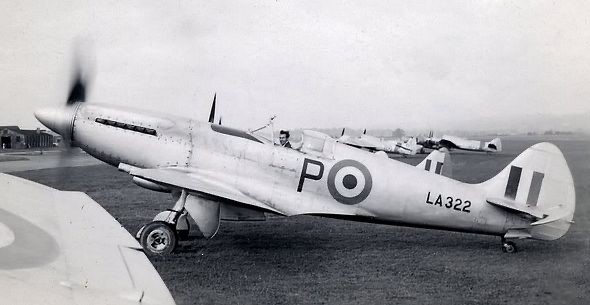
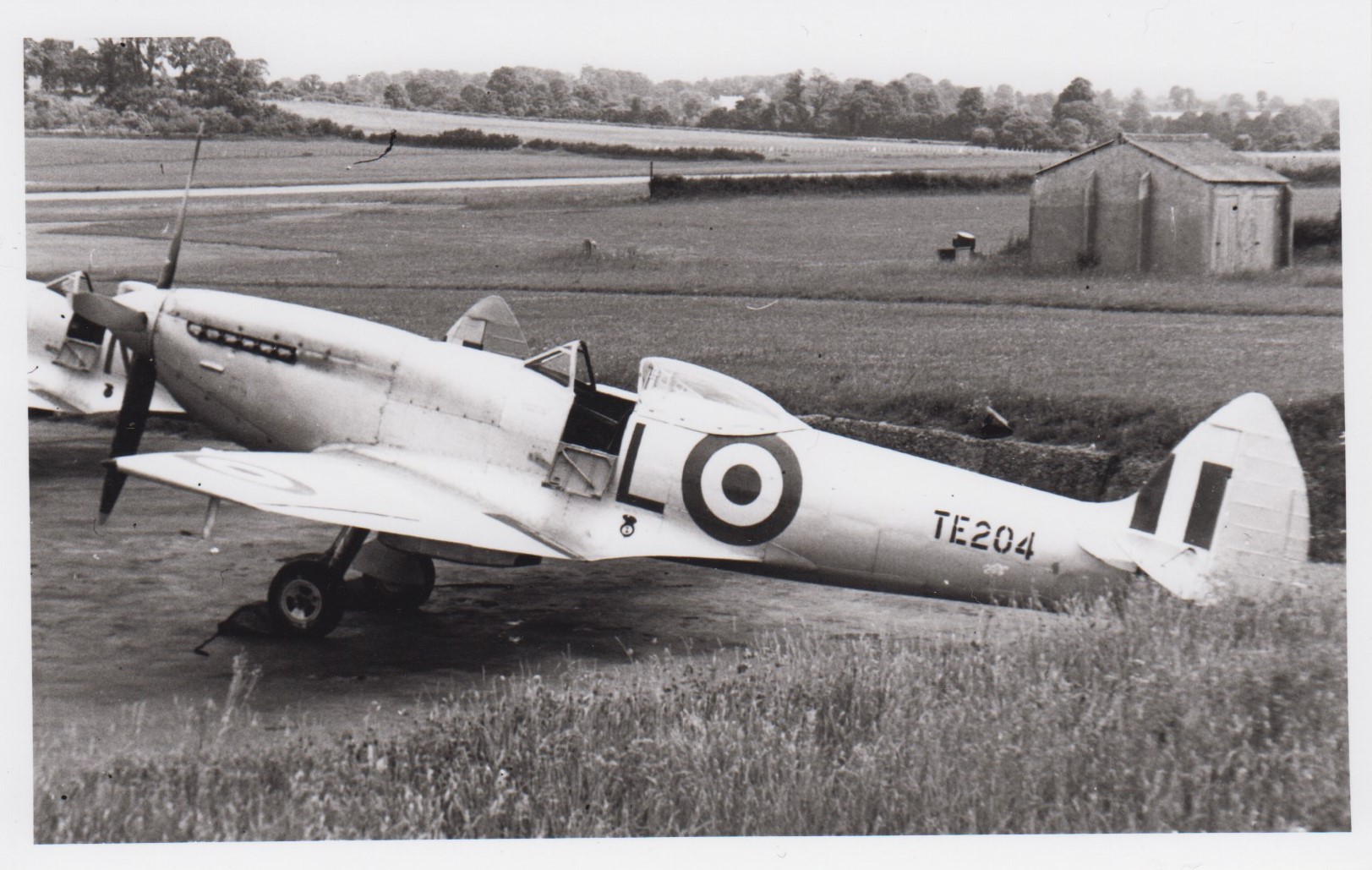
By 1953, No. 3 CAACU was fully established under the management of Exeter Airport Ltd, utilizing various Second World War dispersal areas around the airfield. Spitfires were among the first aircraft employed, including one notable example: L.F.XVIE RW393/7293M, coded ‘B’ in blue beneath the cockpit and painted in overall white. At that time, Exeter was home to the largest remaining Spitfire unit in the country.
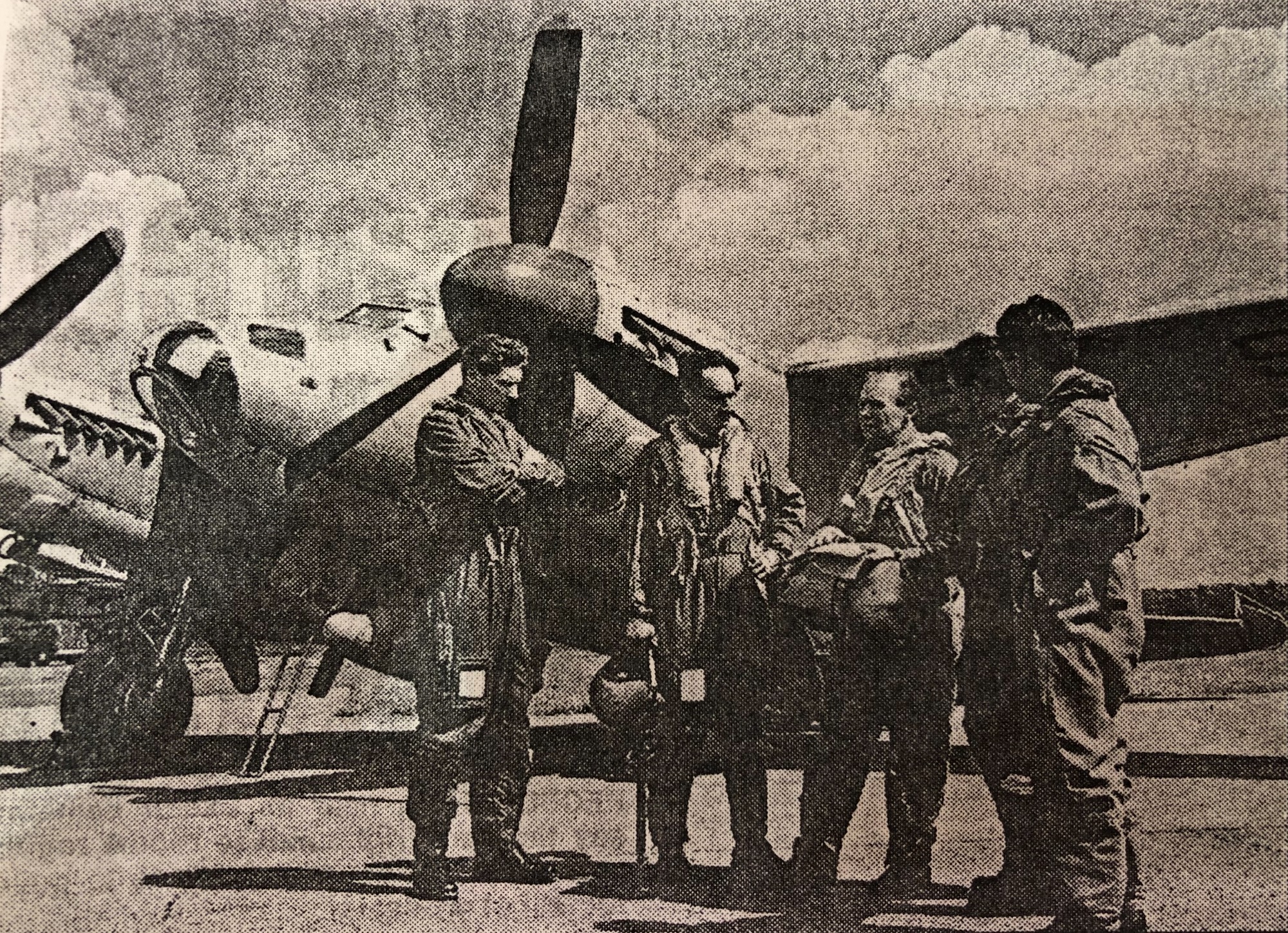
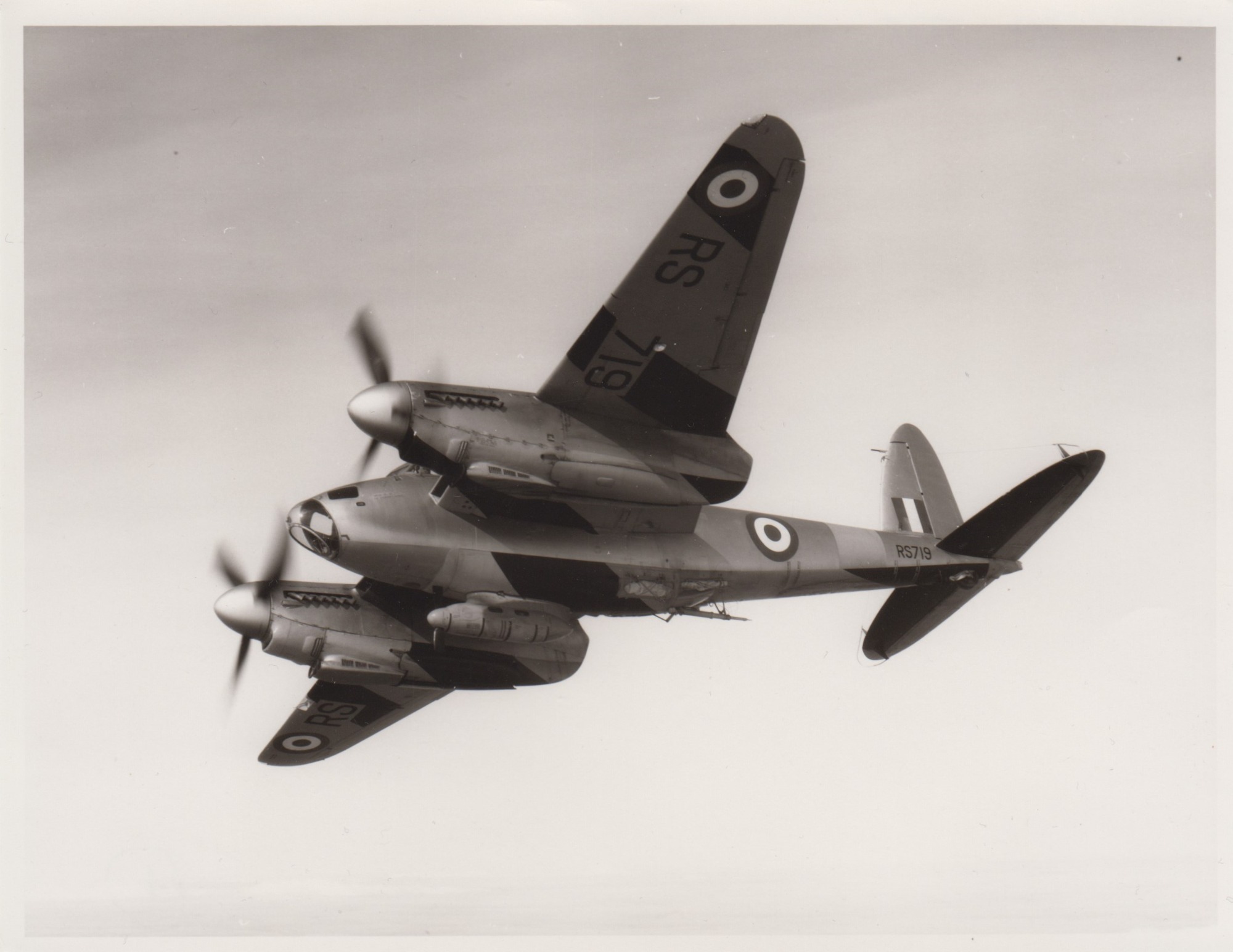
By 1954, the unit’s target towing operations expanded to include twin-engine Beaufighter TT.10s and Mosquito TT.35s, alongside Spitfire F.21s and LF.XVIEs. Other aircraft used for tactical exercises included the Boulton Paul Balliol and the Chipmunk.
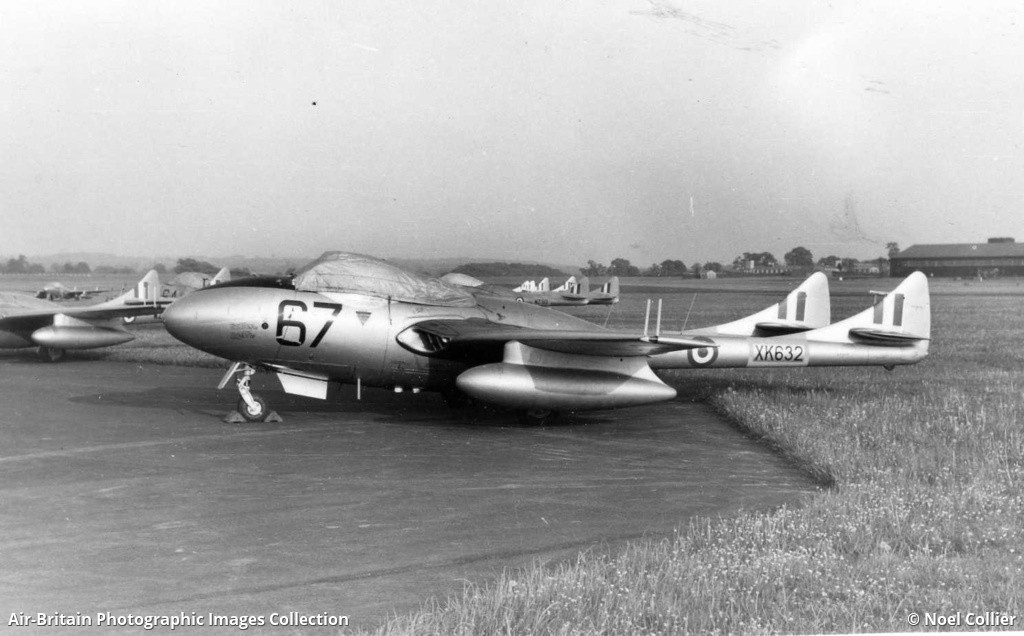
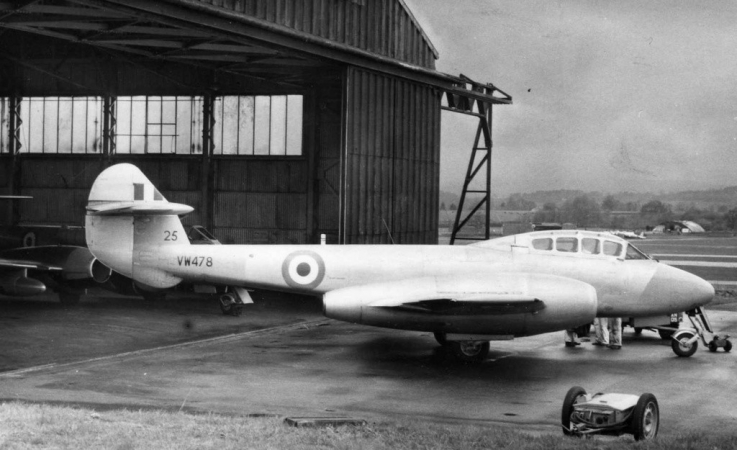
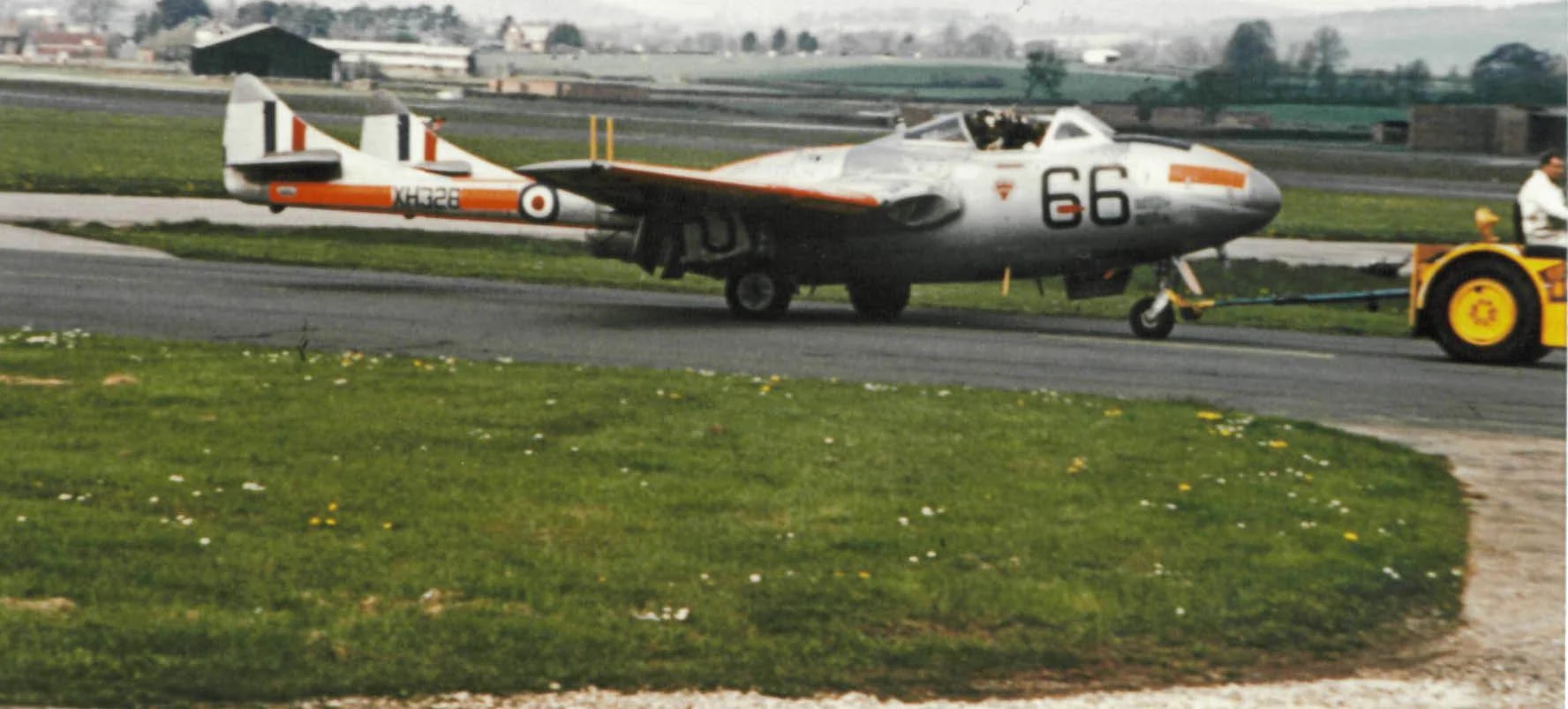
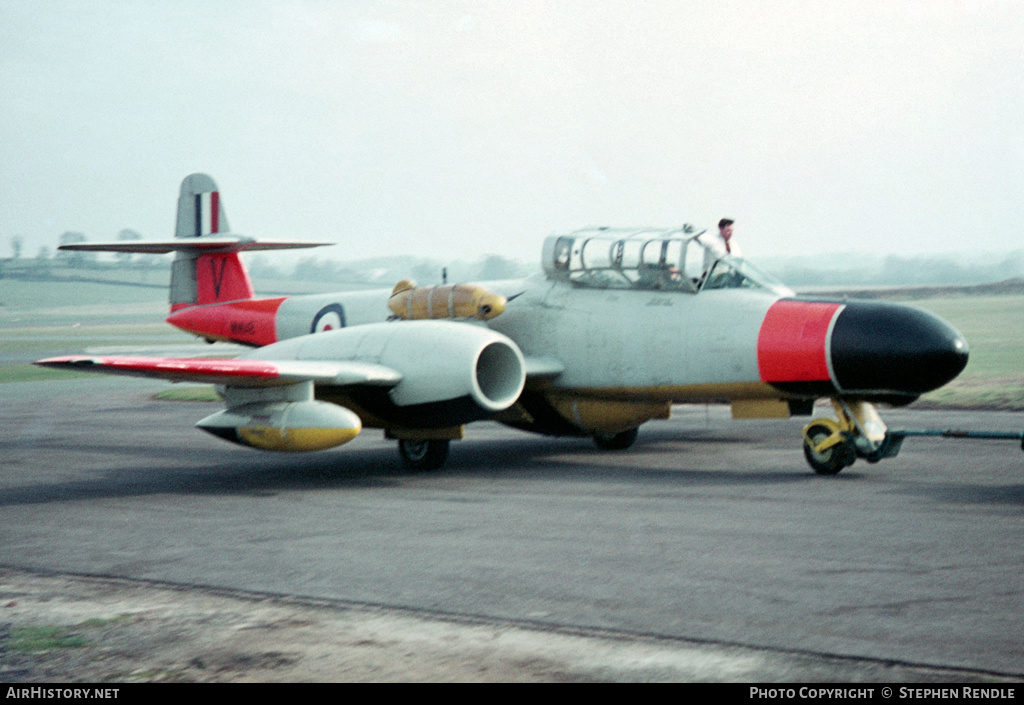
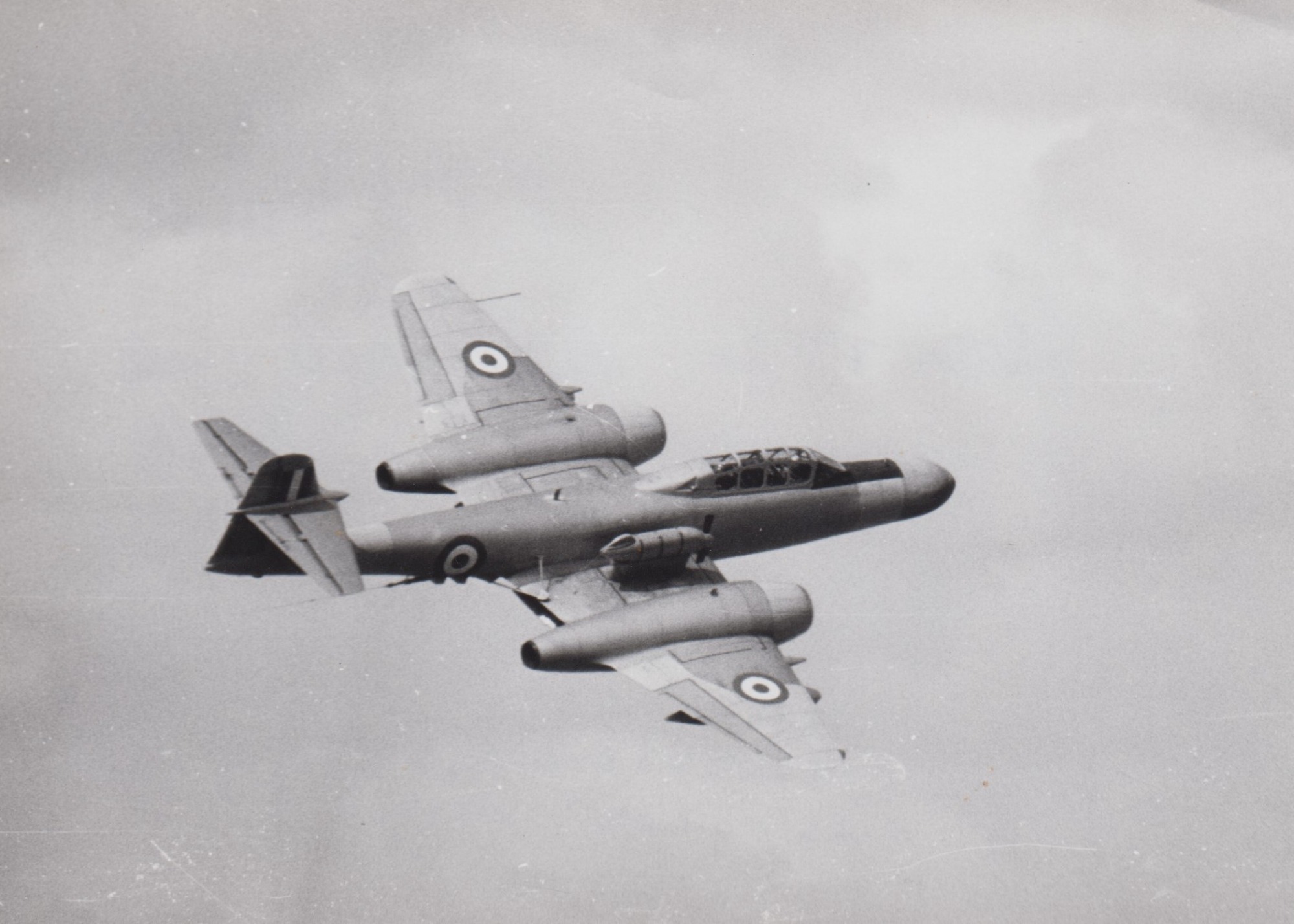
In August 1954, No. 3 CAACU merged with No. 4 CAACU at RAF Llandow, Wales, forming No. 3/4 CAACU. As aviation technology advanced, jet aircraft were introduced, including Vampire T.11s and converted Gloster Meteor TT.20s.
Following the disbandment of the Royal Auxiliary Air Force on 10 March 1957, additional Vampire FB.5s arrived at Exeter, later replaced by Vampire T.11s. The 1960s saw further diversification with Hawker Hunter F.4s and Jet Provosts joining the fleet.
In 1968, the Meteor aircraft were retired and replaced by the English Electric Canberra, continuing the unit’s target towing duties. On 31 December 1971, the CAACU at Exeter was finally disbanded, marking the end of one of the airfield’s longest-serving resident units. Its duties were taken over by the newly reformed No. 7 Squadron at RAF St Mawgan, Cornwall, equipped with Canberra TT.18s.
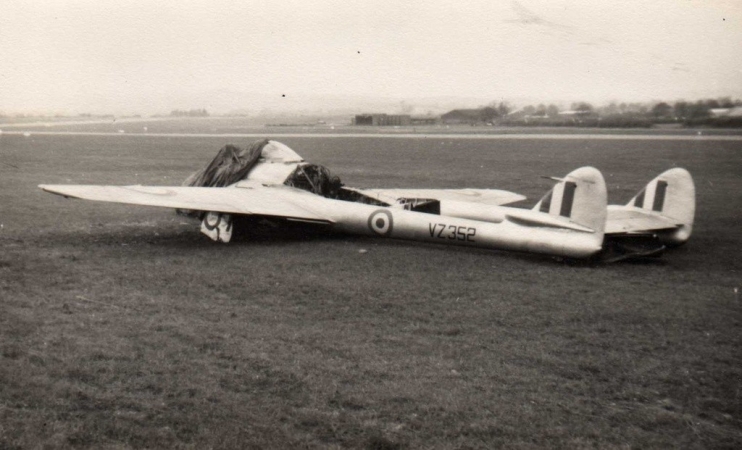
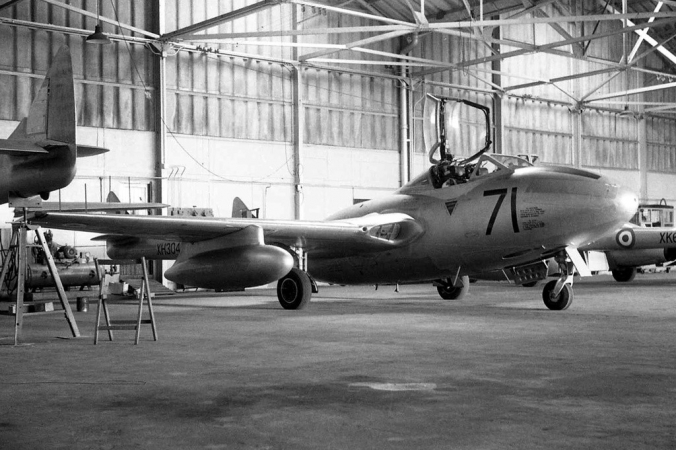
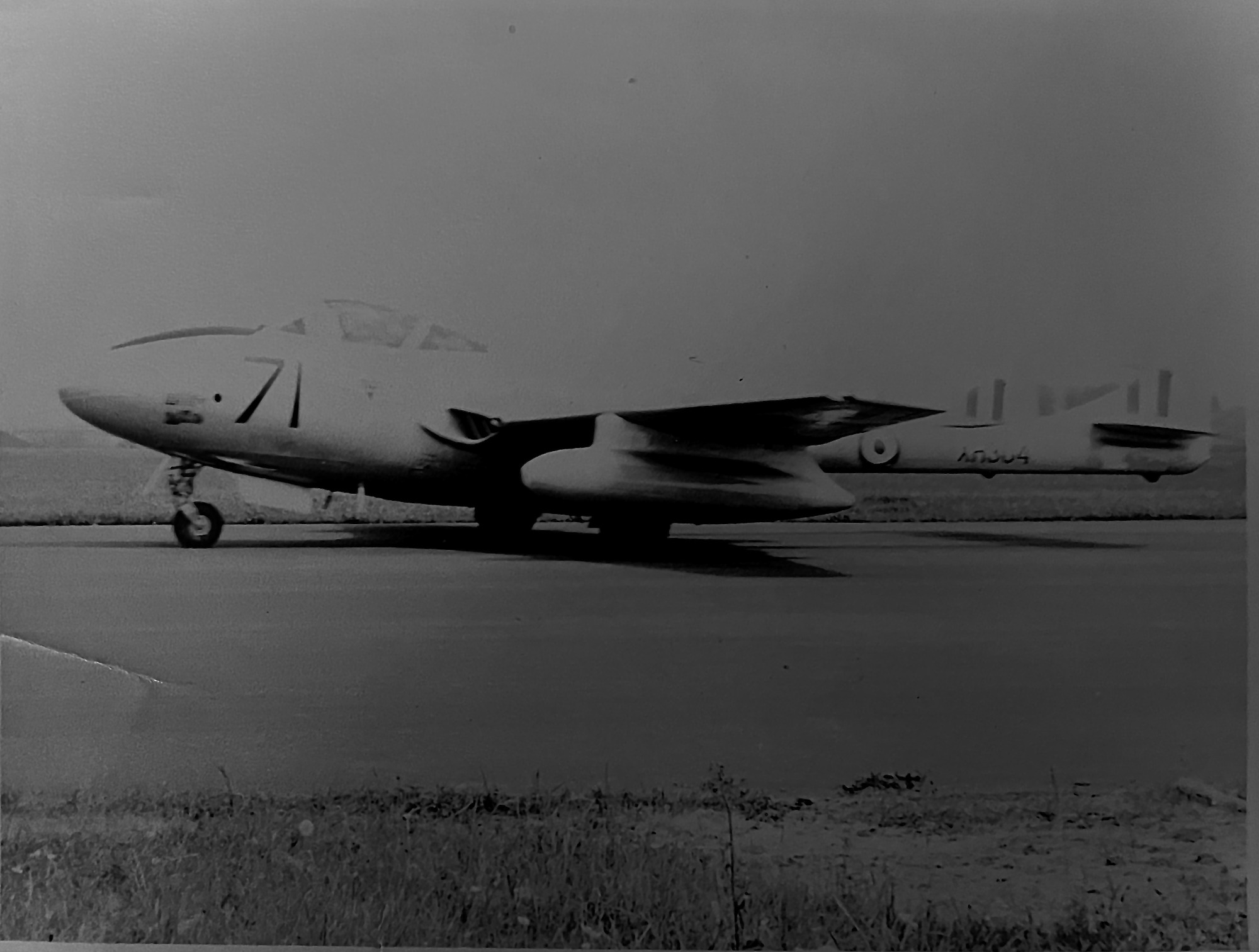
Vampire and Meteor aircraft recorded at Exeter were as follows,
Exeter Vampires -
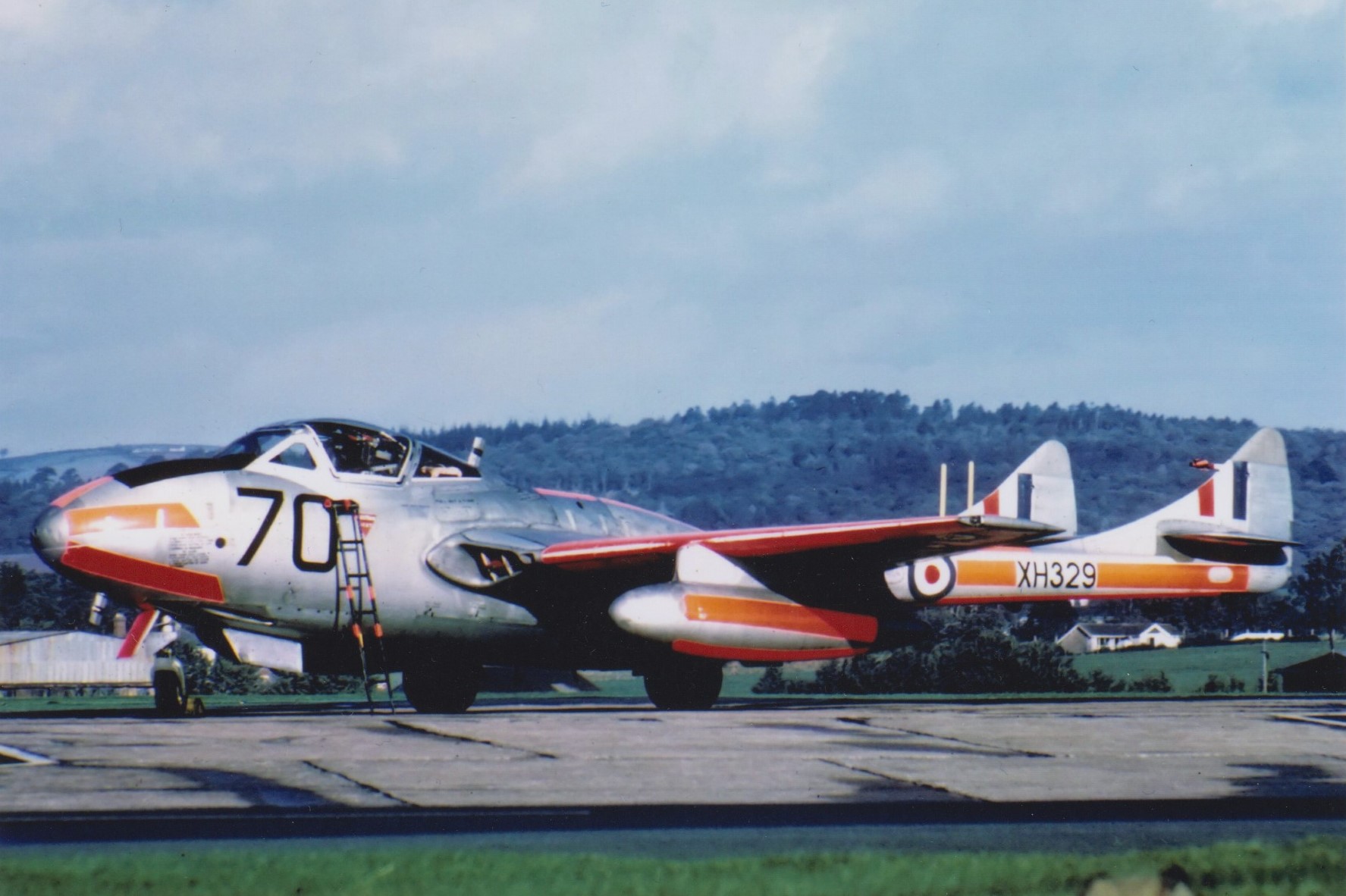
*indicates featured with photo.
VZ352*
WZ581
XE928
XD459
XK632*
XH326*
XH328
XE921
WZ415
XH304
XH329*
XE860
WZ620
WZ616*
XD634
Exeter Meteors
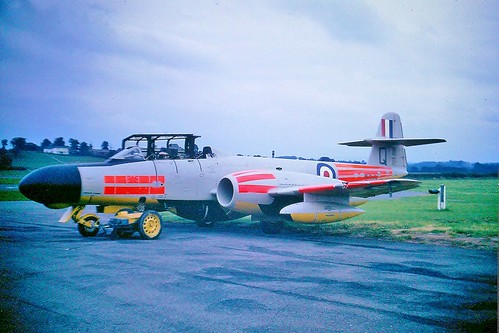
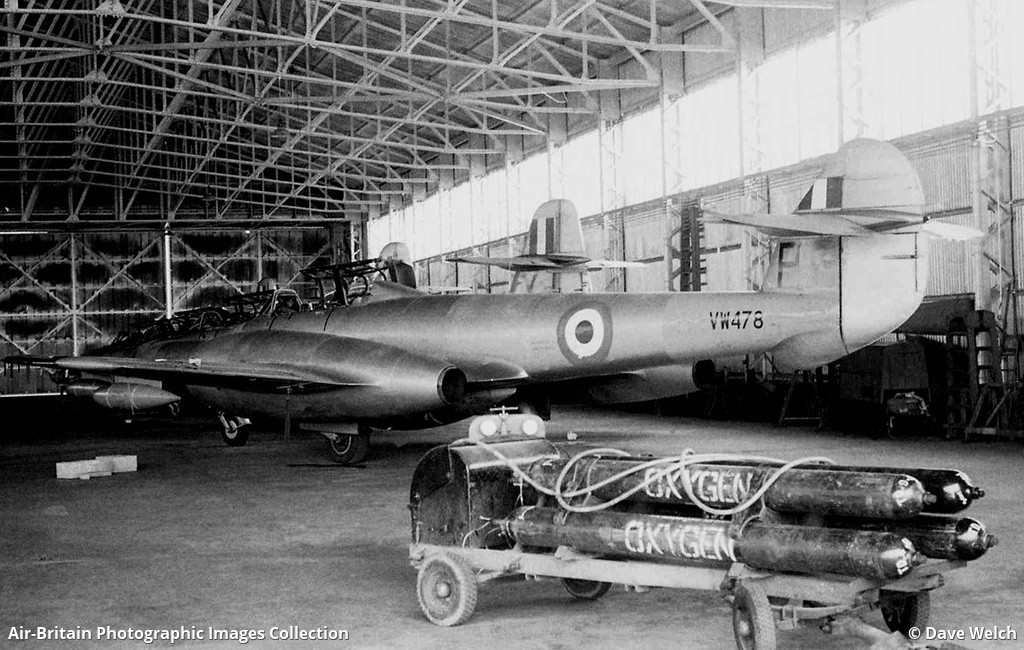
*indicates featured with photo.
VW478*
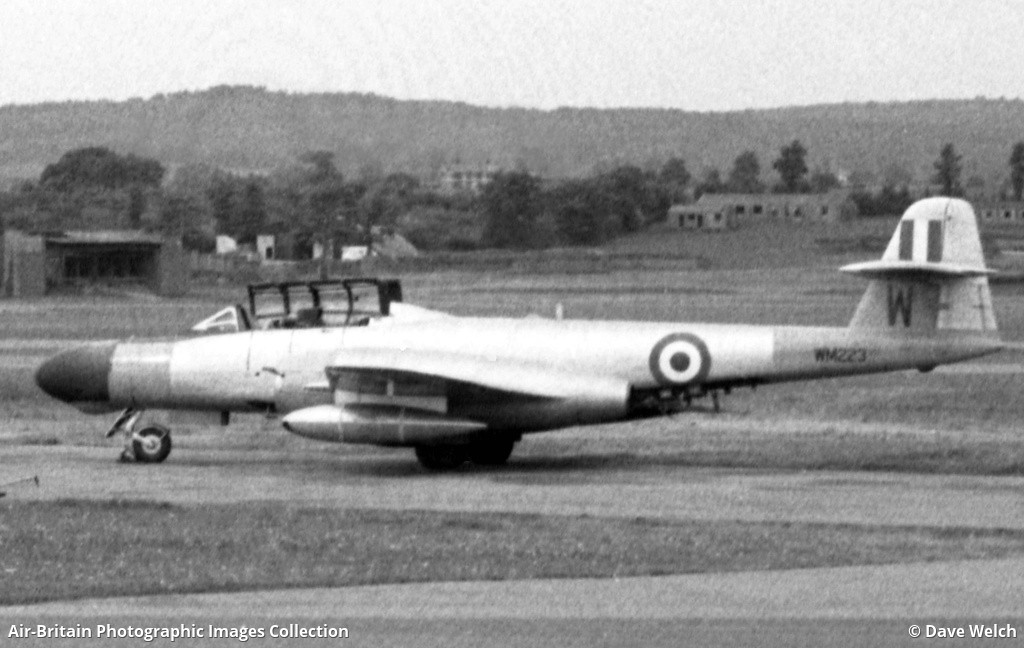
WM223
WD702
WD630
WD646
WD647
WD706
WM148*
WM223
WM270
WM293
WM224#
#note: Meteor WM224 experienced an incident when it was hit by a shell. This was not fully discovered until the aircraft landed back at Exeter when the pilot then noticed the lack of rudder control. When engineers inspected the aircraft, it was discovered the rudder control cable was severed. It was deemed a lucky escape for the pilot. If the shell had hit the main fuel tank the outcome could have been very different.
CAACU Gallery
Information sourced from the following references.
Exeter CAACU Meteors and Mossies | Key Aero
Exeter International Airport
Exeter - Airfields of Britain Conservation Trust UK (abct.org.uk)
Doug Johns - CAACU
Exeter Festival of Britain Air Display Souvenir Programme 1951
Information sourced from the following references.
There is a wonderful recollection from Doug Johns who flew with CAACU from Exeter in the late 50s. His in depth story is provided by the link below to his Exeter Memories page.
Exeter Memories - Doug Johns CAACU
This page was last updated 25 March 2026.