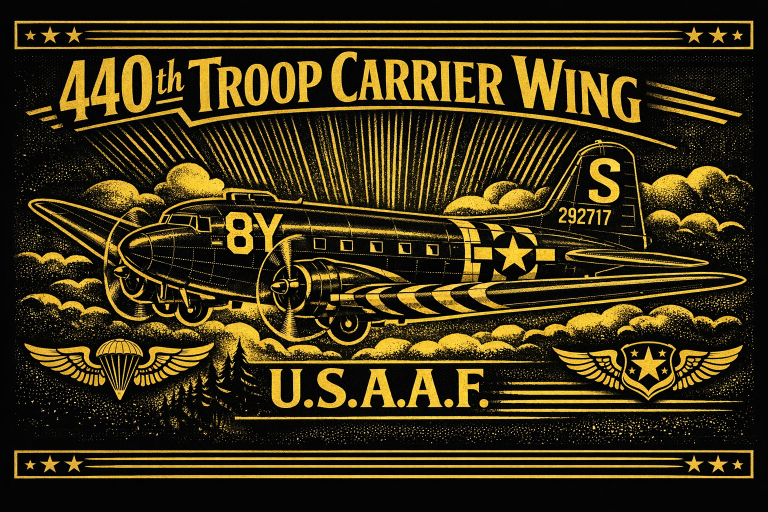
RAF Exeter and the USAAF –
Station 463 and the Road to D-Day
The 440th Troop Carrier Group
In preparation for the Allied invasion of France in June 1944, RAF Exeter was handed over to the United States Army Air Forces (USAAF). British squadrons were redeployed to other stations, and the airfield was redesignated as “Station 463” under the command of the US 9th Air Force.
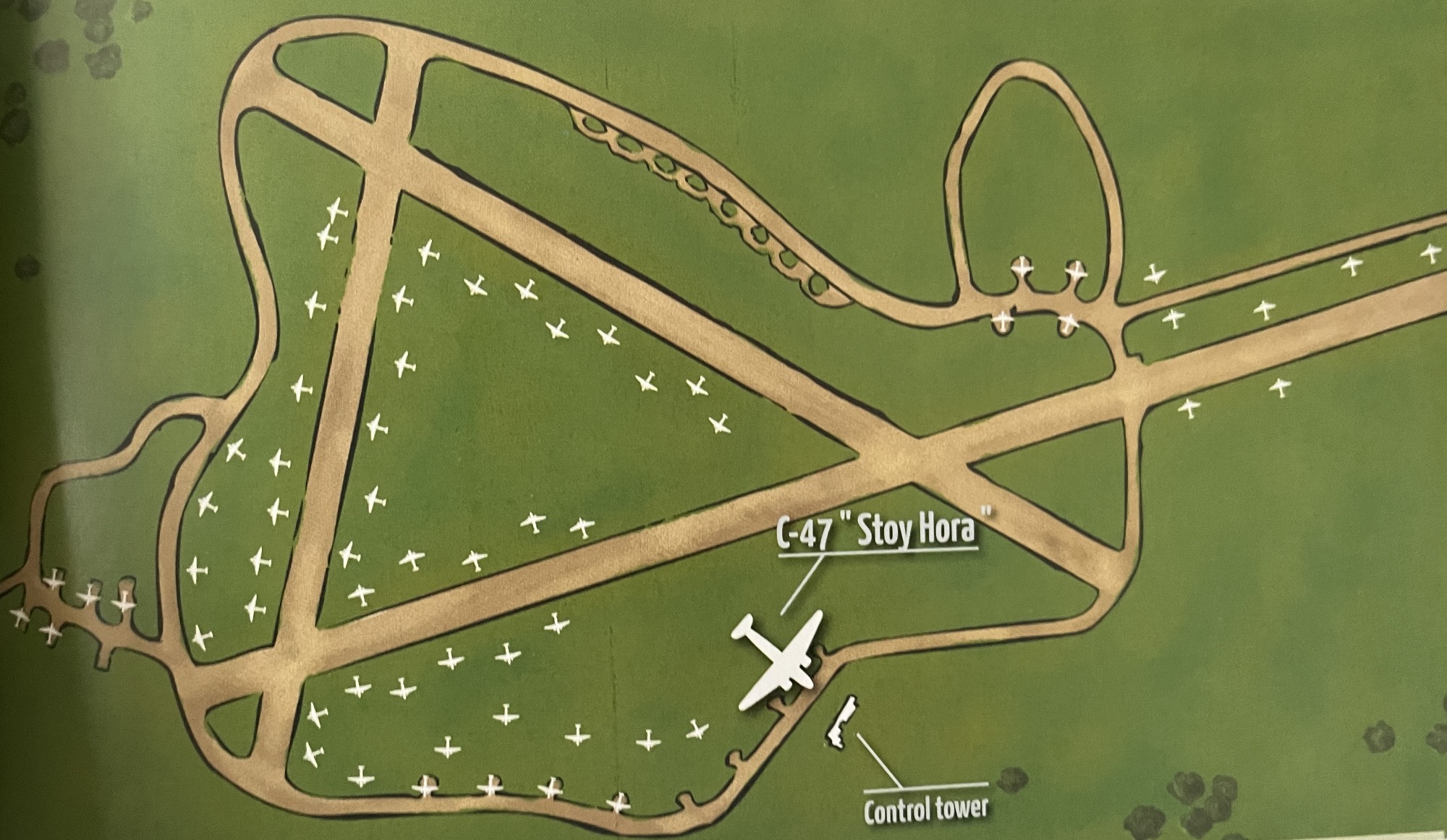
The 440th Troop Carrier Group, first established on 25 May 1943 and activated on 1 July, arrived in England in March 1944. After a brief stay at Bottesford in Northamptonshire, the group moved into Exeter on 18 April 1944, bringing with it more than forty C-47 and C-53 Skytrain aircraft—known to the British as Dakotas. The influx was so substantial that most hard standings were occupied, forcing some aircraft to be parked on grass areas around the airfield.
The 440th comprised four squadrons—the 95th, 96th, 97th, and 98th—who trained intensively with paratroopers from the 82nd Airborne Division. From April through early June, Exeter witnessed a flurry of activity: transport formations roared overhead, parachute drops dotted the skies, and pilots honed their skills in day and night sorties, flying in Vic formations of three Dakotas at a time. The sights and sounds of this buildup were both impressive and ominous, heralding the scale of the operation to come.
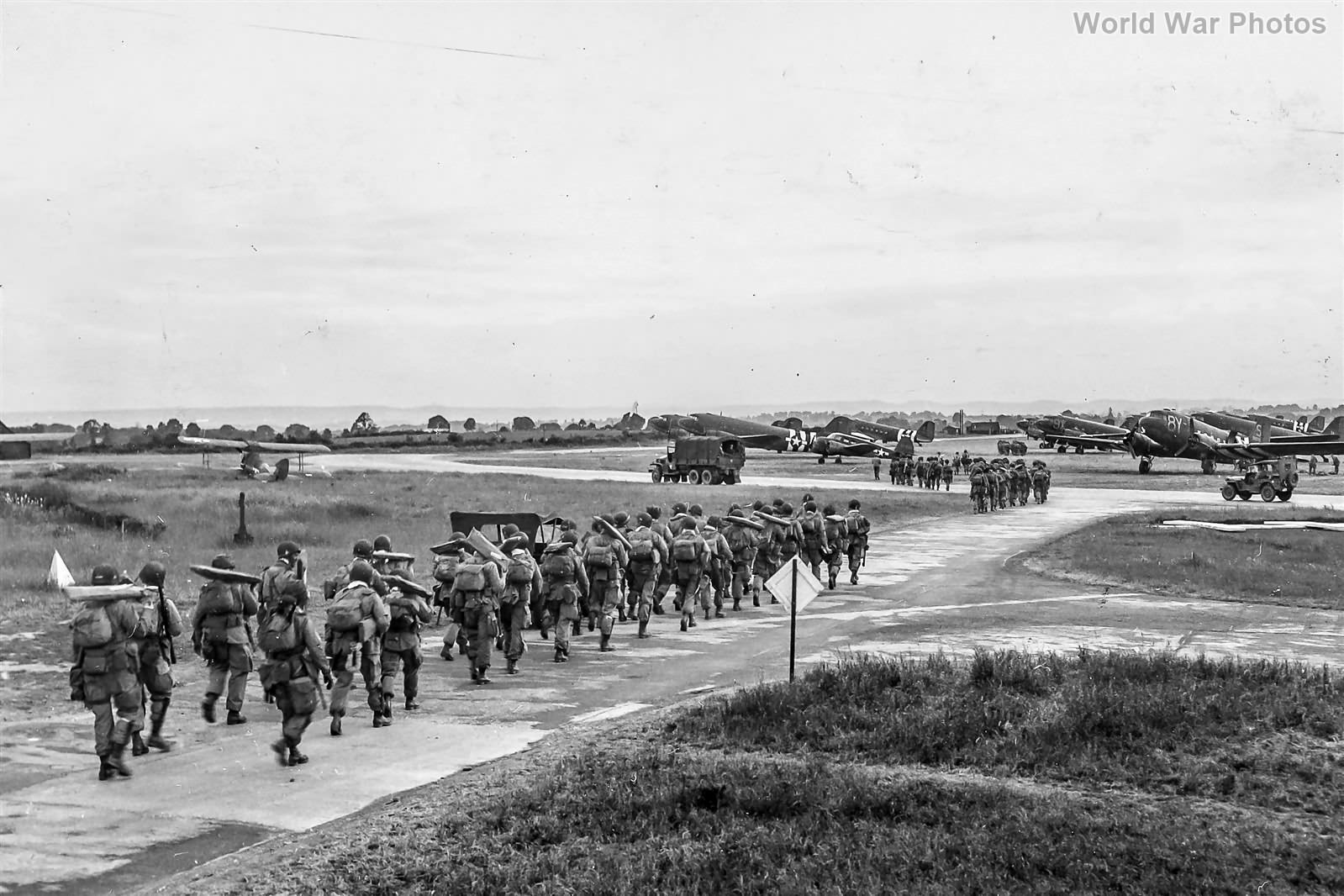
On 5 June 1944, the eve of D-Day, elements of the 3rd Battalion, 506th Parachute Infantry Regiment (PIR) of the 101st Airborne Division, along with two platoons of the 326th Airborne Engineers, departed from Exeter. In the early hours of 6 June, these units were positioned toward the rear of the massive airborne formation. This made them more vulnerable to enemy fire, as German forces had time to regroup and respond following the initial surprise. By contrast, squadrons from nearby Upottery had launched earlier in the wave.
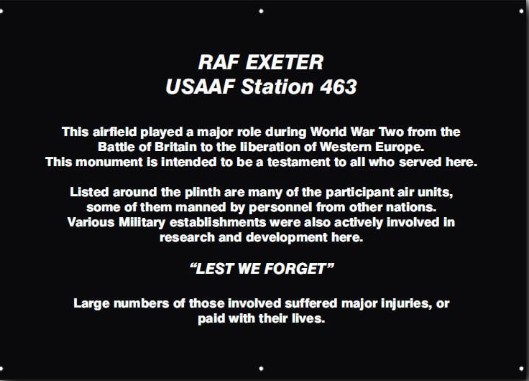
RAF Exeter—now Station 463—played a vital role in the airborne assault on Normandy, its runways and skies bearing witness to one of the most pivotal moments of the Second World War.
RAF Exeter and the USAAF –
Station 463 and the Road to D-Day
The Painful Cost
On 6 June 1944—D-Day—three C-47 Skytrain aircraft from the 440th Troop Carrier Group were lost over France. Their serial codes were 42-100733, 42-100905, and 42-100914. These aircraft had been part of the vital airborne operation that dropped elements of the 101st Airborne Division near Carentan, deep behind enemy lines. Despite the losses, the Group pressed on with unwavering resolve.
The very next day, operational sorties resumed with a continuous stream of supply drops to support the advancing Allied forces. This sustained effort earned the 440th Troop Carrier Group a Distinguished Unit Commendation—recognition of their bravery, precision, and critical contribution to the success of the invasion.
Even in the weeks following D-Day, the Group remained active, flying resupply missions into France as the Allied advance continued. While the 95th, 96th, and 97th Squadrons had already departed Exeter shortly after the invasion, the 98th Troop Carrier Squadron remained at the airfield until 7 August, before relocating to RAF Ramsbury.
On 11 September 1944, the headquarters of the 440th Troop Carrier Group was officially established at their new base in Reims, France (Advanced Landing Ground A-62D). Just two days later, on 13 September, the final air echelon departed Exeter—bringing to a close the American chapter at Station 463.
RAF Exeter had played a pivotal role in one of the most significant operations of the Second World War. The legacy of those who served, and those who were lost, remains deeply woven into the fabric of the airfield’s history.
The 440th was disbanded deactivated on 18 October 1945.
Echoes of Departure – Exeter Inn and the Eve of D-Day
For many of the American airmen stationed at RAF Exeter, the local pub of choice was the Exeter Inn in Clyst Honiton—formerly known as Honiton Clyst. It became a cherished gathering place, where laughter, music, and the camaraderie of shared purpose filled the evenings. No doubt, many a lively night was had within its walls, offering a brief respite from the weight of war.
As D-Day approached, however, the mood shifted. USAAF personnel were confined to base, and all details of the impending invasion were shrouded in secrecy. The people of Exeter and the surrounding villages knew nothing of the operation—only that, quite suddenly, the Americans seemed to vanish. It was a silence that spoke volumes.
The only clues came in the days leading up to 5 June 1944: an intensification of training activity, the hum of engines, and the unmistakable tension in the air. Then, in the late hours of 5 June and into the early morning of the 6th, the skies erupted with the thunder of over forty C-47 Skytrains lifting off in massive formations. The sound must have stirred every soul in Clyst Honiton and the neighbouring villages—an unforgettable roar that marked the beginning of Operation Overlord.
Only after the fact did the truth emerge: those aircraft had carried paratroopers bound for Normandy. The Americans had not disappeared—they had taken flight into history.
D-Day 6 June 1944 - Order of Flight Operations:
The Pathfinders x 20 aircraft
438 TCG RAF Greenham Common Berkshire
436 TCG RAF Membury Berkshire
439 TCG RAF Upottery Devonshire
435 TCG RAF Welford Park Berkshire
441 TCG RAF Merryfield Somerset
440 TCG RAF Exeter Devonshire x 45 aircraft
316 TCG RAF Cottesmore Rutland
315 TCG RAF Spanhoe Northamptonshire
314 TCG RAF Saltby Leicestershire
313 TCG RAF Folkingham Lincolnshire
61 TCG RAF Barkeston Heath Lincolnshire
442 TCG RAF Fulbeck Lincolnshire
440th Tactical Command Group out of Station 463 (Exeter)
Sqn Code Aircraft
95 9X C47 -Skytrain
96 6Z C47 -Skytrain
97 W6 C47 -Skytrain
98 8Y C47 -Skytrain
Below - Two Vic formations of C47s over fly the field in training for the big day. It interesting to note, only the lead aircraft of three had a Navigator onboard so close formations were critical to avoid getting detached and possibly lost.
Photo credited to original copyright owner.
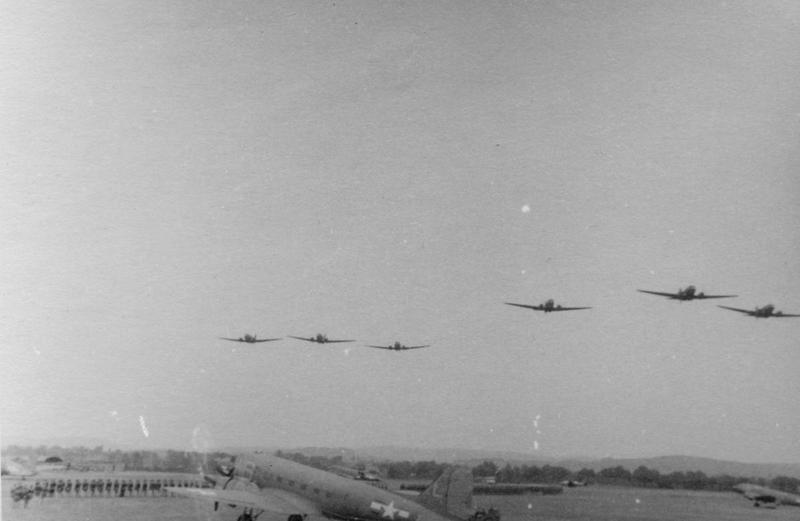
Below - The photo was taken from what is now the terminal building looking towards Exeter City.
Photo credited to original copyright owner.
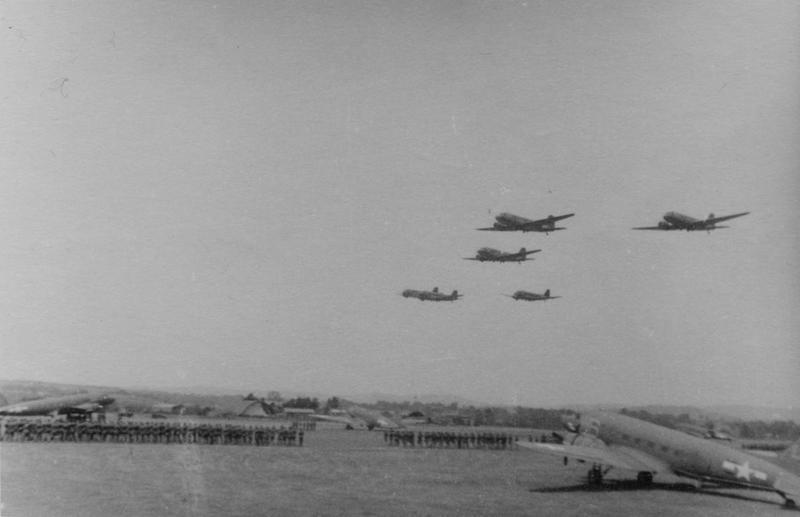
Below - One of many training exercises leading up to 6 June 1944. The training was all about loading preperations, order and getting large amounts of C47 aircraft into formations. Six aircraft over fly the field in two 'Vic' formations.
Photo credited to original copyright owner.
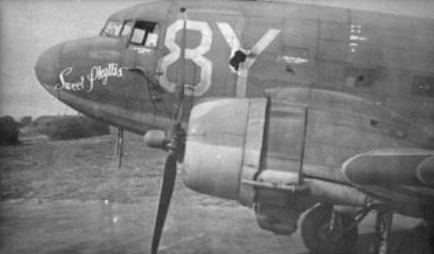
Below - Douglas C47A (8Y) known as 'Sweet Phyllis' of the 98th is pictured post D-Day as the aircraft has damage to the fuselage at the letter 'Y'. This aircraft was assigned to the 440th Troop Carrier Group, 98 Squadron based at Station 463 USAAF, formerly RAF Exeter from the 18th April 1944 until September 1944.
Photo credited to original copyright owner.
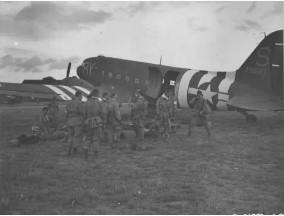
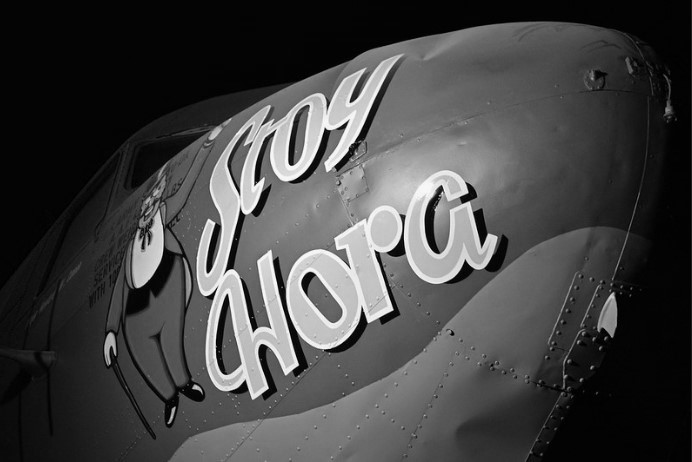
Below - Douglas C47A 292717 (S) 98th, known as 'Stoy Hora' of the but what was the meaning of this name? The name comes from a slang expression in Spanish "Estoy ahora" translated into "I'm here now for you" On D-Day this aircraft was flown by Colonel Frank Xavier Krebs. It was to be the lead C47 in the whole formation.
Photo credited to original copyright owner.
Below - Nose art was very much a part large bomber or transport aircraft of the USAAF. There were some Spanish speaking artists in the 440th who composed the impression of a ringmaster representing the Commander's aircraft.
Photo credited to original copyright owner.
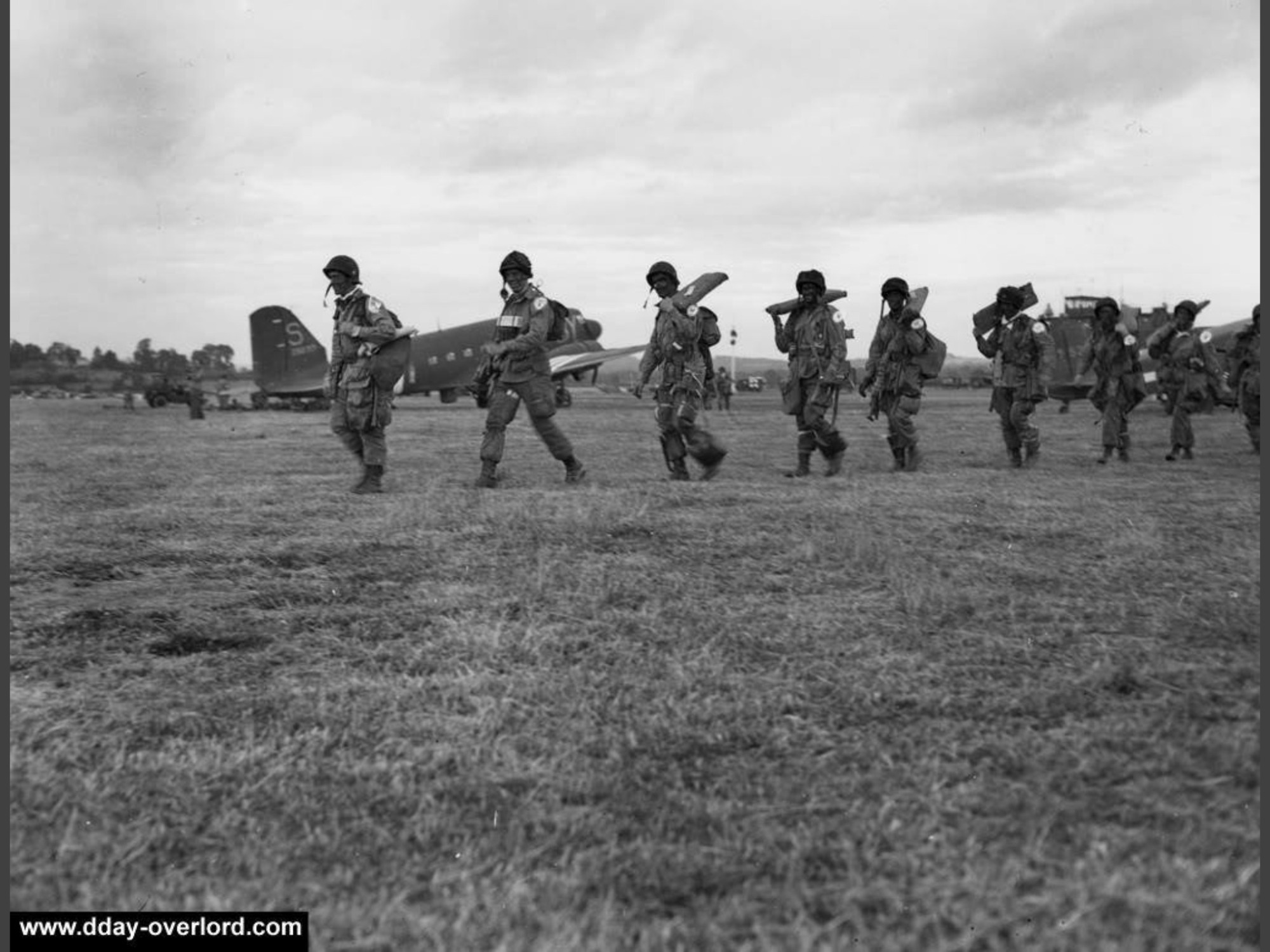
Below - This is an interesting photo showing troops walking across the grass with C47 'Stoy Hora' in the background and the old watch tower just visible on the right of the image.Photo credited to original copyright owner.
Below - The map below shows the position of the Commanders aircraft nearest to the watch tower and all other C47s scattered all over the airfield. This is why RAF Squadrons had to move out to make space for the transport aircraft of the USAAF.
Image taken from 'The Night of Liberation' by Gilles Vallée and Christophe Esquerré
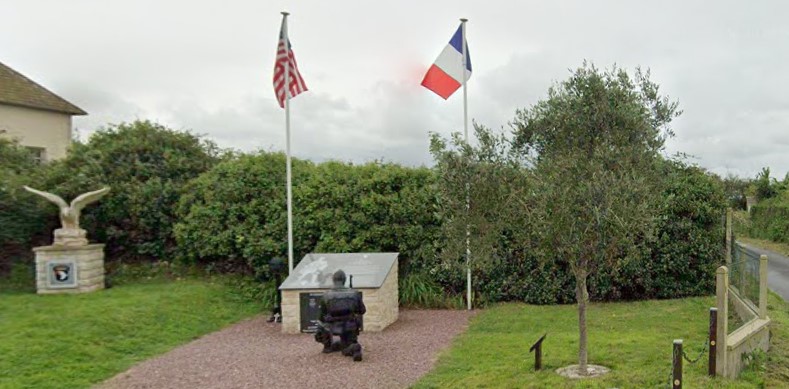
Below - The Memorial to the Filthy Thirteen located at
Rue de Moulin 50500Le Moulin Calvados France.
Photo credited to original copyright owner.
Rare video footage of the Demolition platoon paratroopers from the 506th PIR HQ Company, 101st Airborne nicknamed the 'Filthy Thirteen' are filmed at Station 463 (Exeter Airfield) preparing for the D-Day drop, 5/6 June 1944. Click Here
A Soldier's Prayer
by John Agnew
Dear Lord, not all the tears we shed today
Are for those we lost along the way
Some tears are for those who dare to say
We must have lingered on the way
Tears for those who fought so brave and gave their lives
And for those of us who died inside
We had been in hell and did return
God's mercy will be shown to them
Who served so well and suffered long
They who are the humble in this land
And did proclaim freedom to all in god's domain
Guide us, dear lord, in your great way
We who were not trampled on the way.
Below is an interview with Stan Mallett's Son Frank Mallett (both from Exeter) and two students who are travelling to Normandy in July this year to pay their respects to all those who paid the ultimate sacrifice for our freedom on the 6 June 1944. This emotional interview provides a fascinating account of what life was really like on the front line and how RAF personnel arrived on Omoha beach with the Americans. This interview was conducted as part of the Basildon Borough Twinning Association and produced by The Forget Never Project.
An interesting website here on the Filthy Thirteen FILTHY 13 HISTORY - Site Title (weebly.com)
Lorem ipsum dolor sit amet, consectetur adipiscing elit. Nulla euismod condimentum felis vitae efficitur. Sed vel dictum quam, at blandit leo.
This page was last updated 25 March 2026.