The Exeter Sirens 1940-1944
“Words from the Exeter Air Raids”
Exeter entered the Second World War as a quiet cathedral city, far from the industrial centres that first drew the Luftwaffe’s attention. Yet by 1942 it found itself on the front line of a new kind of conflict — one in which ordinary streets, homes, and familiar landmarks became targets. The Blitz reshaped the city’s landscape and its memory, leaving marks that remain visible even today.
Among the most valuable records of this period are the diaries kept by Exeter’s fire wardens and civil defence volunteers. Written in pencil, often in the small hours, they capture the rhythm of wartime life with a clarity that official reports rarely convey. These were not documents created for history; they were working notes, written for the next shift, the next night, the next moment of uncertainty. Their authors could never have imagined that their words would one day be preserved, digitised, and shared with a wider audience.
Yet it is precisely their simplicity — the brief entries, the steady observations, the matter‑of‑fact tone — that makes them so powerful. They show us how the city experienced the war from the ground: the sirens, the false alarms, the sudden violence, and the quiet resilience that carried Exeter through its darkest nights.
This page brings together those first‑hand accounts with the wider story of RAF Exeter and the defence of the city. It is a record of what happened, but also a tribute to the people who took the time to write it down. Their vigilance, their patience, and their sense of duty allow us to understand the Blitz not as an abstract event, but as a lived experience — one that shaped the city and its people.
The Diary of John Henry Beedell
“Words from the Exeter Air Raids”
The diary of John Henry Beedell offers a clear, steady record of Exeter during the years 1942–1943, when the city was still living with the aftershocks of the Baedeker raids and the continuing uncertainty of wartime life. His entries, written with quiet precision, capture the rhythm of alerts, the strain on the community, and the resilience of ordinary days lived under threat.
This section is made possible through the kindness of Dr Todd Gray, who generously loaned these original materials for preservation and study. His support ensures that Beedell’s words — and the experiences they reflect — can be shared with the wider community.
Images from the diary
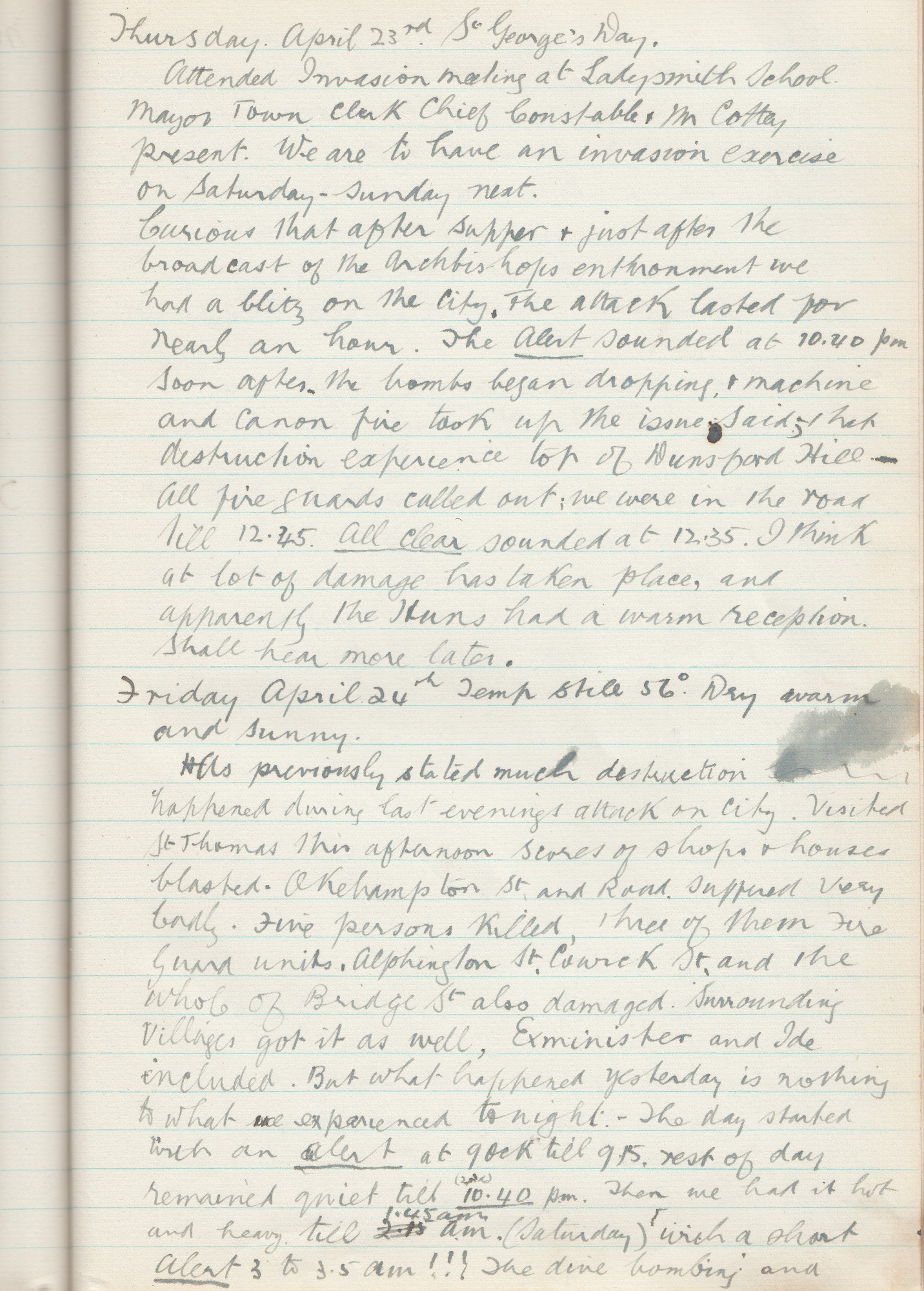
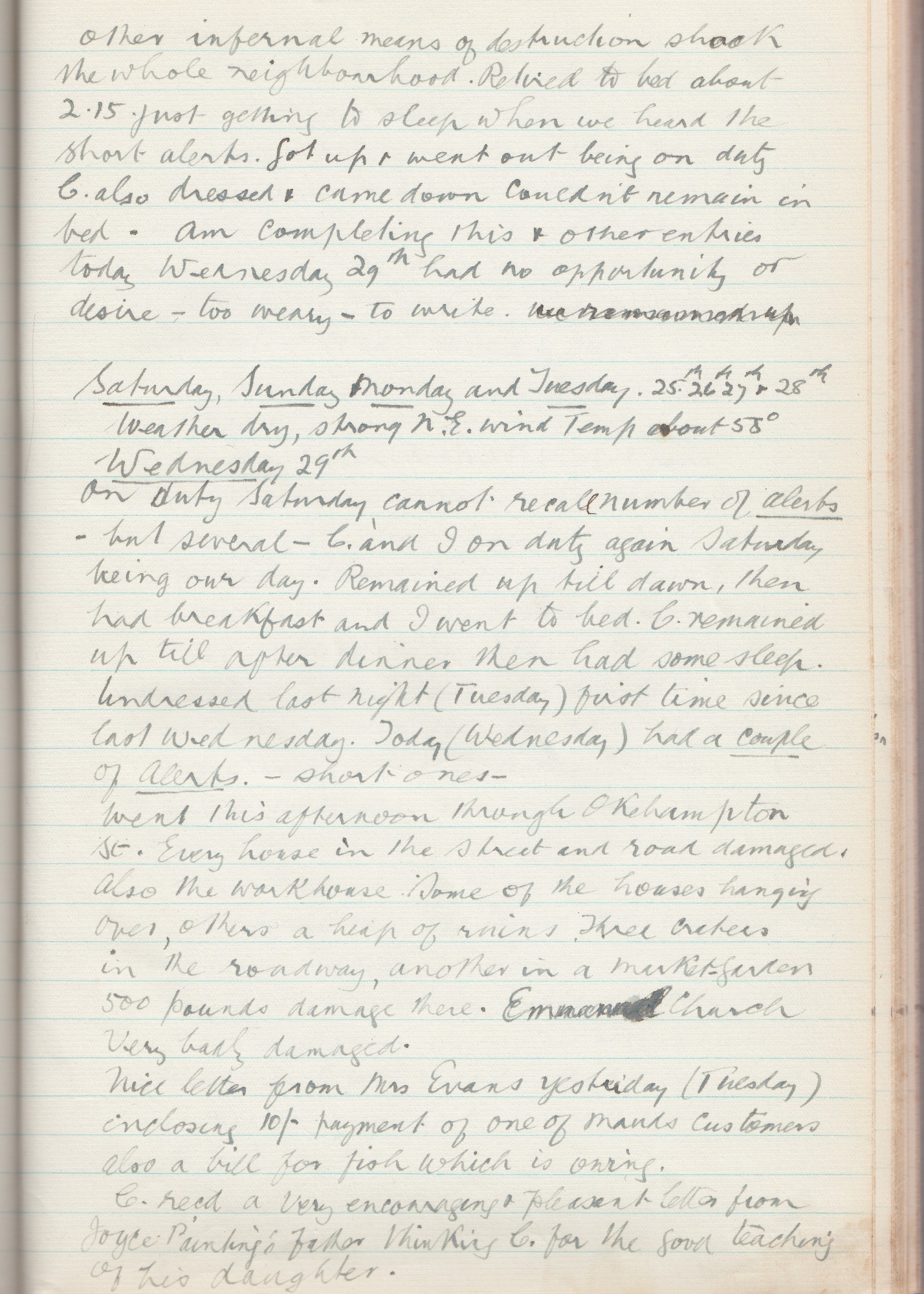
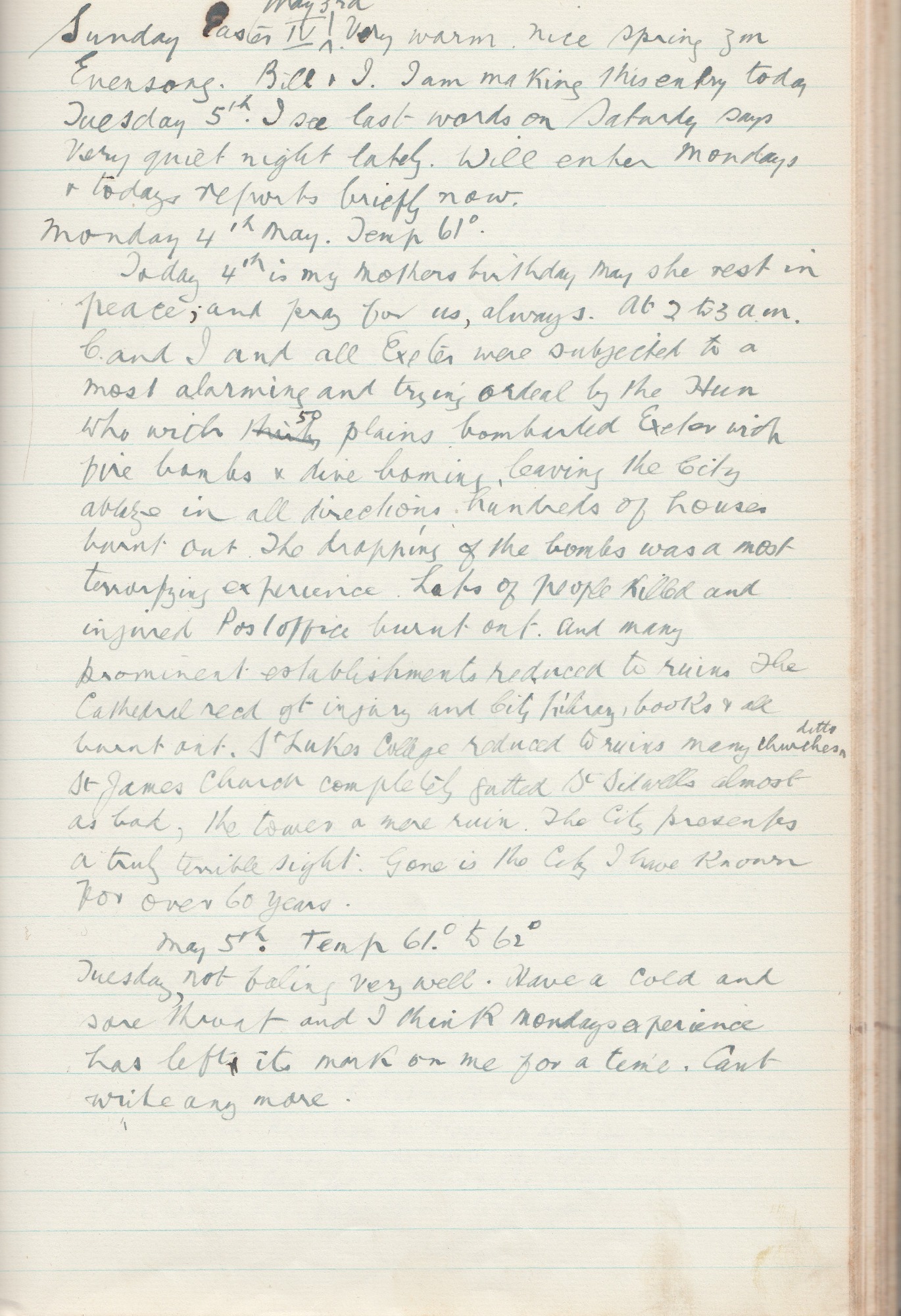
Exeter Air Raid Dates - Aug 1940 – Dec 1942
- 7 Aug 1940 Exwick and St Thomas areas
- 16 Aug 1940 Bovemoors Lane Wonford
- 6 Sept 1940 Heavitree area
- 11 Sept 1940 Sweetbriar and Hamlin Lanes
- 16 Sept 1940 Exwick
- 17 Sept 1940 Heavitree and Polsloe Areas
- 28 Nov 1940 Heavitree and Wonford
- 16 Jan 1941 Magdalen Bridge
- 4 May 1941 Exmouth Junction
- 5 May 1941 South of St Davids Station and Council Yard
- 6 May 1941 East Wonford
- 17 Jun 1941 Burnthouse Lane and Topsham Rd
- 23 Apr 1942 Baedeker Raids / Okehampton St and Redhills
- 25 Apr 1942 Baedeker Raids / City Centre area
- 26 Apr 1942 Baedeker Raids / Newtown area
- 3 May 1942 Baedeker Raids / City Centre
- 4 May 1942 Baedeker Raids / City Centre
- 30 Dec 1942 South St Holloway St Topsham Rd Polsloe Rd
265 were killed and 111 seriously injured while 677 were injured to a lesser extent.
400 shops, nearly 150 offices, over 50 warehouses, and stores, 36 clubs and pubs.
Source: Official police, fire and council records, Exeter, the Blitz and Rebirth of the City by Norman Venning.
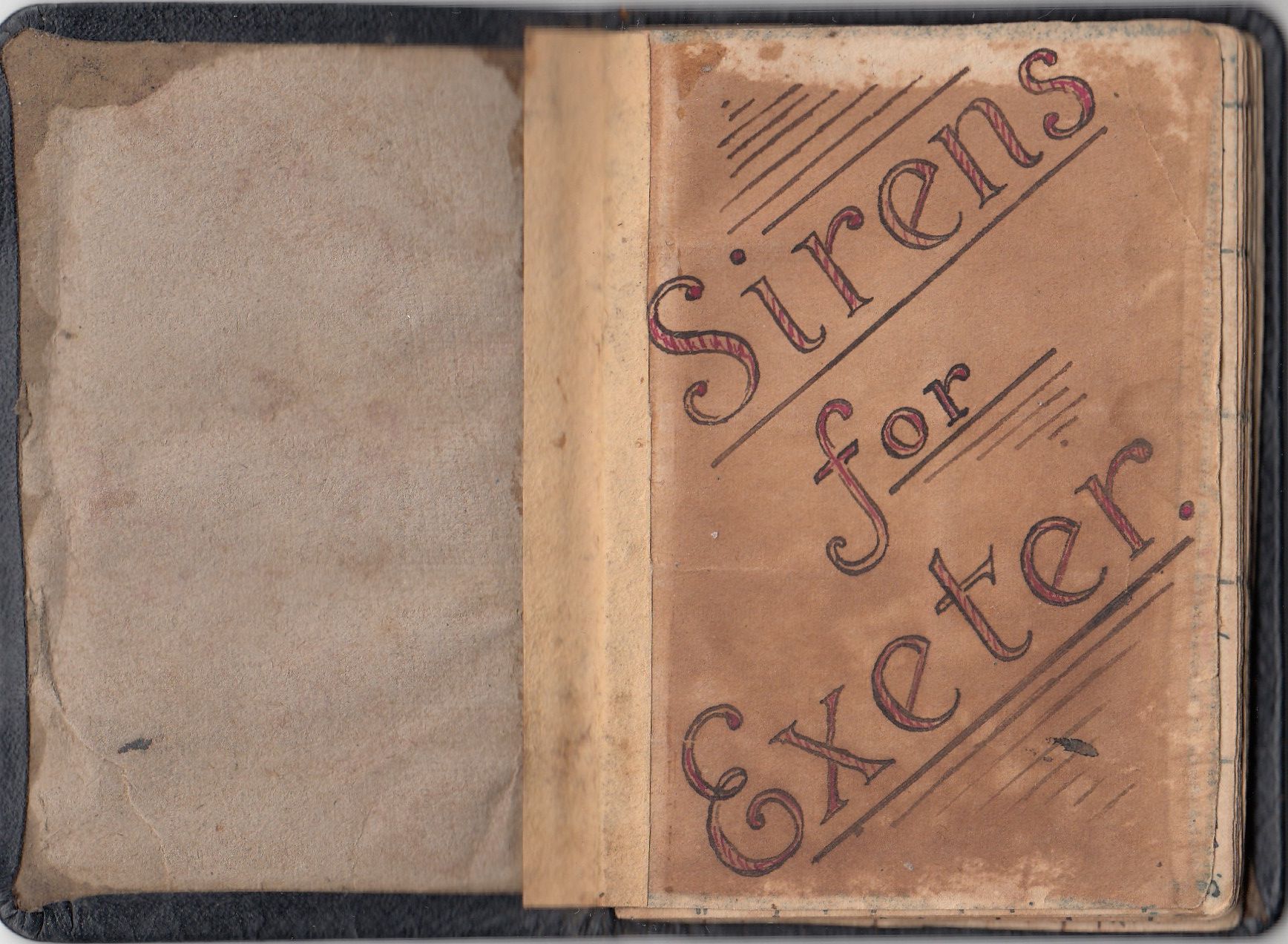
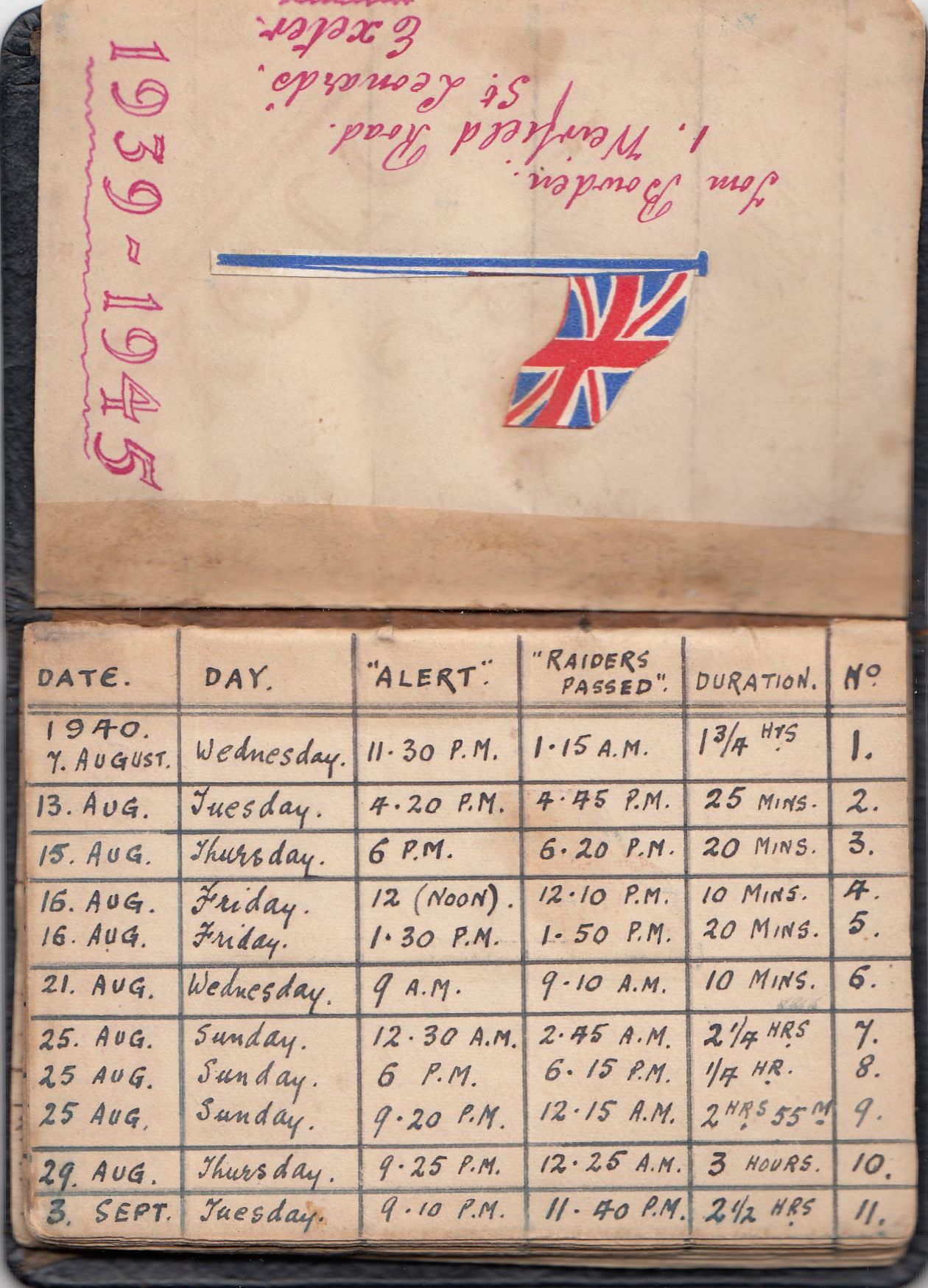
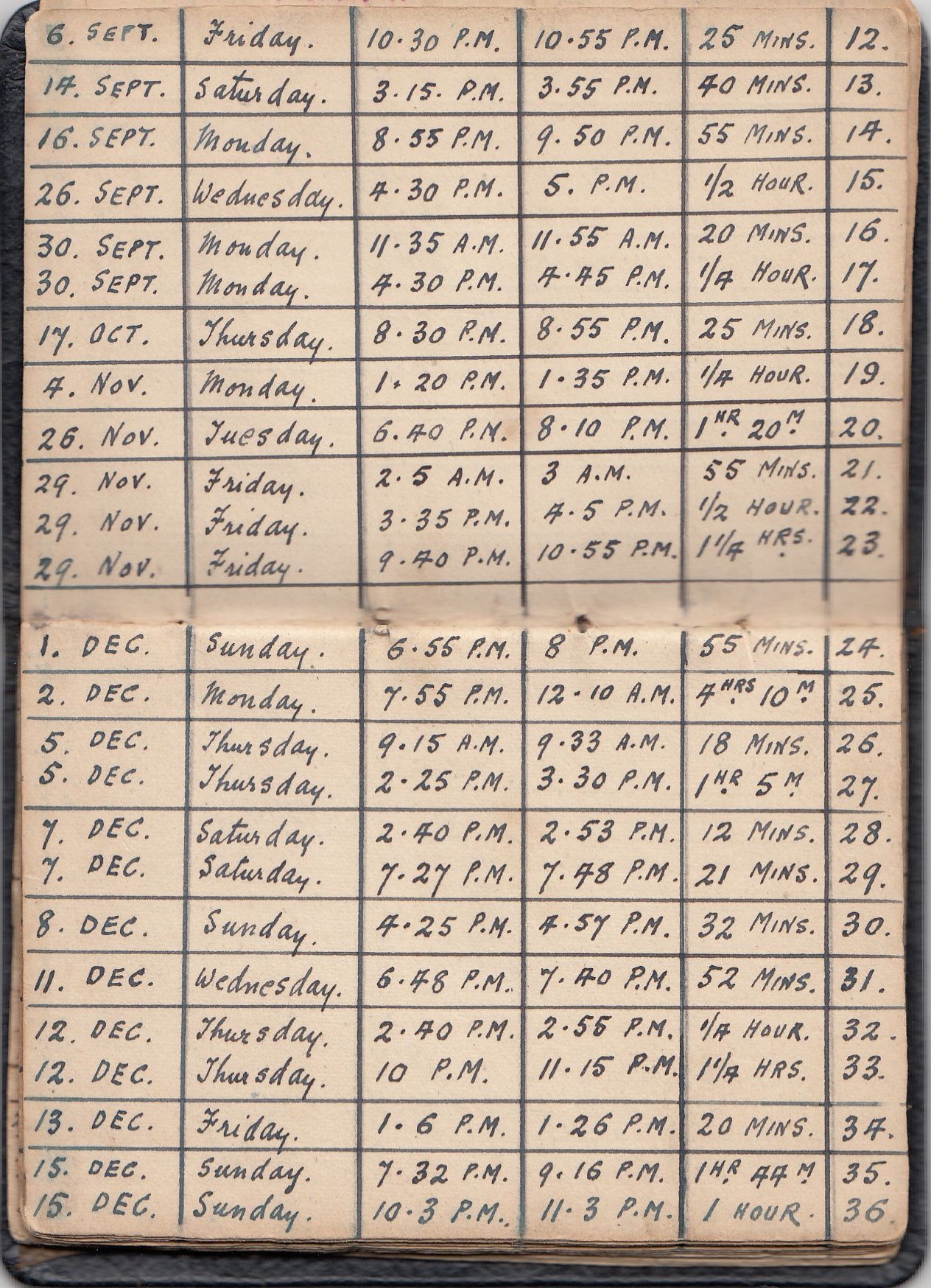
There were 468 Siren Alerts between 1940 and 1944 according to records kept by Tom Bowden who also corrected people who came up with various totals in the local paper. Tom kept a daily record in a small black notebook which included the press cuttings regarding the figures quoted.
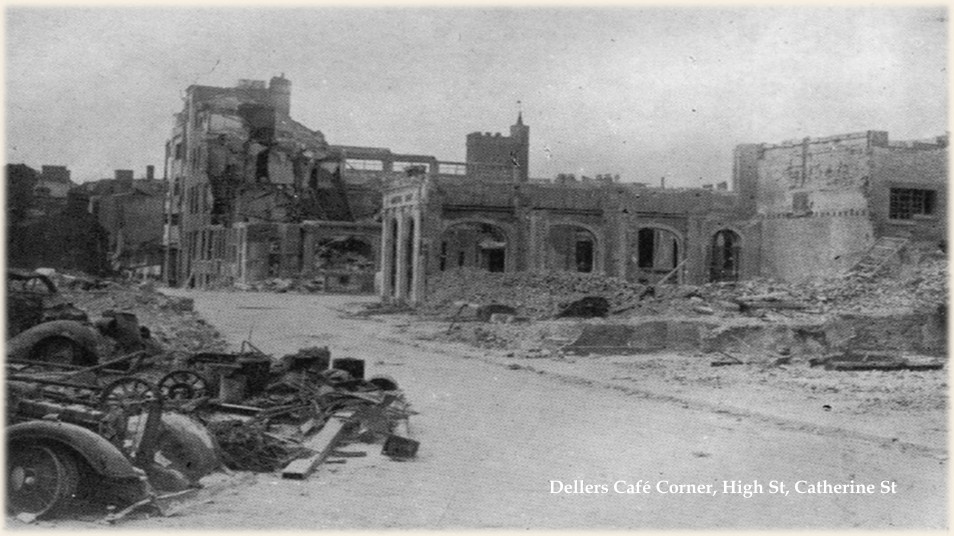
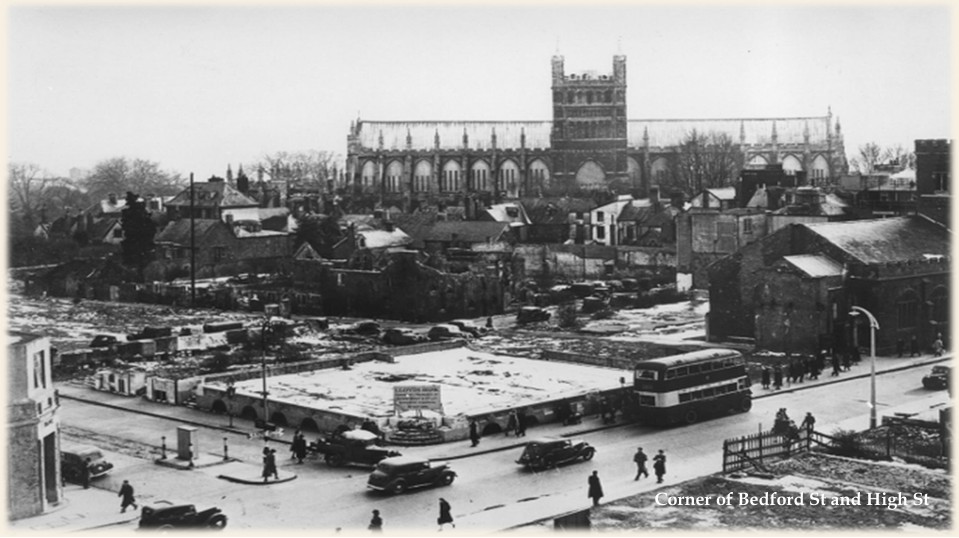
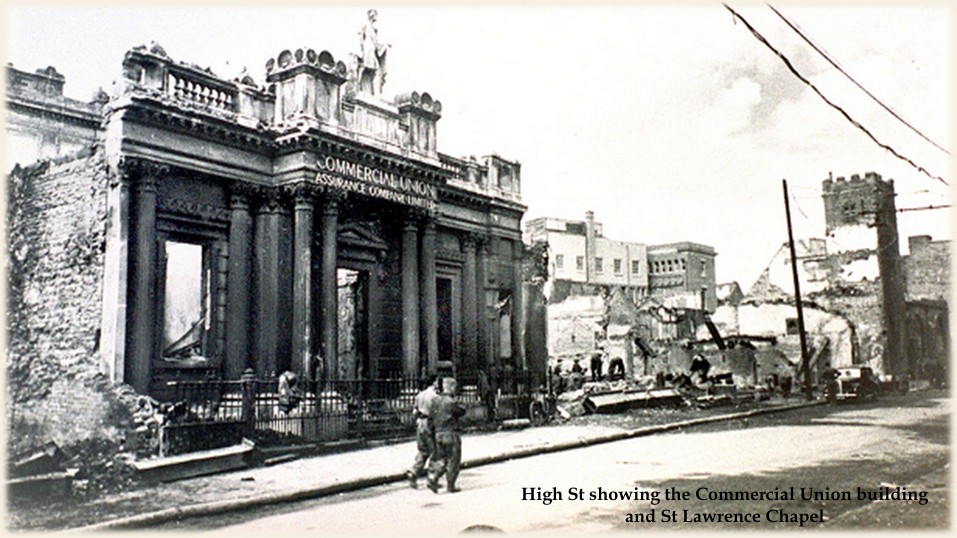
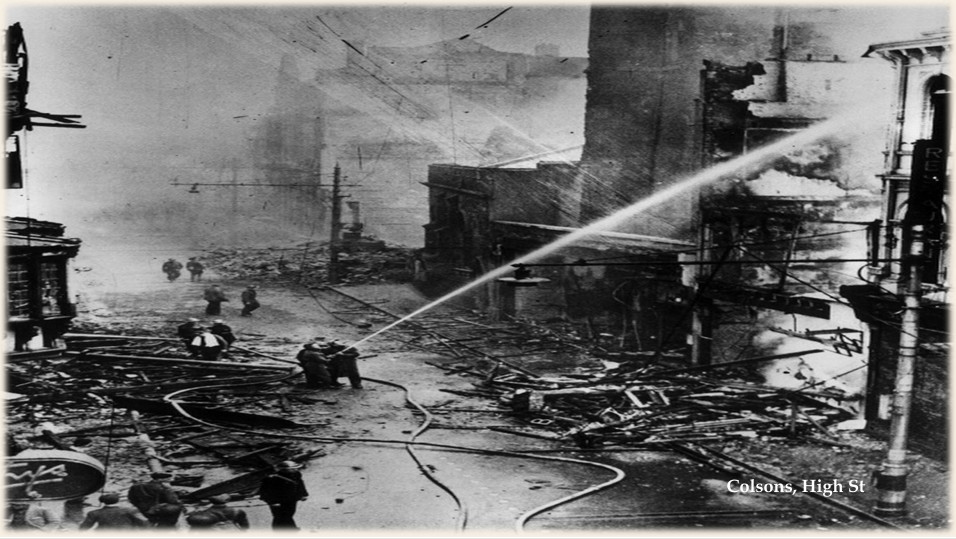
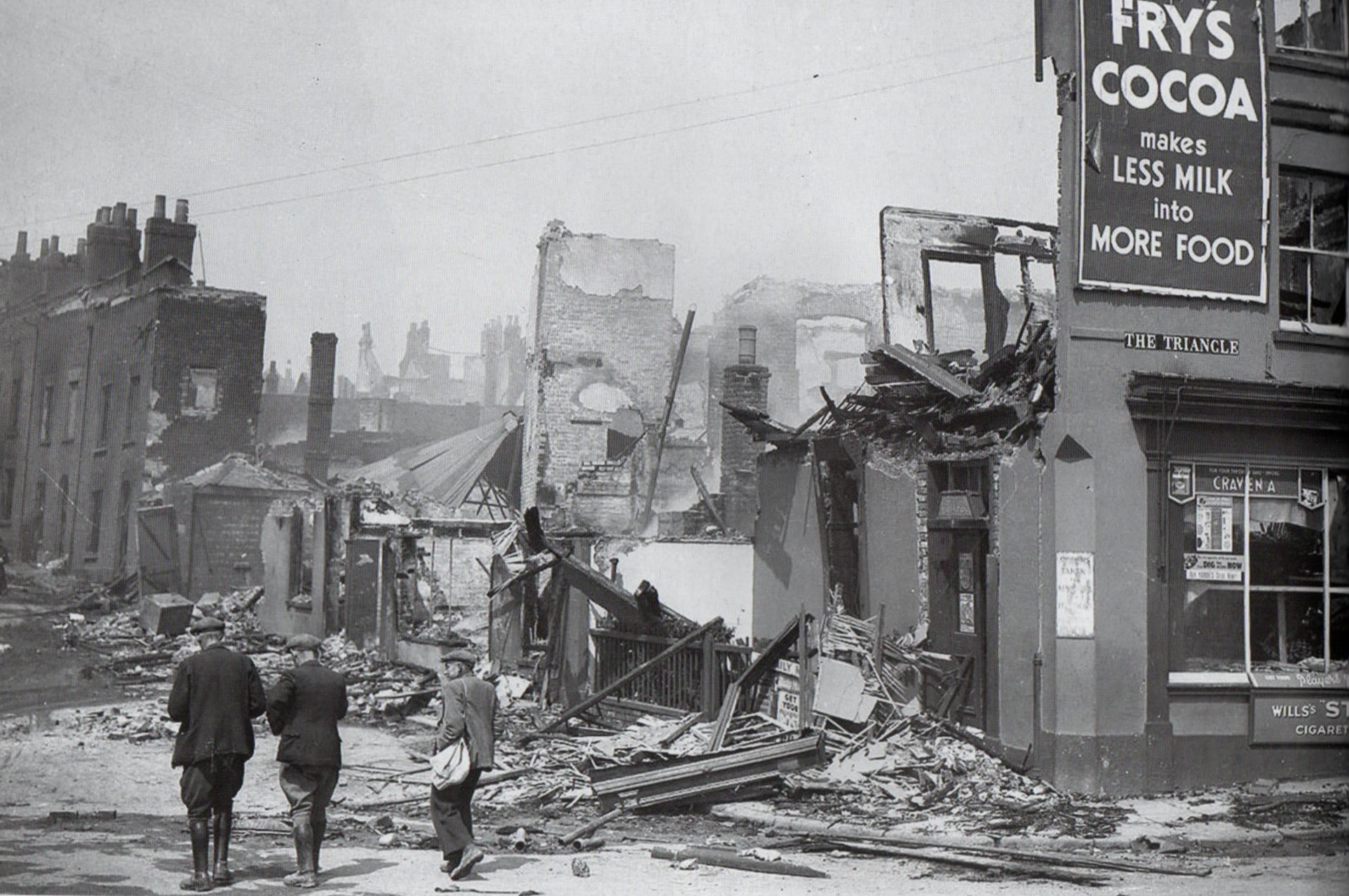
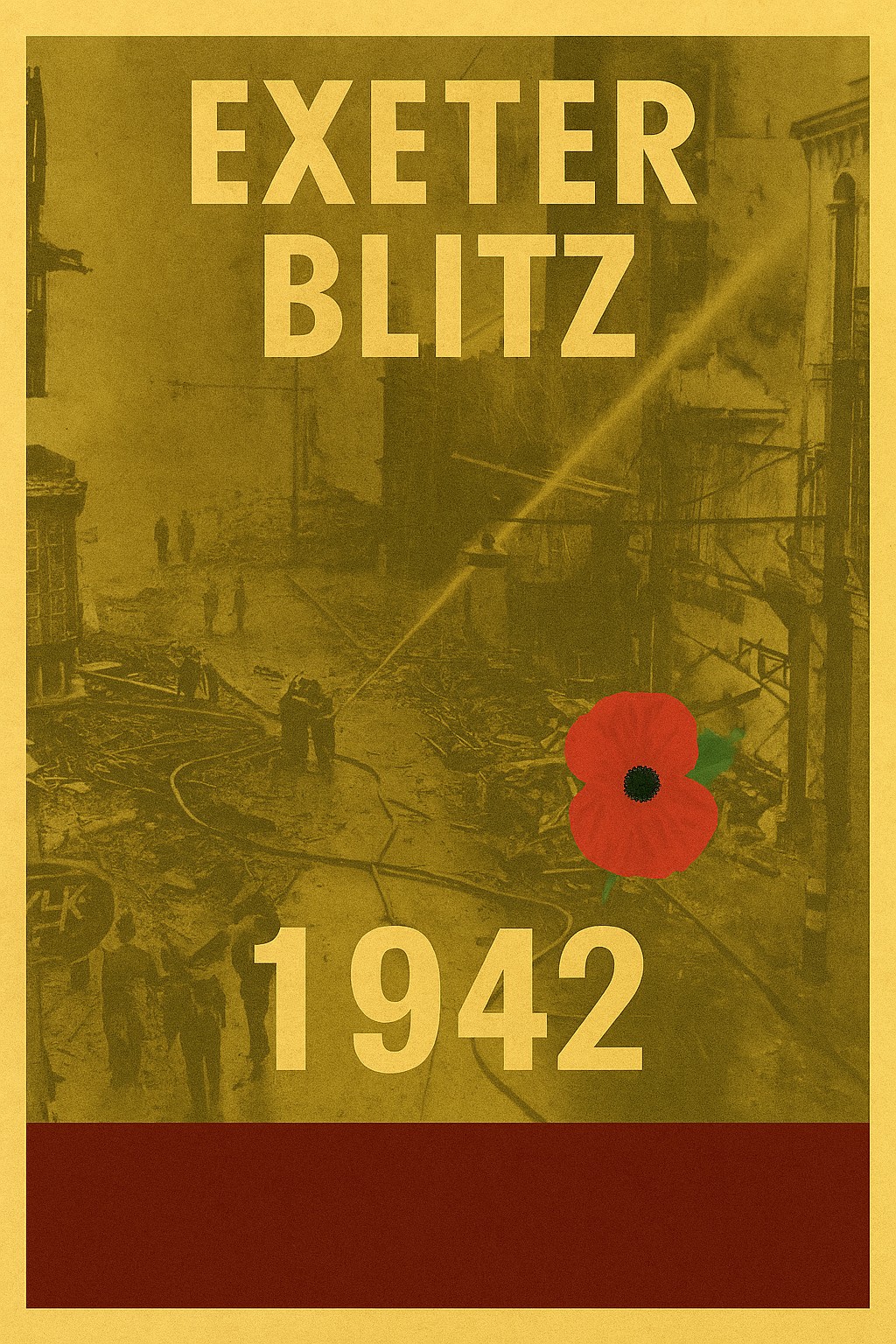
Images from the Exeter Blitz 1942
All images used here are credited to the original copyright owners
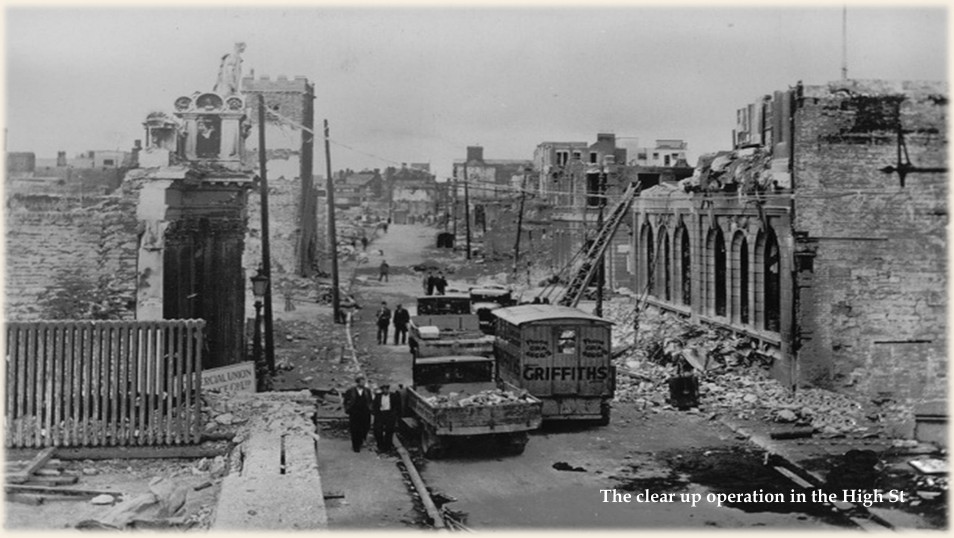
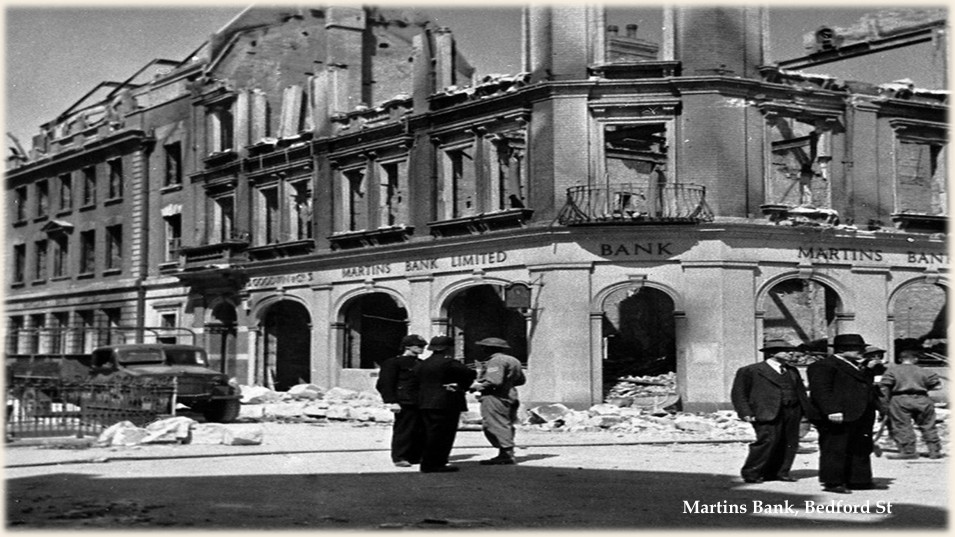
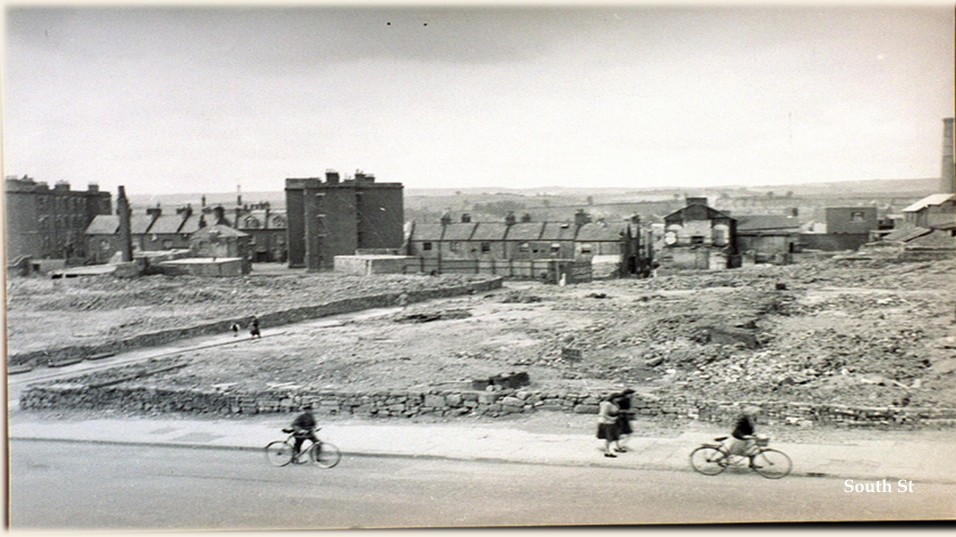
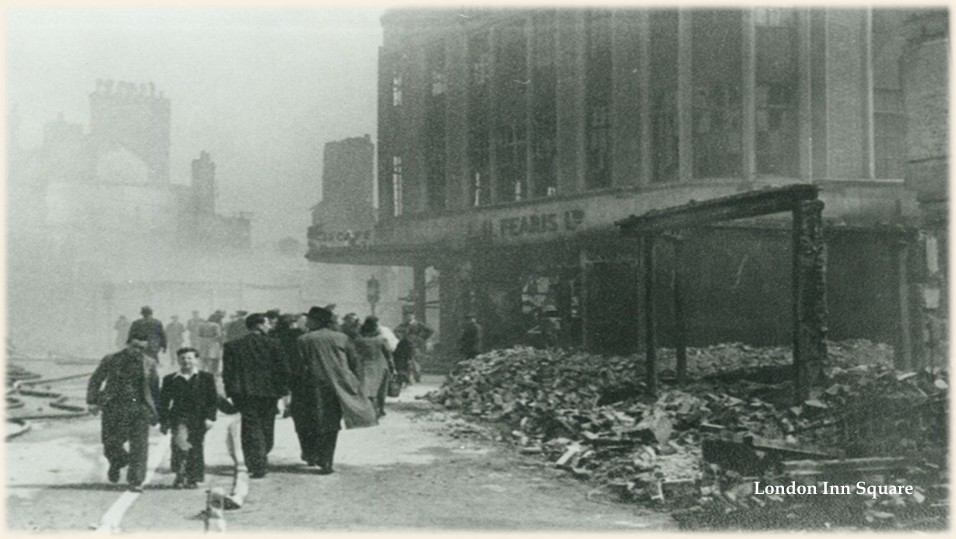
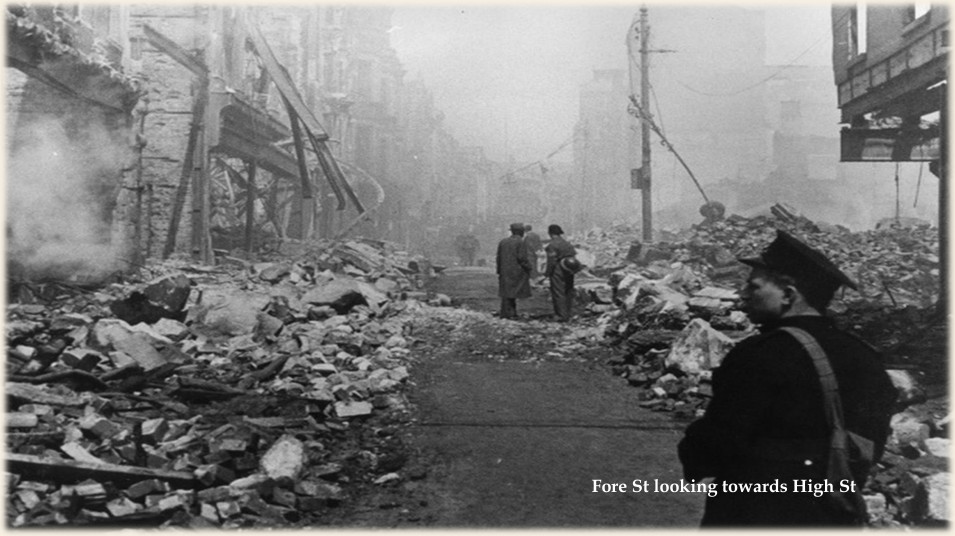
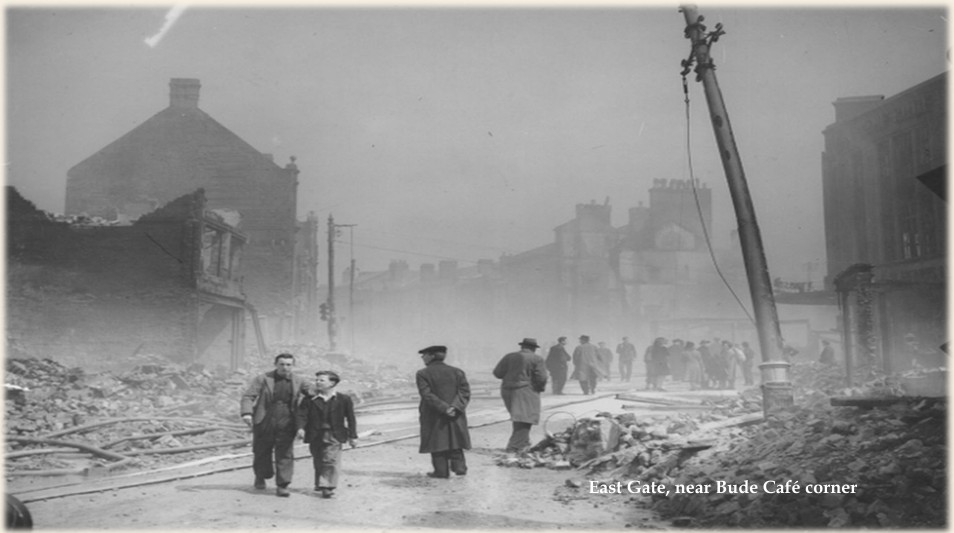
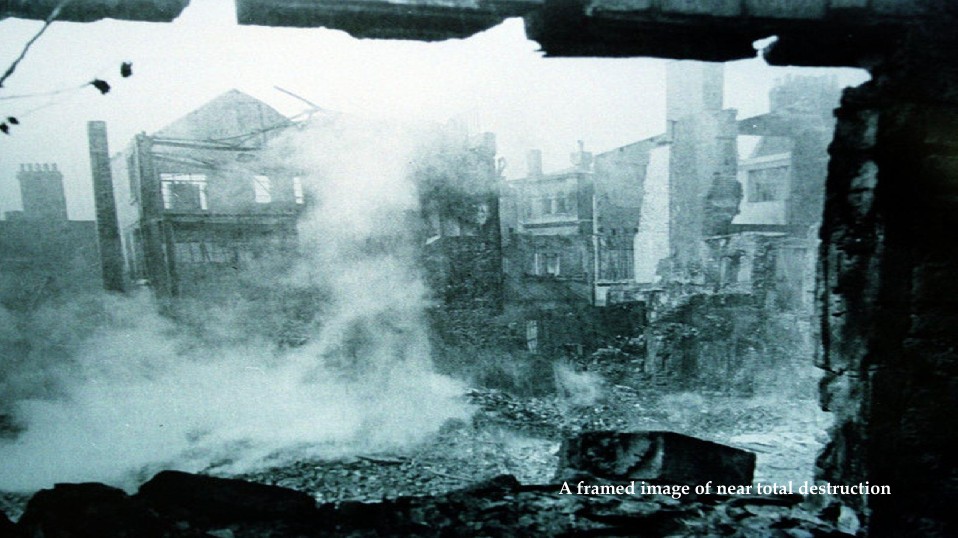
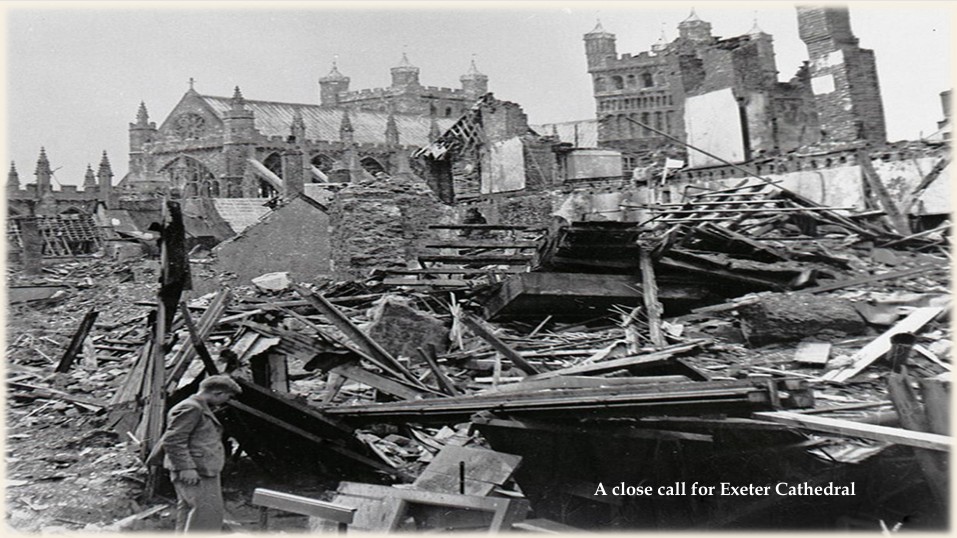
Exeter, 1942 — A Written Evocation using AI
The night settles over the city with that uneasy stillness people had learned to recognise. A thin mist clings to the rooftops, softening the cathedral’s silhouette, while wardens pace their familiar routes with torches hooded and voices low. Somewhere in the distance, a dog barks once, then falls silent.
Then the sirens begin.
The first wail rises over the rooftops like a blade drawn across the sky. Windows tremble. People move with practised urgency — doors open, footsteps hurry, voices call out names. In cellars and shelters, families gather close, the air thick with dust, paraffin, and fear.
Above the city, the engines arrive before the bombs. A deep, rolling thunder that grows and grows until it seems to press against the chest. Searchlights sweep upward, pale fingers clawing at the darkness.
The first explosions fall on the railway yards. A flash — white, then orange — and the ground shudders. Another. And another. Soon the whole city centre is lit by fire: High Street, South Street, Fore Street, the ancient heart of Exeter glowing like a furnace. Medieval timbers crackle. Stonework groans. Sparks drift upward like fireflies.
Wardens shout orders through the smoke. Fire crews battle impossible heat with dwindling water. The cathedral stands in a haze of embers, its great windows glowing as if lit from within. Somewhere, a church bell rings once — not by human hand, but by the concussion of a blast.
And yet, amid the chaos, there is resilience. Neighbours pulling each other from rubble. Nurses guiding the injured with calm, steady hands. Volunteers forming bucket chains through streets they can barely recognise. A city refusing to fall apart, even as buildings crumble around it.
By dawn, the fires still smoulder. Smoke hangs low over the river. The sun rises on a changed Exeter — wounded, blackened, but unbroken.
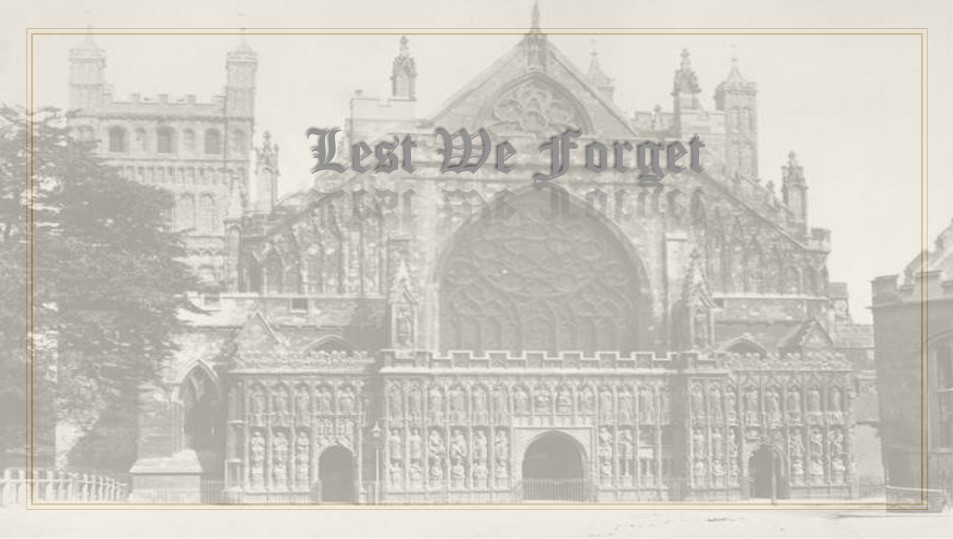
Lest We Forget
All images used here are credited to the original copyright owners
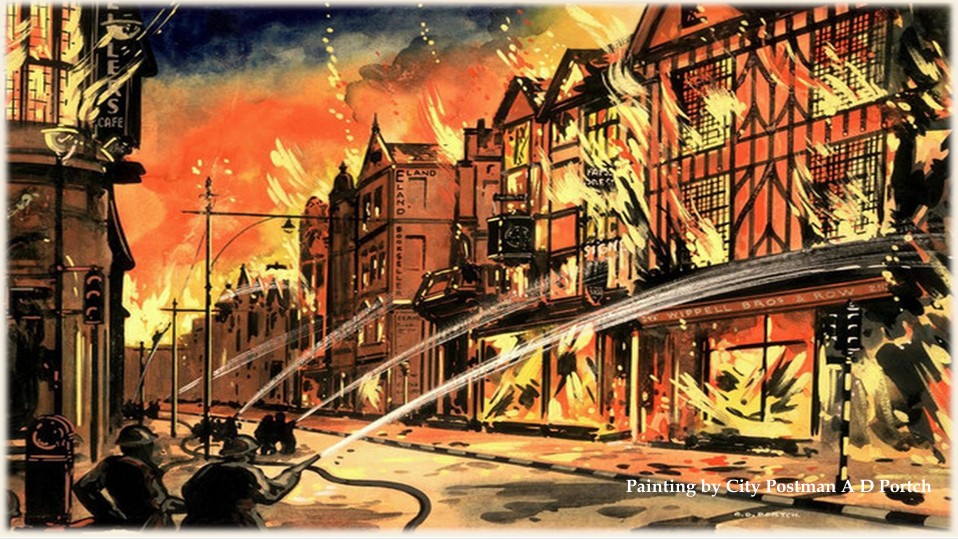
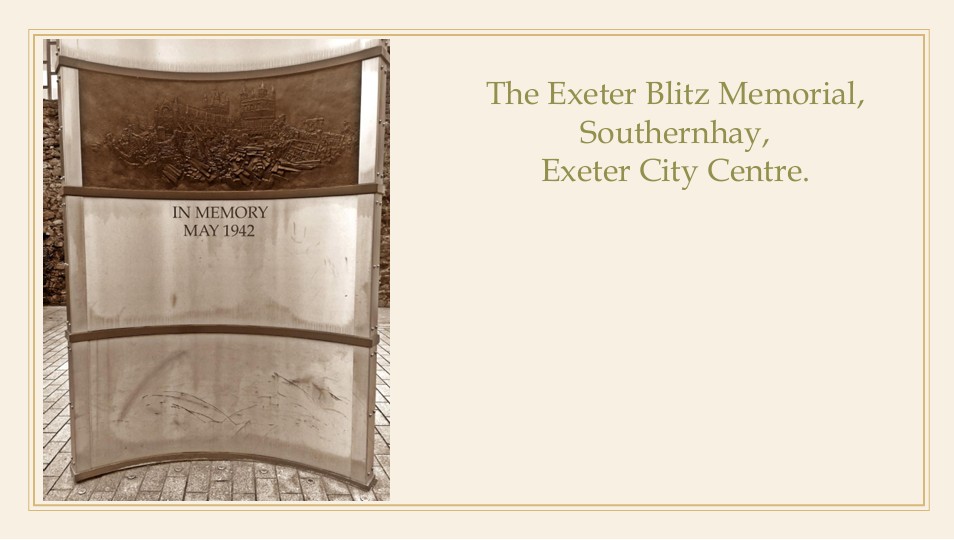
Local resident Tammy Laskey
shares her chat with June Hannaford.
Recently I had the pleasure of talking to 89yr old June Hannaford about her memories of the War in Exeter. June was born at the Whipton Inn in 1936. Her grandfather William Crews was the publican as was his father before him.
Her father though ran a butchers shop in South Street and was an ARP warden. June recalls being constantly frightened and not understanding why they had to run to the air raid shelter. There was such little warning and the enemy were firing on people as they ran for cover. Her mother had a little sling bag all packed and would pick June up under one arm and dash to the communal shelter at the rear of their home. She says there benches all round the edge and she will never forget the smell - “wet concrete, got right up your nose.”
“One morning, in hushed tones (you know what children are like….big ears!) I heard ‘St Sidwell’s went last night’ In my innocence I thought ‘I wonder where it went?’”
The evening of May 4th she had travelled by bus with her mother to visit an Aunt & Uncle on a farm near Ottery St Mary. In the night she woke to see her mother and another lady crying. She remembers watching the orange glow in the sky which they knew was Exeter burning.
When they returned the house and shop in South Street was gone. The family returned to the farm with only the clothes they stood in. They stayed there for a while in a little summer house, really just a shed (which is still there). That winter the family decamped to the Whipton Inn then later to a small cottage at Mont Le Grand which was part of stables belonging to a big house.
Eventually they returned to the city centre, to Fore Street. Her father ran his business from a market stall in Queen Street and then worked for Patches (I believe), a butchers in Goldsmith Street.
VE Day was a happy day spent at a street party in front of the Half Moon Inn, Whipton. Rationing was still on but they made the best of it and June remembers the mum’s taking part in races up and down Whipton Village Road.
Image is credited to the original copyright owner.
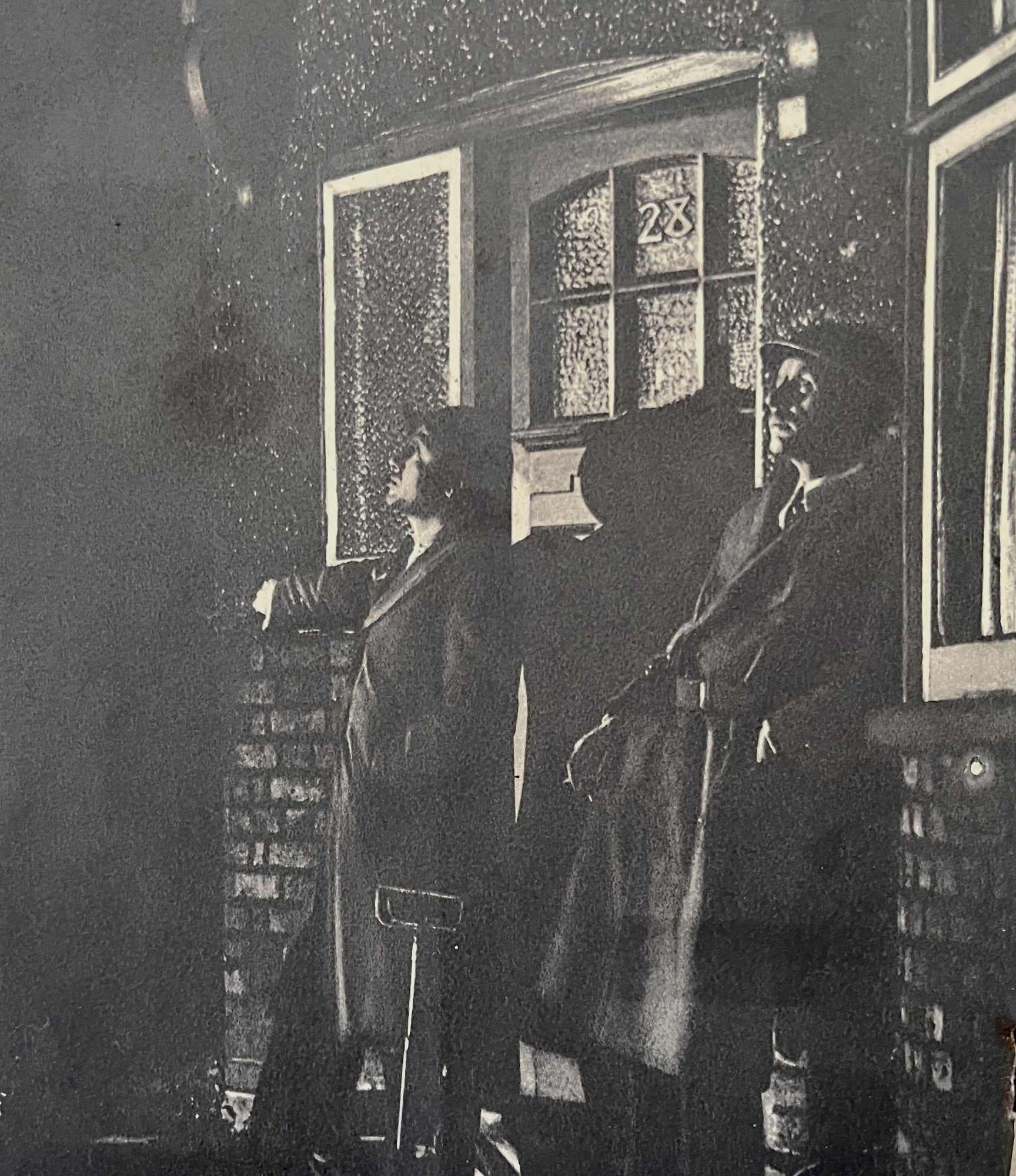
Tribute to the Firewatchers of the Exeter Blitz, 1942
They were not soldiers. They carried no rifles, wore no medals, and marched in no parades. Yet when Exeter’s nights turned to flame in 1942, it was the firewatchers — ordinary men and women — who climbed to the rooftops and stayed.
They watched the sky for the fall of incendiaries, listening for the whistle that meant another street, another home, another life was in danger. Armed with little more than buckets, shovels, stirrup pumps, and a stubborn refusal to abandon their city, they fought a battle measured not in territory gained but in lives saved and heritage preserved.
While the sirens wailed and the cathedral bells fell silent under the weight of smoke, they moved across rooftops slick with ash. They stamped out sparks before they could become infernos. They guided fire crews through streets choked with rubble. They kept watch when exhaustion hollowed them out. They stayed when others were evacuated. They stood their ground when the night itself seemed determined to erase Exeter from the map.
Some were shopkeepers. Some were clerks. Some were boys barely old enough to shave, and women who had never imagined themselves climbing ladders in the dark. But in those nights, they became guardians of a city under siege.
Their courage was quiet — the kind that rarely makes headlines but changes the fate of a place forever. Without them, far more of Exeter’s heart would have been lost. They preserved what they could, protected who they could, and bore witness to what could never be replaced.
Today, their names are seldom spoken, their faces rarely remembered. But the city they defended still stands. The cathedral still rises above the Close. The High Street still hums with life. And every stone that survived the flames carries a trace of their resolve.
This tribute is for them — the watchers on the roofs, the keepers of the night, the ordinary citizens who met extraordinary danger with steady hands and unshakeable duty.
You were here. You mattered. And Exeter has not forgotten you.
All images used here are credited to the original copyright owners
This page was last updated on 28 March 2026