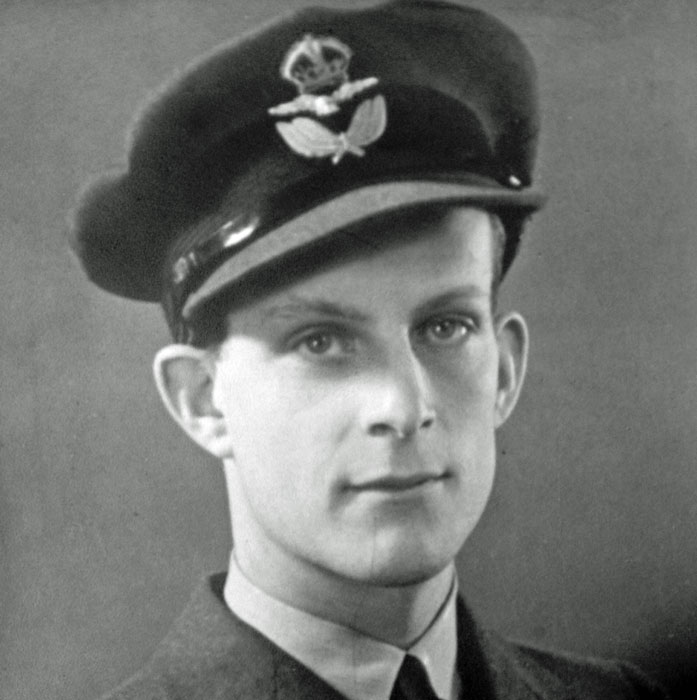
The Full Story of Flight Lieutenant James Murray Strickland, DFC
Early Life and Family
James Murray Strickland was born in Iloilo, Philippines, in 1918, the son of James Strickland (1889–1951) of Kent and Mabel Elizabeth Shaw Strickland (née Harding, 1885–1942) of Wiltshire. His father was working in the Philippines at the time of his birth.
James and his younger brother John spent their school holidays with family friends — Captain W. S. Harvey MC and his family — at Ivybridge, Devon. This connection would later shape James’s adult life in profound ways.
James was educated at King’s School, Bruton, where he excelled academically and showed early promise as a pilot.
RAF Career
Strickland joined the Royal Air Force on a short service commission.
- 21 December 1936 — Began initial training
- 20 March 1937 — Posted to 5 FTS Sealand
- 23 October 1937 — Joined No. 213 Squadron at Church Fenton
By 1940, he was an experienced Hurricane pilot.
France, May 1940
On 16 May 1940, Strickland flew one of six Hurricanes from Wittering to Lille/Marcq to reinforce No. 87 Squadron. With no 87 Squadron pilots available, Strickland and the other five volunteered to stay and fight. Only Strickland and one other pilot survived.
He rejoined 213 Squadron at Biggin Hill on 18 May.
Between 19–22 May, he flew daily missions to France, returning to Biggin Hill each evening.
On 19 May, he was shot down near Tournai by Me109s of 9./JG26. He bailed out wounded — shot in the arm and then hit in the leg by French troops who mistook him for German as he descended.
He was evacuated to Newhaven aboard the hospital ship Worthing.
He did not fly again until 11 July 1940.
Marriage and the Battle of Britain
During this period, Strickland married Betty Stean Harvey, daughter of Captain Harvey, in Plympton — a union linking him permanently to the Ivybridge community.
Throughout August–September 1940, Strickland distinguished himself:
- 11 August — Destroyed a Ju88
- 12 August — Assumed command of B Flight, promoted to Acting Flight Lieutenant
- 12 August — Destroyed a Me109
- 15 August — Destroyed a Me110 and a Ju87
- 25 August — Destroyed a Me109, damaged another
- 18 September — Probably destroyed a Ju88
- 27 September — Shared destruction of a Me110
He survived two crash‑landings:
- P3979 at Horne, near Redhill
- V6544 near Swanage
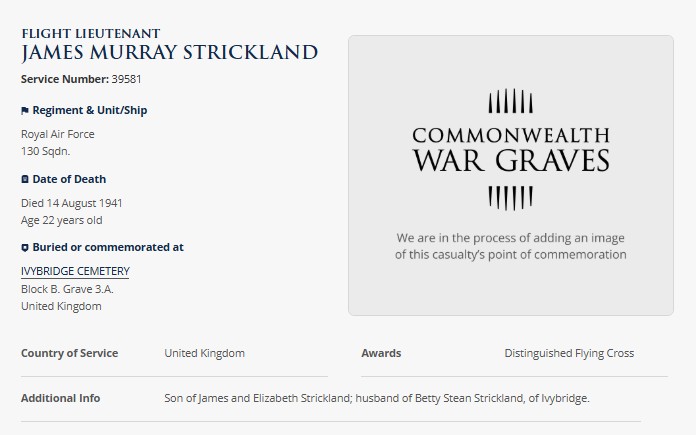
He was awarded the Distinguished Flying Cross (gazetted 22 October 1940) for his courage and leadership.
Final Posting and Death
On 17 December 1940, Strickland was posted to No. 56 OTU, Sutton Bridge as an instructor.
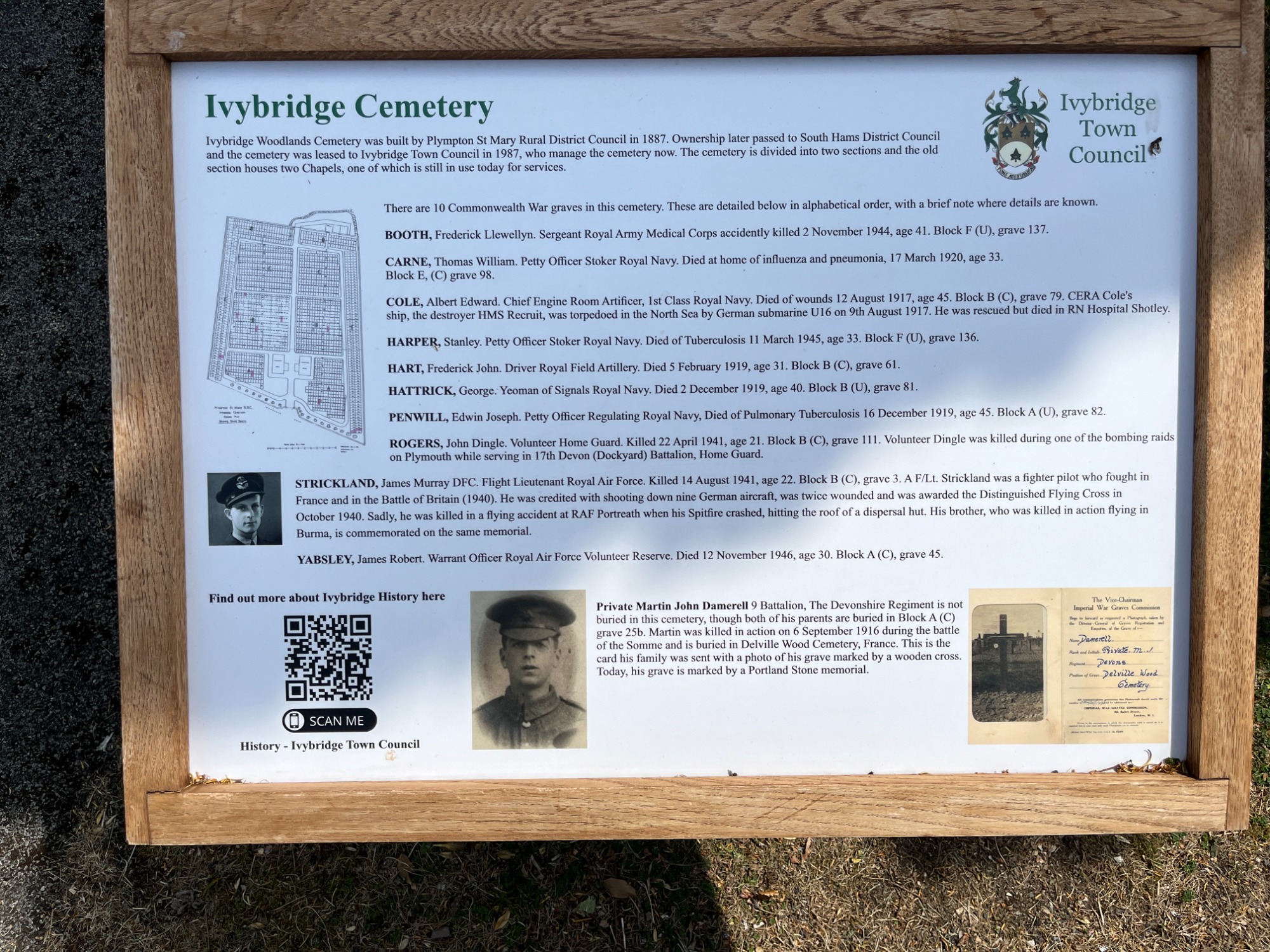
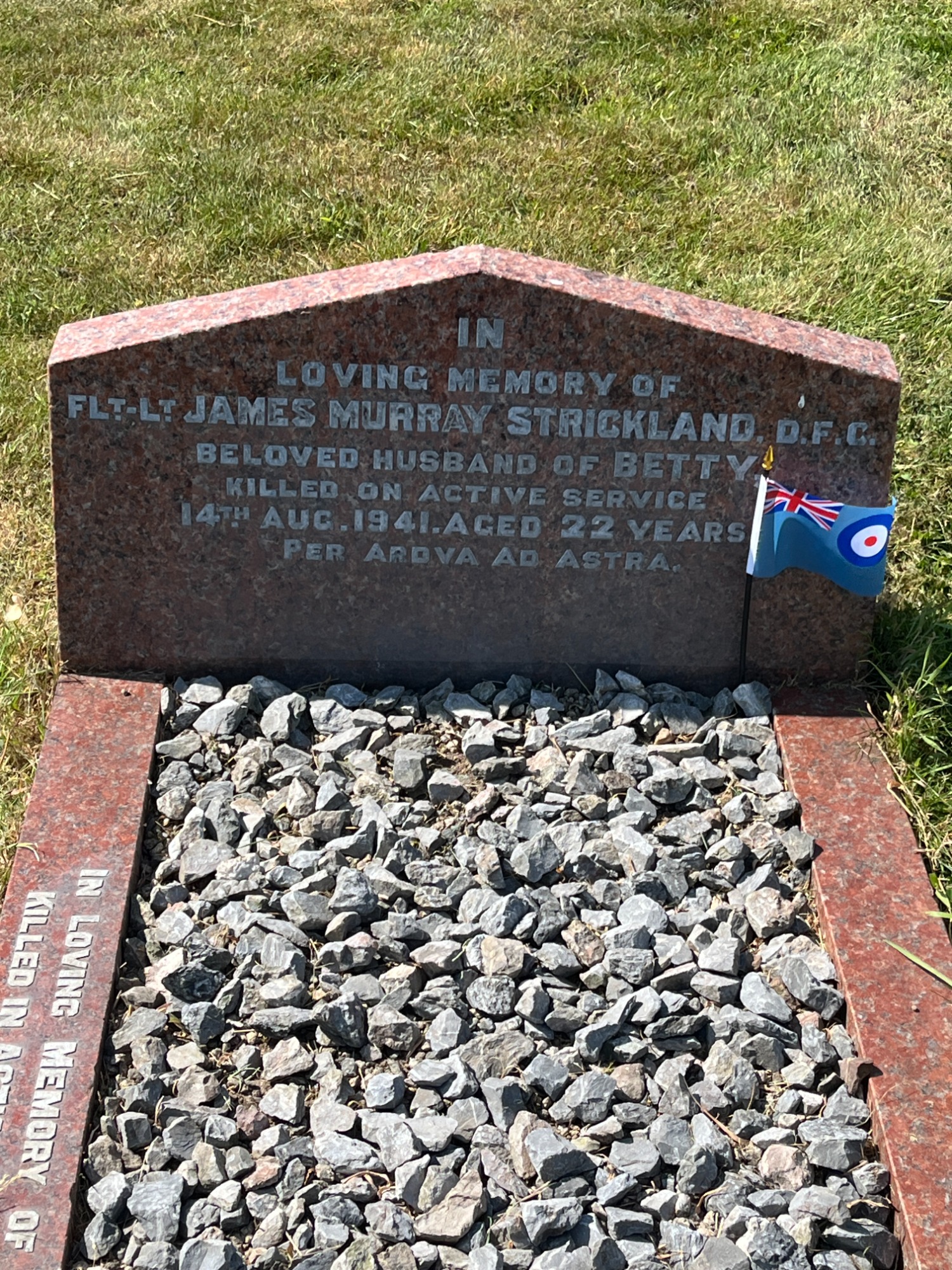
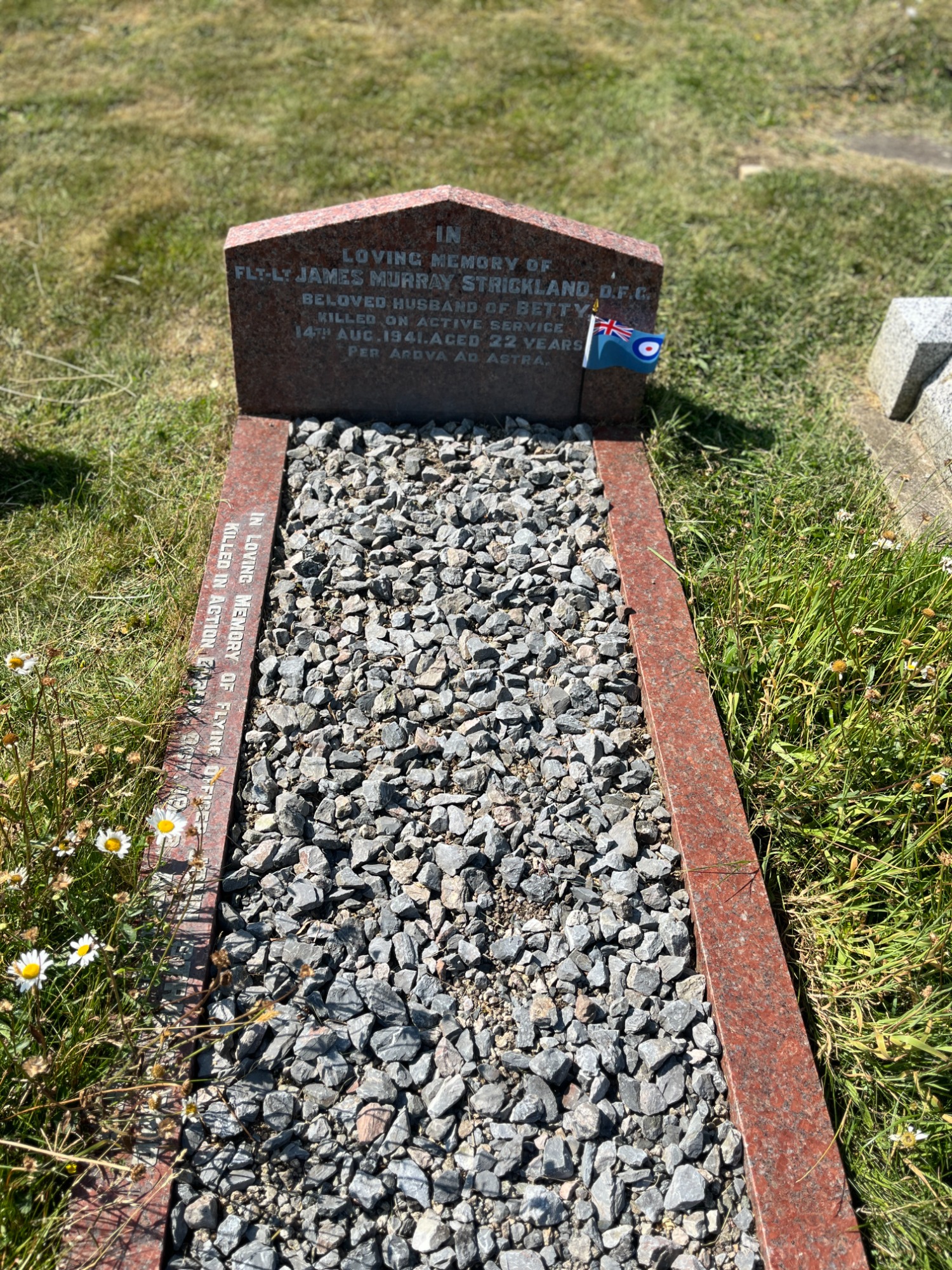
On 14 August 1941, while serving with No. 130 Squadron at Portreath, his Spitfire IIa P7556 struck the roof of a dispersal hut and crashed. He was killed instantly.
He was 22 years old.
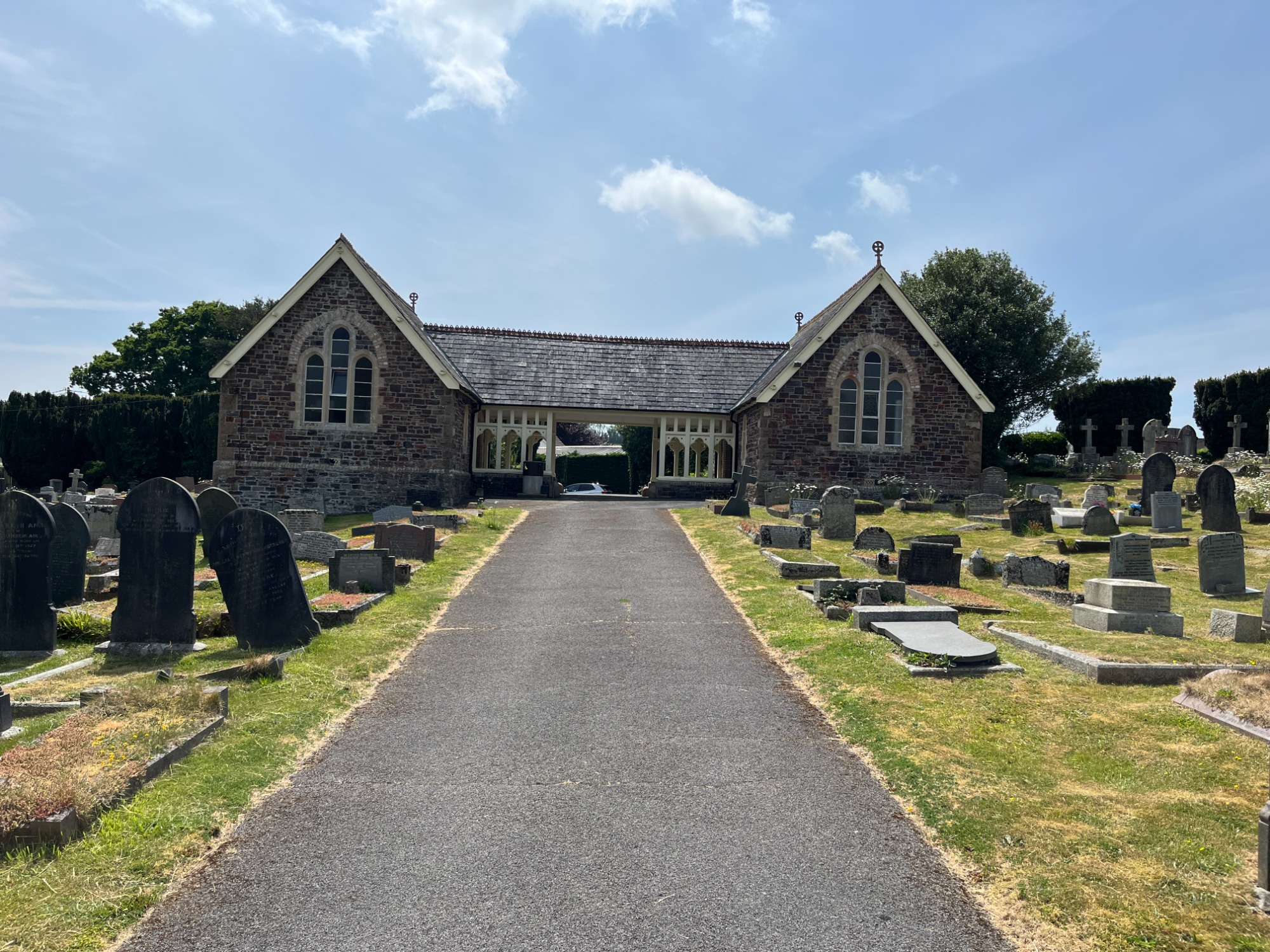
James is buried in Ivybridge Cemetery, where his brother John, killed in Burma in 1943, is memorialised on the graveside kerb.
His Daughter
A month after his death, Betty gave birth to their daughter:
Geraldine (“Gerry”) Strickland
Named in tribute to her father, who was known as Jerry or Jimmy within the family.
The Family After the War
James’s Parents
- James Strickland (1889–1951)
- Mabel Strickland (1885–1942)
Both died in Australia, suggesting they emigrated after losing both sons in the war.
Betty’s Life After James
Betty lived an extraordinarily long and full life:
- Born 1918
- Married Maurice Sheppard in 1946
- Later changed her surname to Oliver
- Married Leonard Oliver in 1972
- Died in Somerset in 2014, aged 96
A life spanning nearly a century — from the era of biplanes to smartphones.
Geraldine’s Adult Life
Geraldine married:
- Derek Gardner in 1963 in the Plympton/Ivybridge area
- Later used the surname Oliver, likely through her mother’s remarriage
Geraldine and her daughter appear on Ancestry as private, strongly suggesting they are still alive. This means James Murray Strickland has living descendants today.